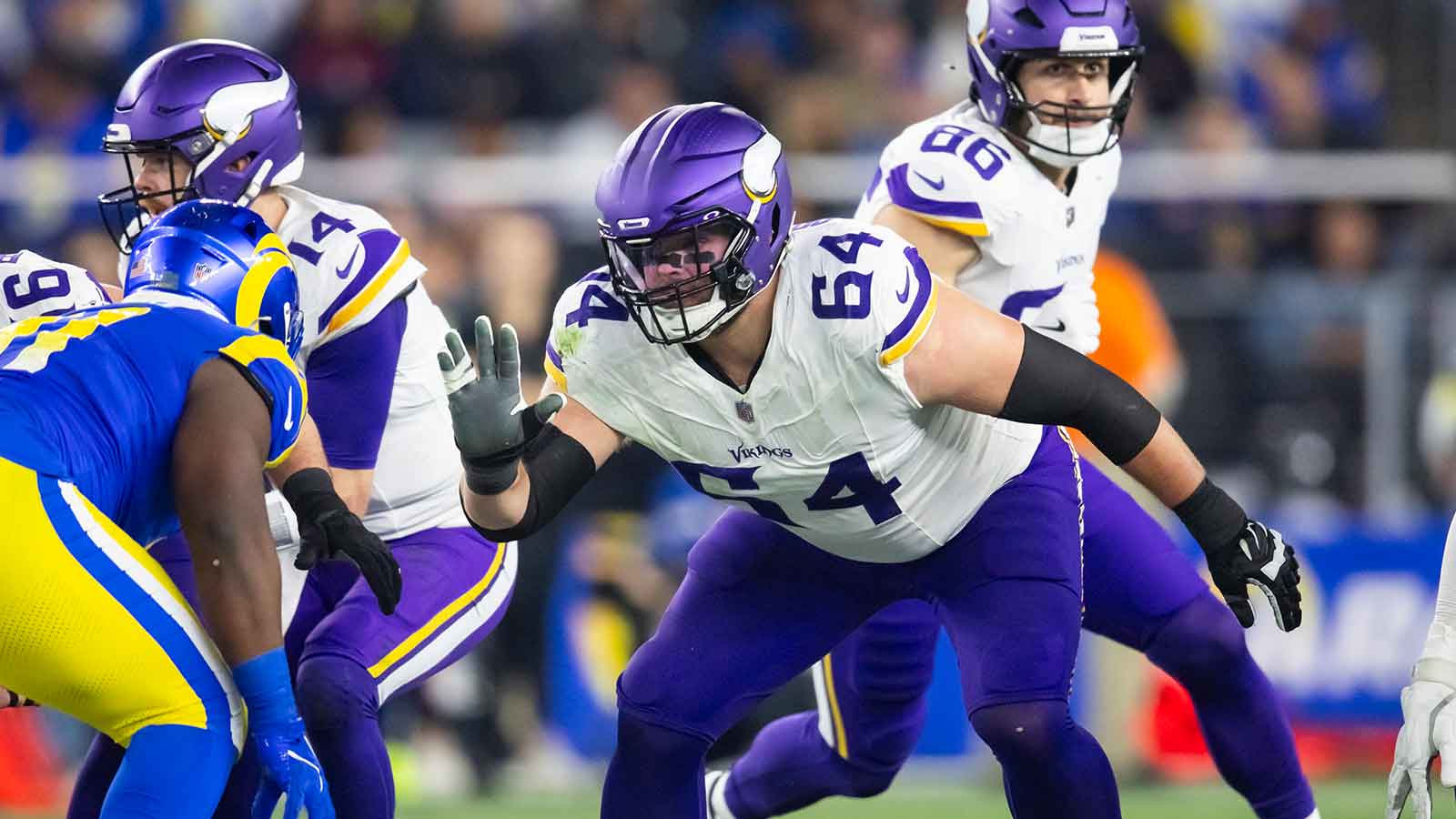
Let’s be real about the Minnesota Vikings. The roster has talent. Justin Jefferson alone makes them dangerous. But the entire franchise is basically waiting to see who wins the quarterback room before they can figure out what they actually are. J.J. McCarthy has a real shot to beat out Kyler Murray, and that might be the best thing that happens to this team long-term.
Meanwhile, the Vikings need pass rush help in a division that keeps getting more physical. That’s why a recent PFF mock draft simulation for 2027 is worth talking about. It focuses on the trenches. It adds protection for whoever ends up under center. And it gives Kevin O’Connell the kind of depth he hasn’t had yet.
Here’s how it shakes out.
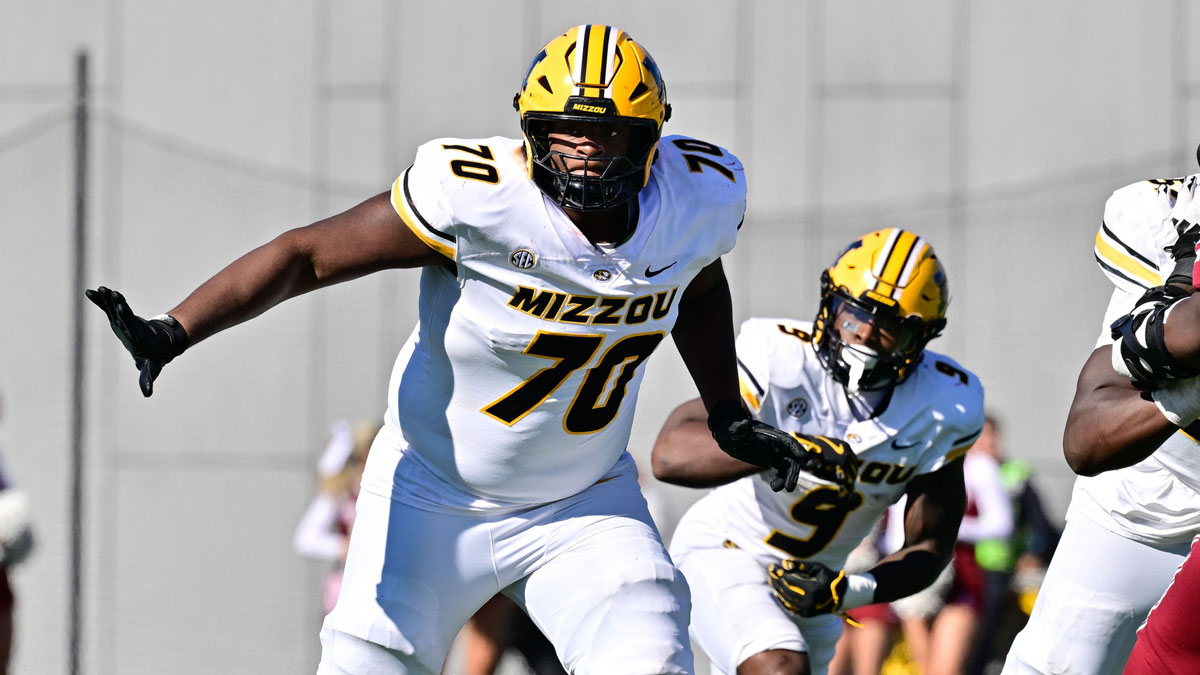
Round 1, Pick 14: Cayden Green, T, Missouri
Cayden Green is listed as a tackle but his real value is flexibility. He’s played guard and tackle at a high level. He’s got a powerful frame, heavy hands, and strong anchor. NFL teams love that.
For Minnesota, this pick works no matter who wins the job. McCarthy needs protection to develop. Murray needs clean edges so he doesn’t have to improvise as much. Green might end up inside long-term, but that’s fine. The Vikings need more reliable answers up front.
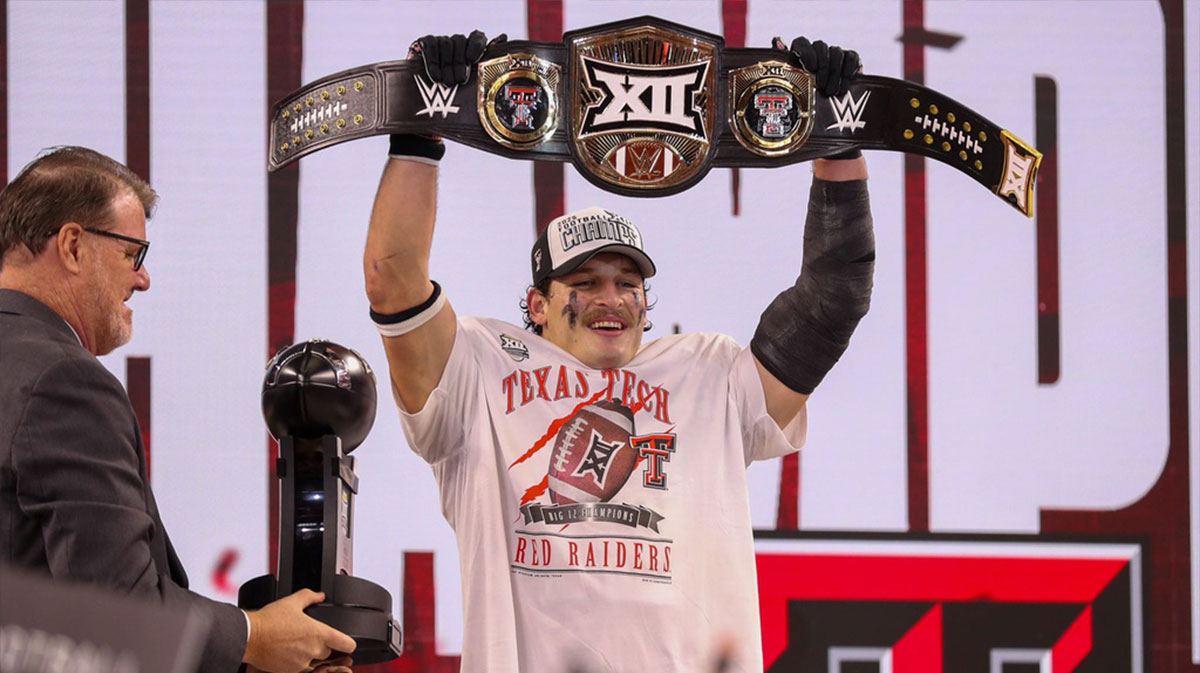
Round 2, Pick 46: Ben Roberts, LB, Texas Tech
Ben Roberts is the kind of linebacker who just makes plays. He’s active. He tackles well. He can cover enough that you don’t have to hide him on passing downs. His instincts are his best trait — he reads plays fast, flows to the ball, and forces turnovers.
The Vikings defense needs linebackers who can play in space but still hit people in the run game. Roberts fits that. He might not be a flashy second-rounder, but he plays like a future defensive signal-caller.
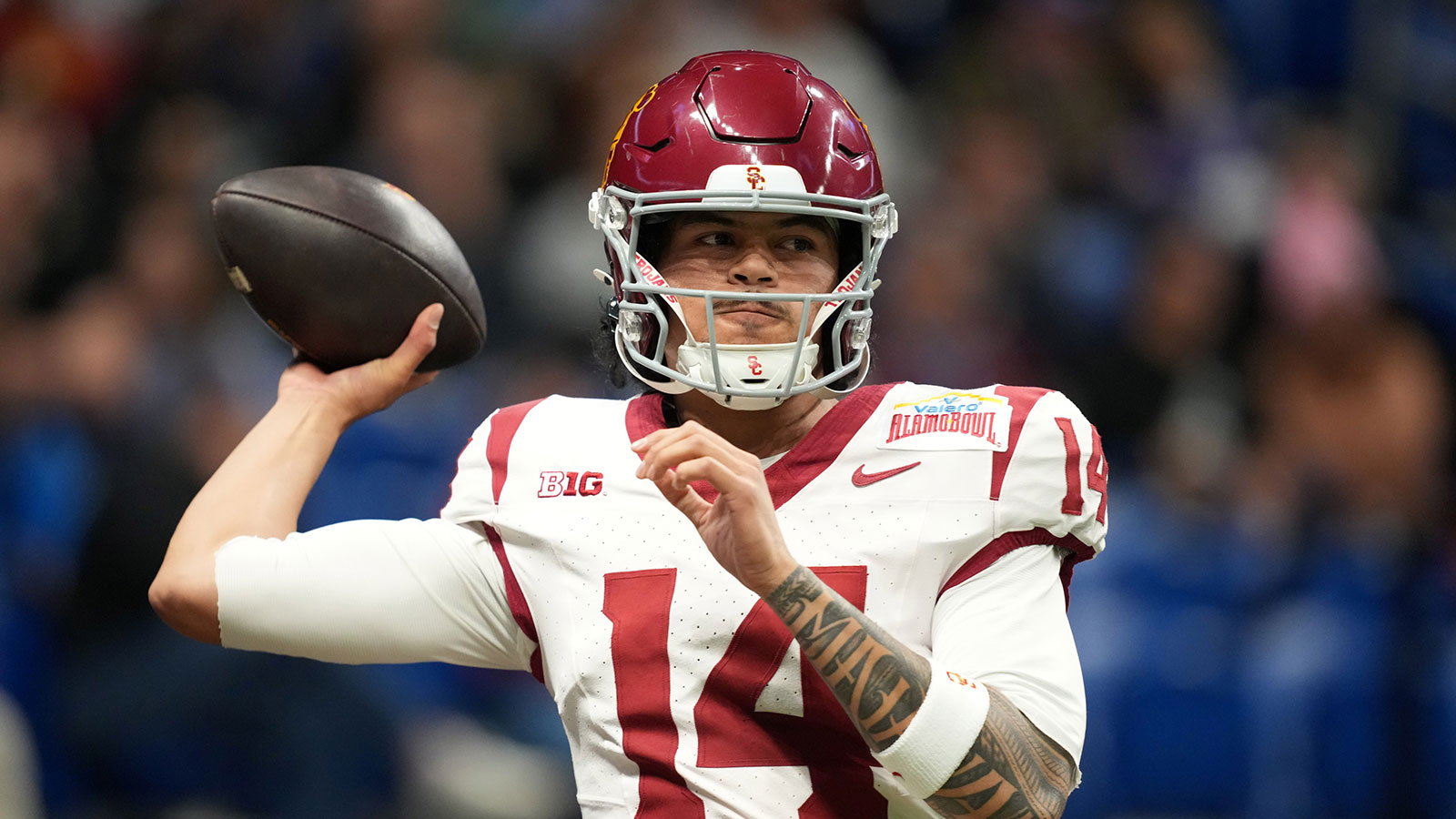
Round 3, Pick 78: Jayden Maiava, QB, USC
Taking Jayden Maiava in the third round would cause some debate among Vikings fans. That doesn’t make it a bad pick. He’s got NFL size, good mobility, and a strong arm. He’s at his best when he can throw downfield and let receivers work. Playing at USC helps and hurts — the system is friendly, but his flaws get exposed more.
The big question is consistency. His timing and decision-making vary from game to game. But for Minnesota, this isn’t a desperate move. It’s a developmental pick behind whoever starts between McCarthy and Murray. Quarterback uncertainty can ruin seasons. The Vikings can’t assume this situation fixes itself.
Round 3, Pick 87: Antwan Raymond, RB, Rutgers
Antwan Raymond looks like a perfect fit for O’Connell’s scheme. He handled a heavy workload at Rutgers. He runs with balance, powers through contact, and has enough burst to create big plays instead of just grinding out three-yard gains. At 5-foot-11 and 205 pounds, he’s more than a change-of-pace back.
The Vikings need a run game that punishes teams for playing light boxes. Raymond can do that. He keeps the offense on schedule and takes pressure off the quarterback.
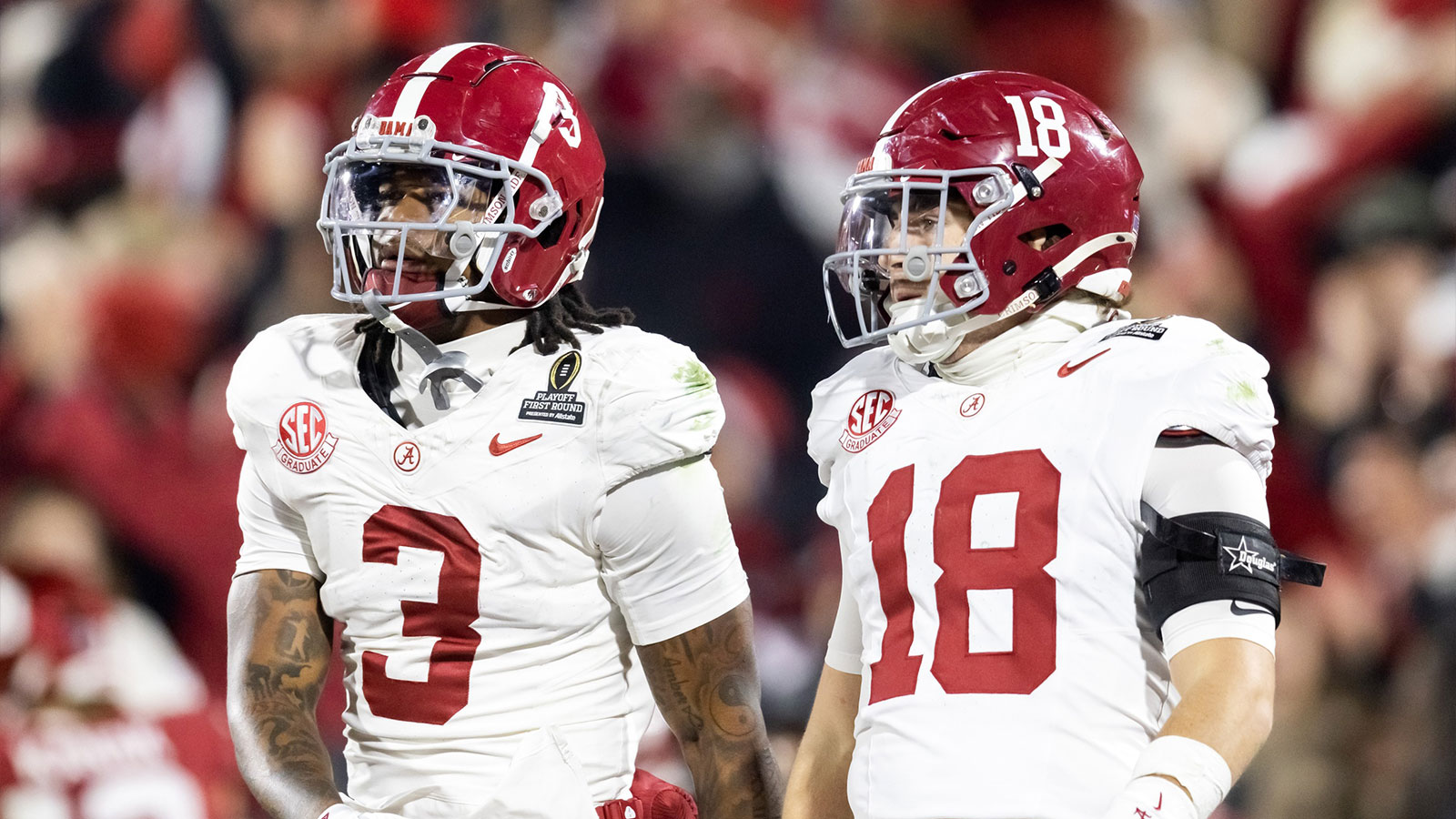
Round 4, Pick 112: Bray Hubbard, S, Alabama
Bray Hubbard is interesting because of his background. He was a high school quarterback, so he reads the field well from the back end. He’s played a lot at Alabama. He’s physical coming downhill and has the range to play outside the box. That sets him up for early special teams work and eventual defensive snaps.
The Vikings need safeties who can communicate, disguise coverage, and tackle. Hubbard plays with urgency in run support. That matters in the NFC North.
Round 5, Pick 152: Samson Okunlola, G, Miami
Samson Okunlola is a classic Day 3 upside pick. He was one of the top offensive line recruits in the country coming out of high school. He still has the size, length, and raw power. The question is whether his technique catches up.
In Round 5, this gamble is worth taking. The Vikings can develop a former five-star talent without needing him to start right away. Offensive line depth gets expensive fast. Okunlola could outplay this draft slot significantly.
Round 6, Pick 211: McKale Boley, T, Virginia
McKale Boley has the kind of experience you want from a late-round tackle. He started at left tackle at Virginia. He battled injuries but developed into an All-ACC caliber lineman. He’s not a perfect prospect, but his size and starting experience make him a candidate for a swing tackle role.
For Minnesota, this is about depth. They already took Green in the first round, but you can never have enough offensive linemen. Boley gives them a guy with real college experience who can compete for a backup job.
Round 7, Pick 230: Ashton Stamps, CB, Arizona State
Ashton Stamps is a smart seventh-round flier. He started at LSU, which means he’s played real snaps in a major conference. He can tackle and make plays on the ball. His transfer to Arizona State gives him a chance to reset after a role change. That kind of background often produces value late.
Round 7, Pick 239: J’Mond Tapp, ED, Memphis
J’Mond Tapp is the edge rusher this class needed late. His college career has been up and down, but the physical tools are there — solid frame, good acceleration, enough pass rush moves to justify a seventh-round pick. He’s a projection, not a finished product.
The Vikings need edge depth like every other team in the NFC North. Tapp comes in competing for special teams snaps and a developmental pass rush role. Low cost, potential payoff.
This draft class doesn’t fix everything for Minnesota. But it strengthens the roster in the areas that decide close games. That’s a smart approach for a team that’s stuck between being good and being great. The Vikings have enough skill talent to compete. The foundation just needs more work. A draft like this gives O’Connell a tougher, deeper, more versatile roster before another season of quarterback questions.
Leave a Comment