
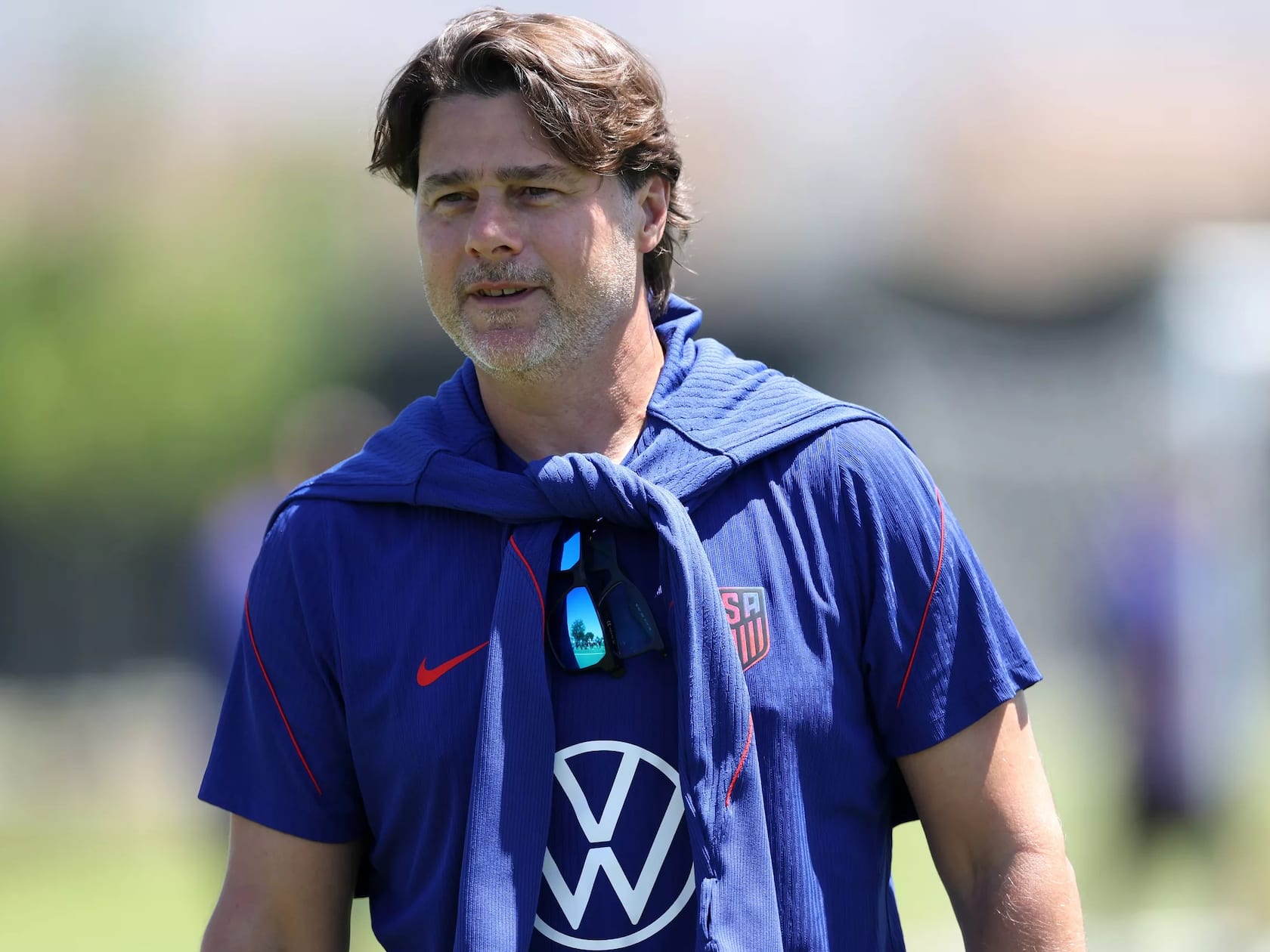
The weight of a nation rests on Mauricio Pochettino’s shoulders—and according to sources close to the U.S. Soccer Federation, the Argentine mastermind is cooking up something far more dangerous than anyone expected.
When the United States last hosted the World Cup in 1994, the program was a laughingstock. No professional league. No identity. Just a scrappy team that somehow clawed its way to the Round of 16 before falling to Brazil. That Cinderella story was cute. This time? Insiders say Pochettino isn’t here for nostalgia—he’s here to build a dynasty.
The Pochettino Revolution: From Chaos to Control
Gregg Berhalter laid the foundation with a possession-heavy, positional style. But sources tell us Pochettino took one look at that system and reportedly said, “Nice start. Now watch what happens when you add real venom.”
What he’s built is a tactical monster. Out of possession, the USMNT snaps into a 4-2-3-1 or 4-4-2 mid-block that clogs the middle of the pitch like a freeway pile-up. Opponents are forced wide, where Pochettino’s pressing traps allegedly trigger with the precision of a SWAT team. The double pivot isn’t just a shield—it’s a wrecking ball that crushes counterattacks before they start.
In possession, the team morphs into a 3-2-5 shape that creates numerical overloads up front. But here’s the scary part, according to tactical analysts we spoke with: Pochettino has injected a South American fluidity that makes the system unpredictable. Players rotate positions constantly, forcing defenders into split-second decisions that often end in disaster.
The Christian Pulisic Factor—And the Right Side Nightmare
Christian Pulisic, America’s biggest star, has been unleashed as a roaming playmaker from the left half-space. Instead of hugging the touchline, he drifts inside like a ghost, while Antonee Robinson bombs forward to provide width. It’s a partnership that sources say has German scouts already taking notes.
But the right side is where the real chaos lives. Timothy Weah is deployed as a pure speed merchant, stretching defenses to the breaking point. Sergiño Dest, meanwhile, is reportedly told to abandon his defensive duties and join the press like a heat-seeking missile. One insider described the right flank as “organized insanity.”
The Goalkeeping Crisis That Could Sink Everything
Here’s where the drama peaks. For decades, the USMNT could rely on legendary shot-stoppers like Tim Howard and Kasey Keller to bail them out when the system cracked. That safety net is gone—and sources say Pochettino is quietly panicking.
Matt Turner and Matt Freese are locked in a tense battle for the starting job, but neither has convinced the coaching staff. In the final friendly against Germany, Freese’s hesitation on a routine cross led to a goal that drew sharp criticism from broadcast analysts. One source told us, “If the goalkeeper can’t sweep behind Pochettino’s high line, this team is one through-ball away from disaster.”
The Golden Generation’s Star-Studded Arsenal
Pochettino’s 26-man roster reportedly features a staggering 21 players with international trophies, including Champions League winners like Pulisic. The attack is a three-headed monster: Folarin Balogun (who scored in nine straight games for Monaco), Ricardo Pepi (who led PSV to a third straight Eredivisie title), and Haji Wright (whose 18 goals fired Coventry to promotion).
Together, these three racked up 56 club goals in the 2025-26 season. If Pulisic’s creativity and Weah’s verticality can feed them, opponents are in serious trouble.
Host Nation Pressure: The Real Test
When the squad arrived at their training base in Irvine, California, they were reportedly greeted by 5,500 fans who had won a lottery just to watch a practice. Veteran defender Tim Ream told reporters the players were “pleasantly surprised by the excitement.” But insiders say the real pressure hasn’t hit yet.
Group D is no cakewalk: Paraguay, Australia, and Türkiye are all capable of causing an upset. And the opening match against Paraguay—the first World Cup meeting between the two nations in 96 years—will reveal whether Pochettino’s psychological work has paid off.
One thing is clear: this U.S. team has abandoned the reactive, counter-attacking style of the past. Pochettino has built a proactive, possession-hungry machine designed to dismantle opponents. Whether it can handle the crushing weight of a home World Cup remains the billion-dollar question.
Leave a Comment