
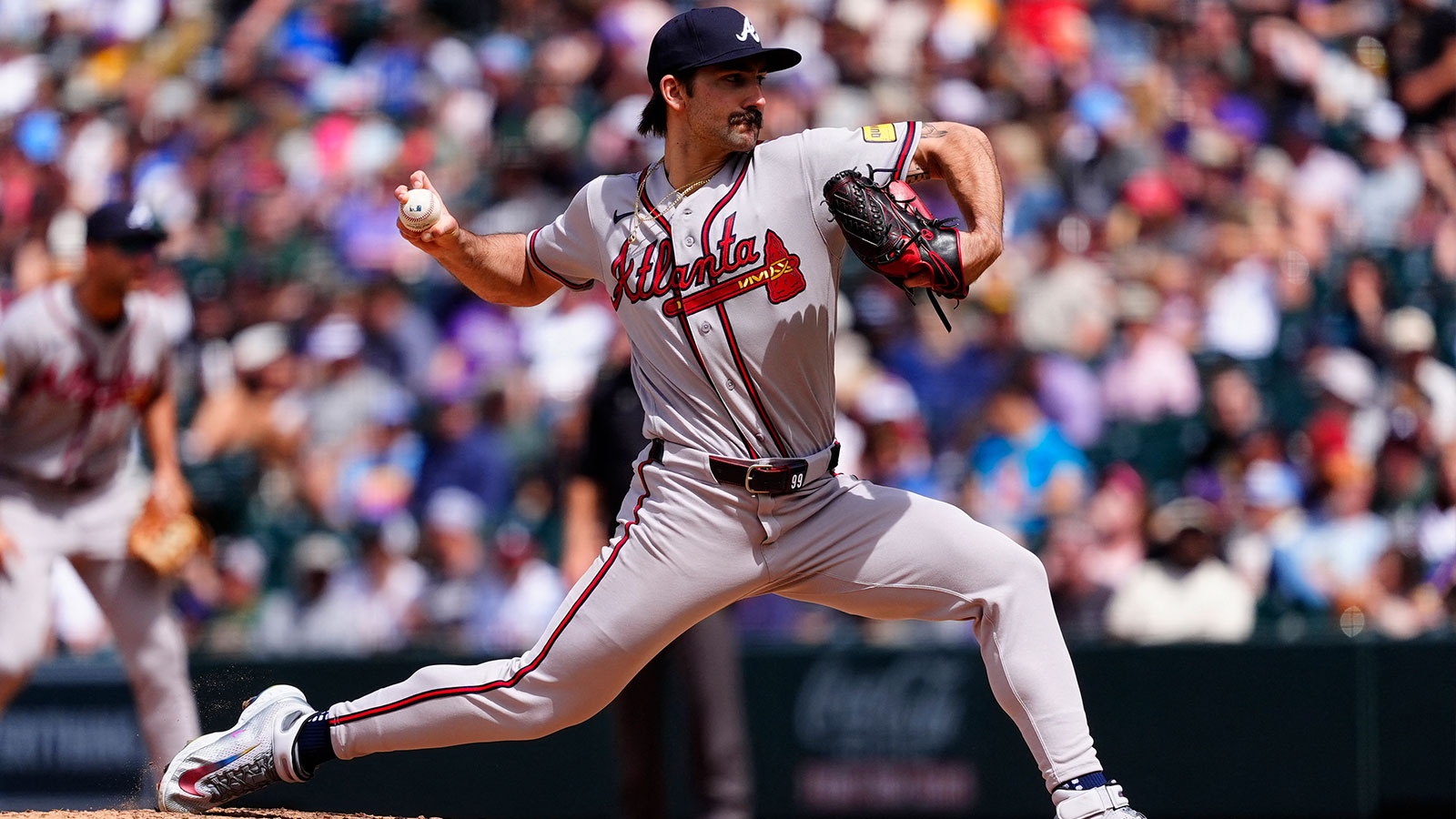
Something wasn’t right with Spencer Strider on Friday night, and it didn’t take a radar gun to figure that out. By the time the Atlanta Braves ace left the mound at Citi Field in the fourth inning, his fastball had dropped from the upper 90s to barely scraping 88 mph — a red flag that sent the dugout scrambling.
Strider exited the Braves’ 7–5 loss to the New York Mets with what the team later described as right arm soreness, specifically mentioning discomfort in both his shoulder and elbow. According to reports from the broadcast, manager Walt Weiss and a team trainer rushed to the mound after Strider issued a leadoff walk to MJ Melendez, and they walked him off the field without any visible drama — but the underlying numbers were anything but quiet.
The Velocity Crash Tells the Story
Strider opened the game sitting around 96 mph. By the third inning, his fastball was hovering in the 92–94 range. Then came the meltdown. His final four-seamers were clocked between 87.8 and 89.6 mph — a drop that, for a power pitcher like Strider, typically signals mechanical breakdown or physical distress. Fans online were quick to note the alarming trend, with some pointing to his workload over the past three seasons as a possible factor.
“His arm angle changed. You could see it from the stands,” one fan posted on X. “Looked like something in his elbow gave.”
The Braves have not yet announced whether Strider will undergo imaging or miss his next start. Given the mention of both elbow and shoulder soreness, the team is expected to proceed cautiously with a pitcher who signed a long-term extension less than two years ago.
A Rough Night Before the Exit
Before the injury became the headline, Strider was already having a brutal outing. He allowed seven earned runs on six hits over just 3-plus innings, including three home runs. The Mets jumped on him early in the first frame, when Bo Bichette and Juan Soto went back-to-back. Bichette added a grand slam later in the game, putting the Braves in an early hole they couldn’t fully climb out of.
Strider finished with 68 pitches, 43 strikes, three strikeouts, one walk, and one hit batter. His ERA for the 2026 season now sits at 5.31 across eight starts and 39 innings — a far cry from the dominant form he showed in 2023, when he posted a 3.86 ERA and a career-high 281 strikeouts.
For context, Strider has seen his ERA climb each of the past two seasons, from 2.67 in 2022 to 3.86 in 2023, then 4.45 over 23 games last year. The velocity dip Friday, combined with his 2025 numbers, raises legitimate questions about his durability heading into the summer.
How the Braves Responded
JR Ritchie came on in relief and gave Atlanta five solid innings, throwing 73 pitches and striking out five. His steadiness kept the game within reach while the Braves’ offense tried to rally. Matt Olson launched a home run, and Ozzie Albies collected two hits, but the nine-hit, five-run effort wasn’t enough to erase the damage from those early Mets homers.
The Braves still hold a 45–24 record and sit atop the NL East despite the loss. The Mets improved to 31–38. These two teams square off again Saturday afternoon in Queens, with all eyes now on Strider’s availability and what the Braves’ medical staff finds next.
Leave a Comment