
The 2026 World Cup is the biggest soccer tournament ever staged. Forty-eight teams. Three host nations. And a staggering number of players whose passports don’t match their birthplace — nearly a quarter of the entire pool, by the tournament’s own count.
That fact alone makes this World Cup a living argument against the kind of nationalism that politicians like Donald Trump and Viktor Orban have been selling. Trump tried to put his stamp on the tournament early, yapping about American greatness while FIFA president Gianni Infantino handed him the FIFA Peace Prize. Then Trump declared war on Iran, which was literally a participating nation. So much for peace.
But the tournament itself refused to cooperate with that narrow vision. The players told a different story, one about escape, survival, and the messy beautiful reality of modern identity. And you couldn’t watch a single game without seeing it.
The team that proved the point better than anyone
Curaçao is the clearest example. Only one player on their World Cup roster — Tahith Chong — was actually born there. The rest came from the Netherlands, raised in Dutch academies, holding Dutch passports. They chose to play for Curaçao anyway. And when the tiny island nation qualified, people celebrated not just in Willemstad but in neighborhoods across the Netherlands. That’s diaspora. That’s family. That’s the opposite of hard borders.
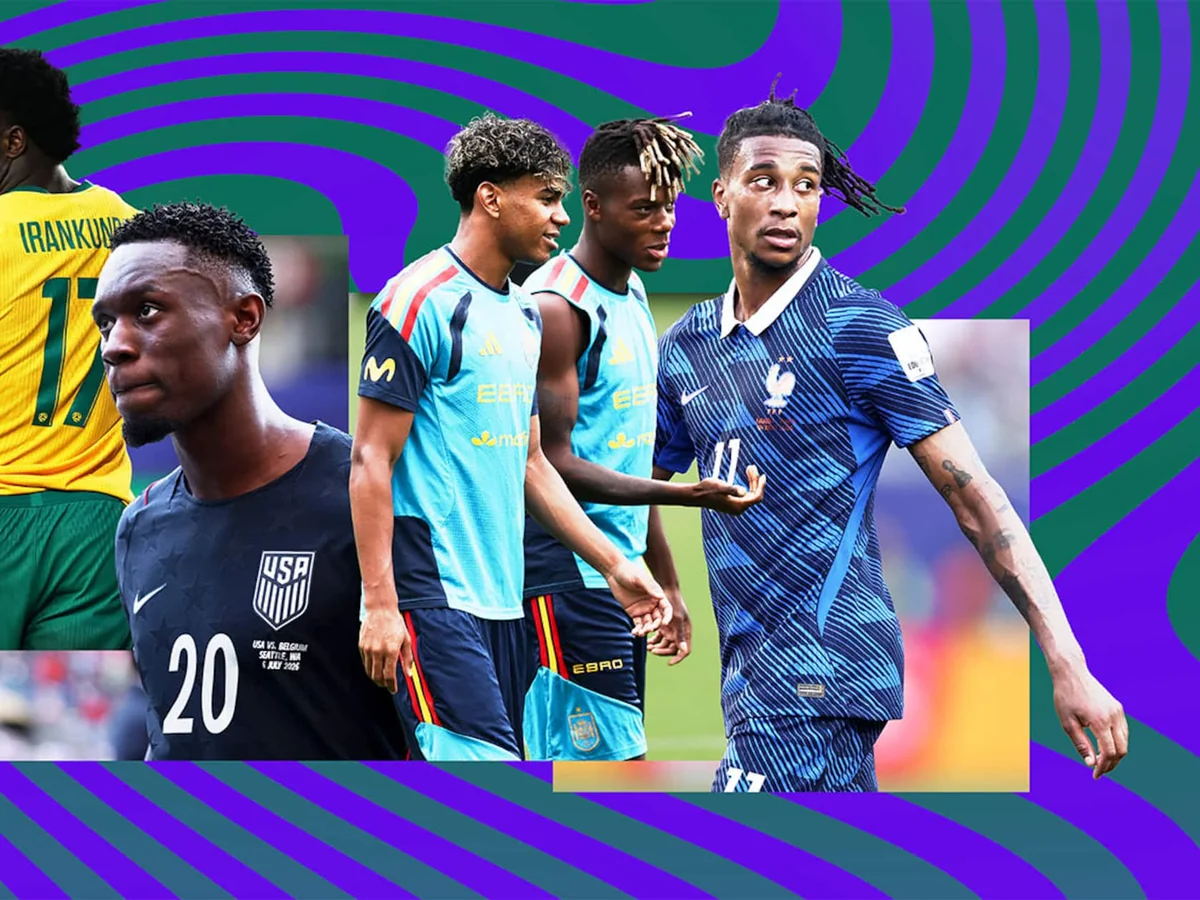
Spain’s Euro 2024 title was built on the same foundation. Nico Williams, whose parents crossed the Sahara Desert while his mother was pregnant with his brother Iñaki, tore down one wing. Lamine Yamal, the son of Moroccan and Equatorial Guinean immigrants, tore down the other. Together they made Spain dynamic for the first time in years. That victory wasn’t a coincidence. It was the direct result of letting people move, struggle, and find a home somewhere new.
Alphonso Davies was born in a refugee camp in Ghana, his parents having fled Liberia’s second civil war. Five years later the family landed in Canada. Now he’s a Bayern Munich star and the face of Canadian soccer. Nestory Irankunda scored on his World Cup debut for Australia — a kid whose parents escaped Burundi’s civil war on foot, through Tanzania, eventually settling in a working-class suburb of Adelaide where he learned the game in a front yard.
These aren’t exceptions. They’re the norm now.
What happens when you try to lock identity down
Orban once said Europeans should not mix with non-Europeans. He passed laws forcing migrants into shipping containers. He compared non-Europeans to terrorists. Meanwhile a player named Loïc Négo — born in France, Guadeloupean heritage — was starting for Hungary’s national team. The irony is almost too heavy to carry.
France’s best team in history came straight out of the banlieues, the suburban housing projects outside Paris where kids from African immigrant families play football in narrow streets before any formal academy gets to them. Kylian Mbappé. Paul Pogba. Thierry Henry. Patrick Vieira. Michael Olise, who says he’s from four countries at once: France, Algeria, Nigeria and England. All of them products of that environment. All of them world-class.
The World Cup thrives on uncertainty, on the unpredictable mix of cultures and stories that no politician can control. Hard identities give politicians something to campaign on. But they don’t win soccer games. They don’t produce players like Williams or Davies or Irankunda. And they certainly don’t make a tournament worth watching.
This World Cup did. Because the players on the field were living proof that the push to box people in is not just wrong — it’s boring. And the beautiful game doesn’t do boring.
Leave a Comment