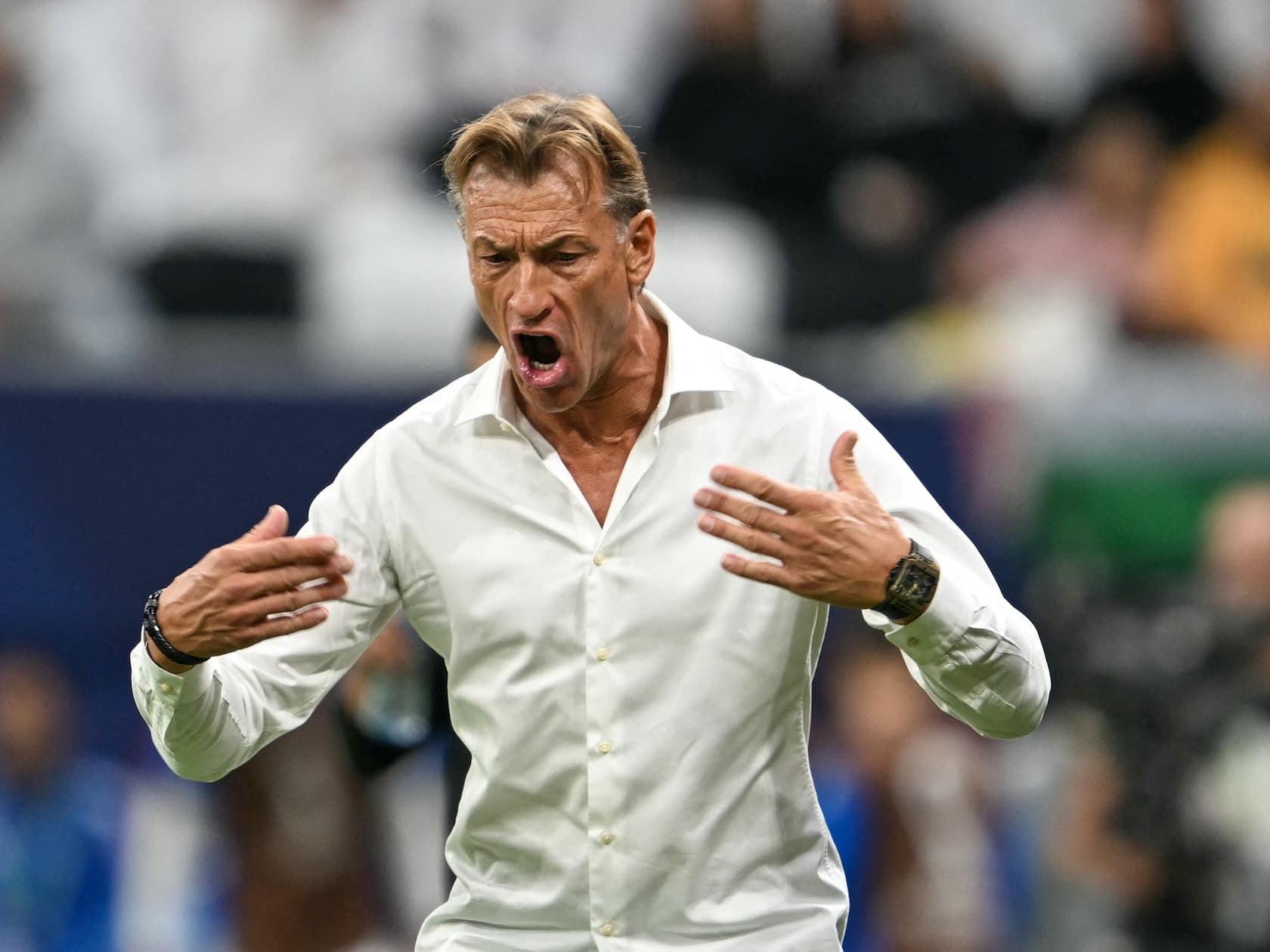
The Tunisian Football Federation made it official early Tuesday morning: Hervé Renard is the new head coach of the Carthage Eagles. The announcement landed on the federation’s Instagram account, confirming what had been widely reported by multiple outlets overnight.
Renard replaces Sabri Lamouchi, whose tenure lasted just a few months. Lamouchi’s undoing came in Tunisia’s opening match of the 2026 World Cup, a brutal 5-1 loss to Sweden. That defeat left the Eagles of Carthage in a deep hole in Group E, where they still have to face the Netherlands and Japan. The federation didn’t hesitate to make the change.
For Renard, this will be his third World Cup as a head coach. He led Saudi Arabia in 2022 — famously knocking off Argentina in the group stage — and Morocco in 2018. His reputation as a crisis manager and a man who thrives in high-pressure tournament settings is well established. But this job brings a unique challenge: Tunisia’s World Cup campaign is already on life support.
“We believe Hervé is the right man to guide this team through a difficult moment,” a federation source said, speaking on condition of anonymity because they were not authorized to discuss the hiring publicly. The team has not confirmed any specific contract terms, but reports suggest Renard signed through the end of the World Cup cycle, with an option to extend depending on performance.
Fans online reacted with cautious optimism. On social media, some pointed to Renard’s history of pulling off upsets as reason to hope. Others noted the sheer difficulty of advancing from a group that includes two top-10 teams. One commenter wrote: “Lamouchi was a disaster, but can anyone really fix this mess in two matches?”
The fixture list leaves no room for a slow start. Tunisia faces the Netherlands next, then closes group play against Japan. The Dutch are favorites to top the group, while Japan is a dangerous team with a recent track record of strong tournament performances. A draw against either would be an achievement — two wins would require something close to a miracle.
Renard is no stranger to miracles. In 2012, he led Zambia to the Africa Cup of Nations title — a story so unlikely it inspired a documentary. He then won the same tournament with Ivory Coast in 2015. That ability to galvanize a squad quickly, to create belief where none existed, is exactly what Tunisia needs now.
The bigger question is whether that magic can translate to a World Cup stage where the margin for error is razor thin. Tunisia’s roster has talent — players like Wahbi Khazri and Hannibal Mejbri can change a game — but consistency has been an issue. Renard’s first task will be to restore defensive organization and confidence, two things that evaporated under Lamouchi.
Whether he succeeds or fails, one thing is certain: the Eagles of Carthage will not go quietly.
Leave a Comment