
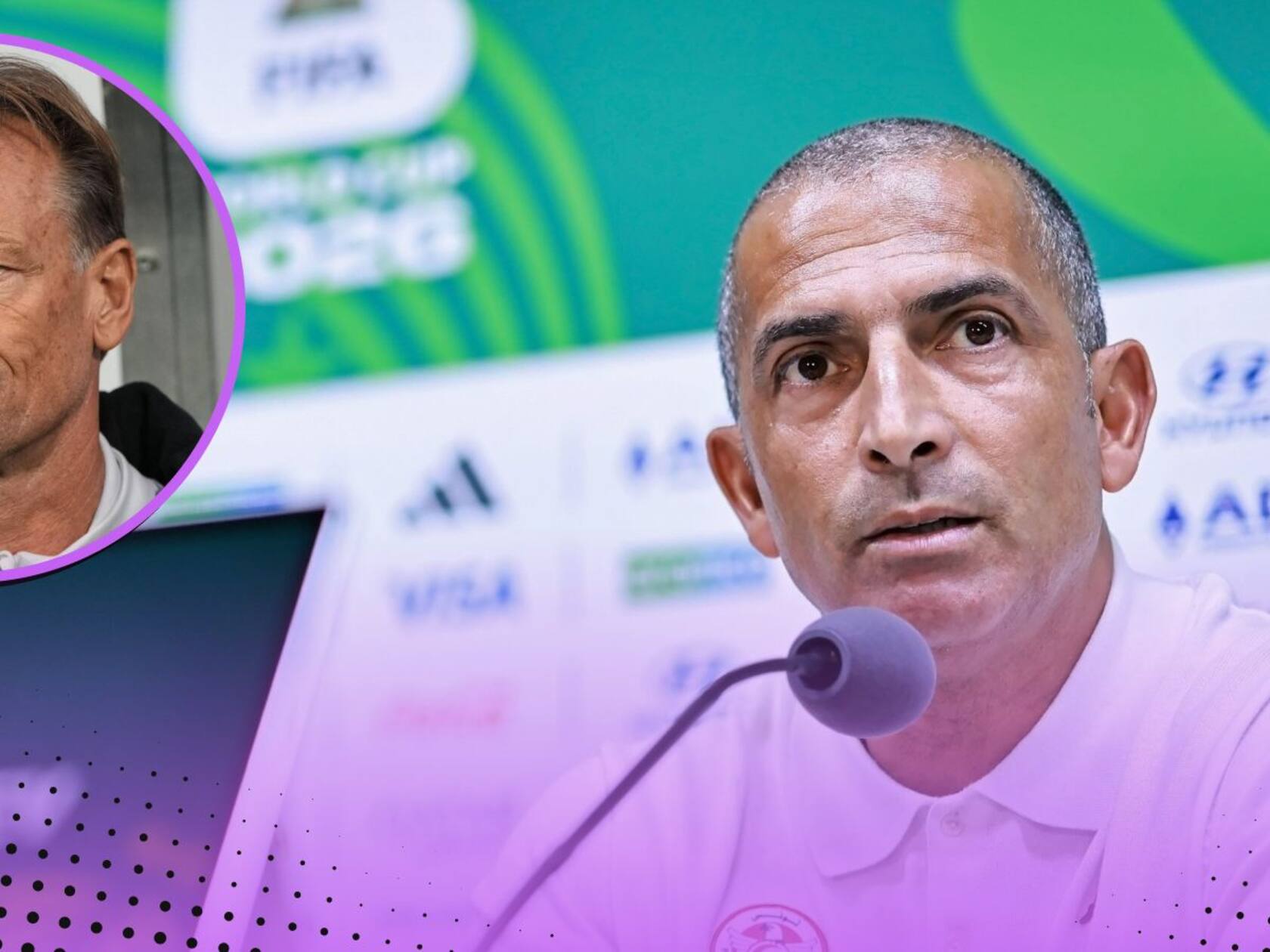
The 2026 World Cup is less than a week old, and already the managerial carousel has claimed its first victim. Tunisia parted ways with head coach Jalel Lambouchi following a 5-1 shellacking by Sweden — the North African side’s heaviest defeat in tournament history. It marks the sixth time a manager has been dismissed during a World Cup finals since 1954, a surprisingly rare event in a sport where coaching tenures at club level have become increasingly volatile.
Lambouchi’s firing is notable not just for its timing — after only one group match — but because Tunisia had historically been a model of quiet, predictable elimination. The Carthage Eagles typically exit after three matches by a set of narrow defeats and a draw. The 5-1 drubbing by a Swedish team that had struggled in qualifying was a shock to the system. Algeria’s Hervé Renard, a tournament specialist with two Africa Cup of Nations titles, has already been installed as replacement for the remaining group games against Japan and the Netherlands.
To understand this decision, it helps to look back at the handful of other mid-tournament sacking sagas. Each tells a story of desperation, stubborn federations, and — in one case — allegations of match-fixing.
The earliest case was technically a resignation. In 1954, Scotland manager Andy Beattie quit after the Scottish FA allowed him to name only 13 players for the country’s World Cup debut. His side lost 1-0 to Austria (then a legitimate powerhouse) and were crushed 7-0 by Uruguay while playing in heavy woolen shirts during a Swiss heatwave. The Scots have never quite lived down that wardrobe malfunction.
Forty-four years later, the 1998 World Cup in France produced a cluster of dismissals. Saudi Arabia fired Carlos Alberto (the Brazilian, not the Italian) after a 1-0 loss to Denmark and a subsequent thrashing by the host nation. Without him, the Saudis salvaged a 2-2 draw with South Africa in their final group game — a match featuring Sami Al-Jaber and Shaun Bartlett among the scorers.
South Korea also axed their manager in 1998. Cha Bum-kun was sacked after heavy losses to Mexico and the Netherlands. According to his Wikipedia entry, Cha blamed the Korean FA for the poor showing, citing a lack of bonuses and alleging that pro soccer games in Korea were fixed. He was banned for five years. Kim Pyung-seok took over for the final match — a spirited 1-1 draw with Belgium that eliminated the European side.
Tunisia themselves fired Henryk Kasperczak in 1998 after a 2-0 loss to England and a 1-0 defeat to Colombia. The Poles-born coach was replaced for a morale-boosting 1-1 draw with Romania. (Kasperczak later returned to manage Tunisia in the 2010s, proving that time — and the Tunisian federation — can heal some wounds.)
So what makes managers so relatively safe at the World Cup compared to the club game? For one, national federations rarely have a deep bench of acceptable replacements on site. Tournament logistics make mid-competition changes messy. And there’s a sense that World Cup cycles are measured in four-year blocks, not weekend results — except, apparently, when a 5-1 embarrassment forces a federation’s hand.
Whether Renard can salvage Tunisia’s campaign in 2026 remains to be seen. But if history is any guide, the new manager bounce at a World Cup is more about dignity than advancement. Only one team has ever won a knockout-round match after sacking a coach mid-tournament. And that was … no one yet.
Leave a Comment