
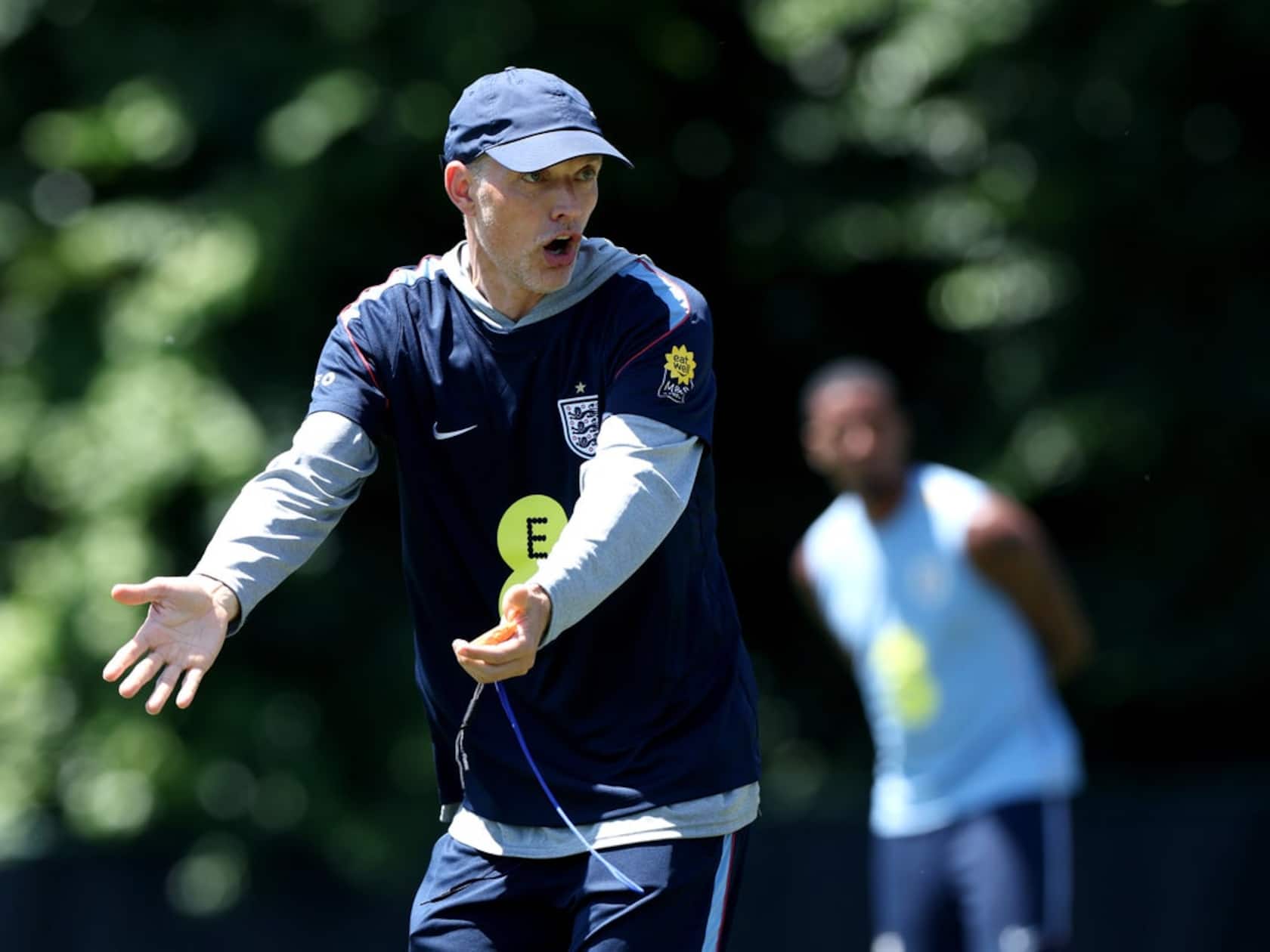
For all the talk about group-stage matchups and knockout bracket math, the 2026 World Cup has already reminded everyone that predictions are mostly a fool’s game. Cape Verde shut out Spain. Australia stunned Turkey. Morocco held Brazil. The tournament’s new 48-team format has only added more variables, but for England, the most critical advantage to winning Group L has almost nothing to do with who they’d face — and everything to do with where they’d have to go.
Thomas Tuchel’s squad, based in Kansas City for the group stage, faces a logistical gauntlet once the knockout rounds begin. FIFA requires teams to arrive at the host city at least two days before each match, and with only four to six days between games, direct travel between venues becomes the only option. That’s where geography becomes strategy.
The Long Road vs. the Short One
If England tops Group L, the knockout route looks like this: Atlanta, Mexico City, Miami, back to Atlanta, then New Jersey for the final. Barring the trip to Mexico, every game stays in the Eastern time zone. Total travel distance for the knockout phase: roughly 4,600 miles.
If they finish second in the group, the itinerary changes dramatically. The round of 32 would pit them against a third-place finisher — likely a weaker opponent — but the quarterfinal would shift to Los Angeles. That adds a west coast swing, pushing the total travel distance past 5,900 miles. The time zone shift matters too: LA is two hours behind Dallas (the semifinal site) and three hours behind New Jersey.
History Doesn’t Love Jet Lag
Sweden’s run at the 1994 World Cup offers a cautionary tale. After playing in California, Michigan, Texas, and back to California, they had just two days to recover from a 120-minute quarterfinal before facing Brazil in the semis. Forward Kennet Andersson later said players weren’t at full strength. “We were not in the same condition as we had been in the group stage,” he recalled.
Tuchel and the FA have built their entire setup — training base, travel schedules, recovery protocols — around minimizing those disruptions. The Kansas City location was chosen because no venue is more than a four-hour flight or a two-hour time difference away. But that advantage disappears once the knockout bracket forces a cross-country flight.
Beyond the Map
There are psychological benefits to topping the group, too. Momentum and confidence carry weight, and a clean sweep against Croatia, Ghana, and Panama would allow Tuchel to rest key players in the final group match — a luxury that could pay dividends in the later rounds. It also quiets the external noise that tends to build when England stumbles early.
But the core reason to finish first is simpler than any bracket projection: avoid Los Angeles. The opponents en route to the final are unpredictable, especially with this expanded field. The physical route, however, is already drawn. One road is kinder on the body and the clock. England’s ability to follow it may determine how far they actually go.
Leave a Comment