
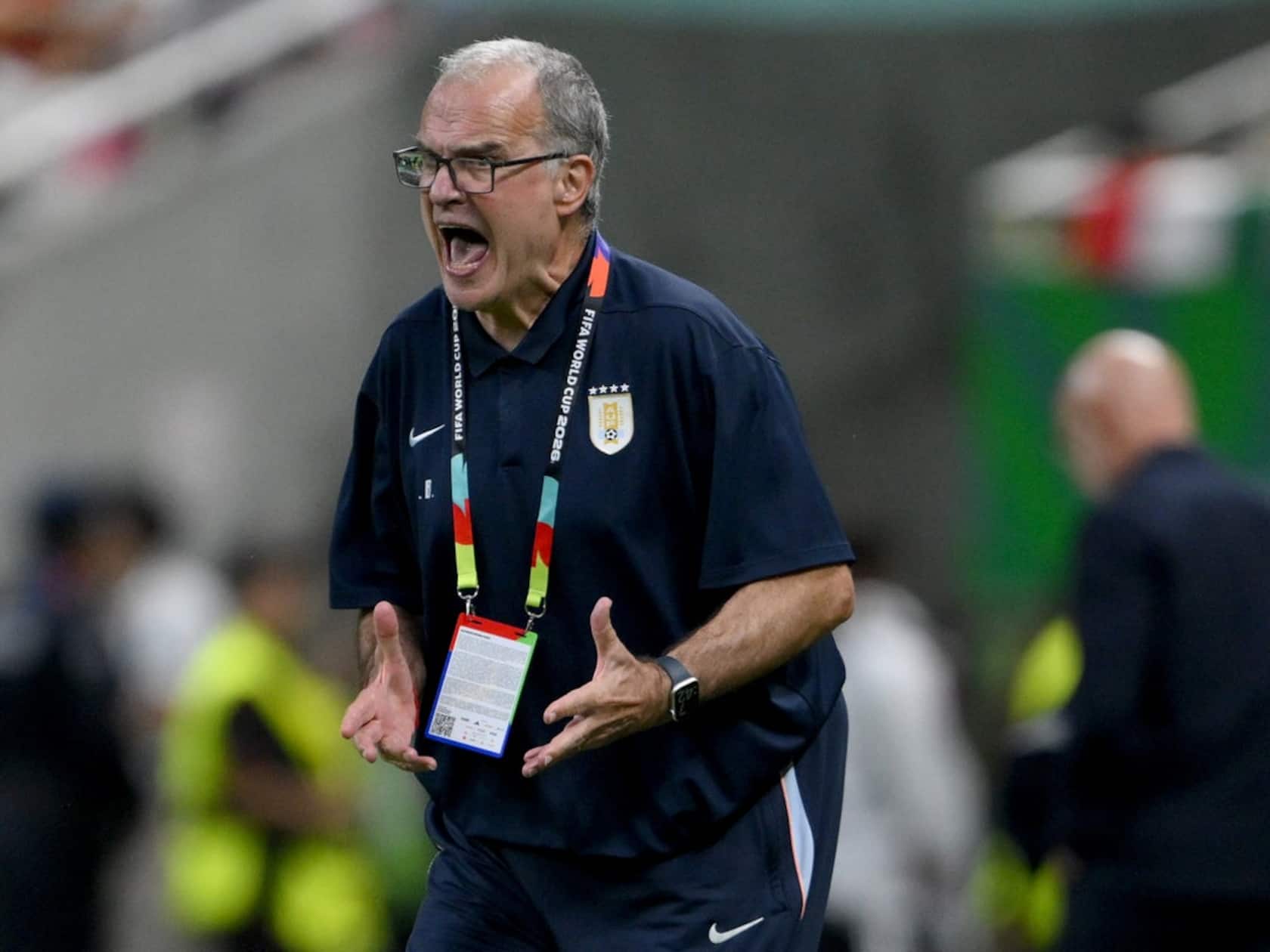
Five minutes. That’s how long Luis Suarez sat across from Marcelo Bielsa at the 2024 Copa America, laying out the frustrations that had been building in the Uruguay camp. The players wanted to greet fans at the hotel. They wanted staff to be allowed to eat with them. Minor stuff on paper, but it was the kind of thing that had always been fine before Bielsa showed up.
Suarez finished talking. He waited. Bielsa looked at him and said, “Thank you very much.” That was it. No discussion, no compromise, no acknowledgment that the team’s most iconic player had just bared his soul.
Within weeks, Uruguay lost a semifinal to Colombia, Suarez retired from international soccer, and he went on a media tour that tore open a wound this tiny, soccer-obsessed nation has never been able to stitch back together. Before that rupture, Uruguay had 11 wins in 18 games under Bielsa, including wins over Brazil and Argentina. After it? Five wins in 17 matches, a 5-1 hammering by the United States, and a World Cup 2026 campaign that produced zero wins against a group featuring Saudi Arabia and Cape Verde. The Uruguayan federation reportedly canceled the team’s charter flight home. Players booked their own commercial seats.
The Bielsa Problem
Bielsa is the anti-Ancelotti. Carlo Ancelotti can manage egos and vibes better than almost anyone in the sport, which is why he called Neymar before this tournament and told him flatly: you’ll be a sub, but I want you here. Ancelotti knows it’s better to have a star inside the tent than outside. Bielsa gave Suarez a one-word answer when he approached him about a farewell run. It wasn’t yes.
Nahitan Nandez, a Suarez ally, was left off the World Cup roster. Bielsa publicly insisted it was for “footballing reasons only.” Matias Vecino had been cut in 2024. But quieter Suarez allies stayed on the team, and the camp split before they even unpacked in Cancun. Bielsa needs total buy-in to work his tactical magic — Pep Guardiola called him a genius — but he was managing a squad seeded with doubt and split by loyalty.
A Country Running on Fumes
Uruguay has always punched above its weight. La garra charrúa, that famous never-say-die spirit named for the indigenous people of the pampas, carried teams built on tough defense and elite attackers like Forlan, Cavani, and Suarez. But the elite talent now lives in midfield and defense. Federico Valverde had the kind of tournament that buries a small nation’s hopes. Darwin Nunez flailed through games like a free agent with something to prove but no proof to offer. And Fernando Muslera made errors that led to goals in three straight matches. A veteran keeper with that kind of stretch sinks anyone.
Last week, senior players including Manuel Ugarte, Rodrigo Bentancur, and Valverde went to Bielsa asking for less intense training and a more counter-attacking approach against Spain. Bielsa said no. Spain won. That loss likely sealed Bielsa’s exit.
What Comes Next
Uruguay will be back. Six of ten CONMEBOL teams make a 48-team World Cup. Missing is hard. But the next cycle will look different. Older talent won’t return. Younger players like Joaquin Lavega and Santiago Homenchenko are waiting. Uruguay needs to stop looking backward. Last year, Montevideo held a fancy reception for the 75th anniversary of the Maracanazo. That win over Brazil in 1950 is still the country’s most famous moment on any global stage. Two World Cup titles, both generations old. That fuel eventually runs out.
The miracle might have been that a country the size of Wales could keep pace this long. But right now, they’re drowning in Cancun, packing up a training base that never felt like home.
Leave a Comment