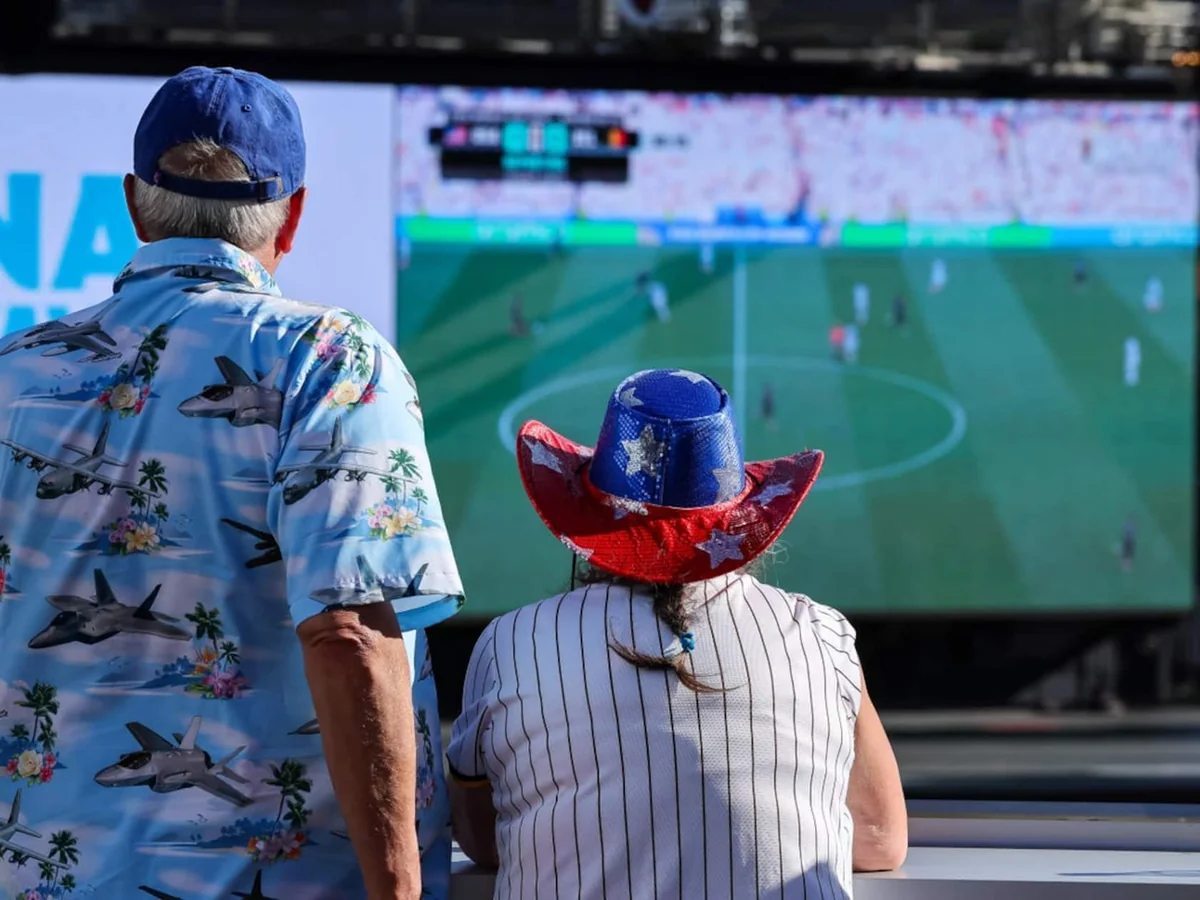
Ashleigh Hallam teaches English as a second language in Indiana. But lately, she’s the one learning something new. She’s been watching World Cup matches on Telemundo — in Spanish — even though she barely speaks it.
She’s not alone. A growing number of English-speaking Americans are making the same choice, tuning into Spanish-language broadcasts of the tournament despite limited comprehension. Nielsen data shows roughly half of all World Cup viewers in the U.S. have watched at least some matches in Spanish. That’s notable considering about 20 percent of the country is Hispanic.
Part of the appeal is simple: no commercials during hydration breaks. Fox cuts to ads during those stoppages. Telemundo doesn’t. So viewers get to watch players huddling, coaches pacing, teammates tapping each other on the back. It’s the game inside the game.
Comedian Trevor Noah pointed this out during one of his YouTube watch parties. He’d switched to the Spanish feed and said the uninterrupted coverage changed everything. You see the tension build, he explained. You see who’s stressed. You see the little moments that ads erase. Noah thanked Telemundo directly, and the network responded by publicly appreciating the shoutout.
Then there’s Andrés Cantor. His signature “¡goooooool!” call has become its own kind of American sports meme. Even people who don’t understand Spanish recognize the sound of a goal coming. It’s theater. It’s anticipation. And it’s contagious.
Jackson Braunius, a Michigan native watching a US game from a Miami steakhouse, admitted he knows maybe five Spanish words. “Cerveza” is one of them. But he had no trouble following the action on Telemundo. He figured out the pattern: quiet announcers mean nothing’s happening. Louder means something might happen. Full volume means a goal is probably coming.
Cost is another factor. Peacock, which includes Telemundo, is often cheaper than the streaming options for Fox. For casual fans or people just tuning in for the World Cup, that math matters.
William Kennedy of Miami is married to a Colombian woman and knows just enough Spanish to order food. But he regularly picks Telemundo over English broadcasts. “When the American commentators are doing the game, I don’t know what game they’re watching,” he said. “I’d rather get the excitement in Spanish. They’re talking, then talking really fast, then getting loud — and your brain just goes, ‘Oh, something’s happening.'”
For Hallam, the World Cup has become a bridge with her Spanish-speaking students. She got into soccer a few years ago when her daughter joined a rec league. She ended up coaching through high school. Now she’s hooked on both the sport and the Spanish broadcasts.
“It’s just very comforting,” she said. “We’re really enjoyed it and I hope we get to continue. The next World Cup, we’re going to watch it just like this.”
The viewership numbers back up the trend. Fox Sports said the Belgium-US match peaked at about 41 million viewers, making it the most-watched soccer telecast in U.S. history. Across Fox and Telemundo, the average audience hit at least 45 million. For context, the Super Bowl drew about 125 million.
This could reshape how World Cup TV rights are sold moving forward. Reports suggest English and Spanish rights might be packaged together for 2030, a change from the current setup. If that happens, it would be a direct response to how many American viewers have already made the switch.
Leave a Comment