
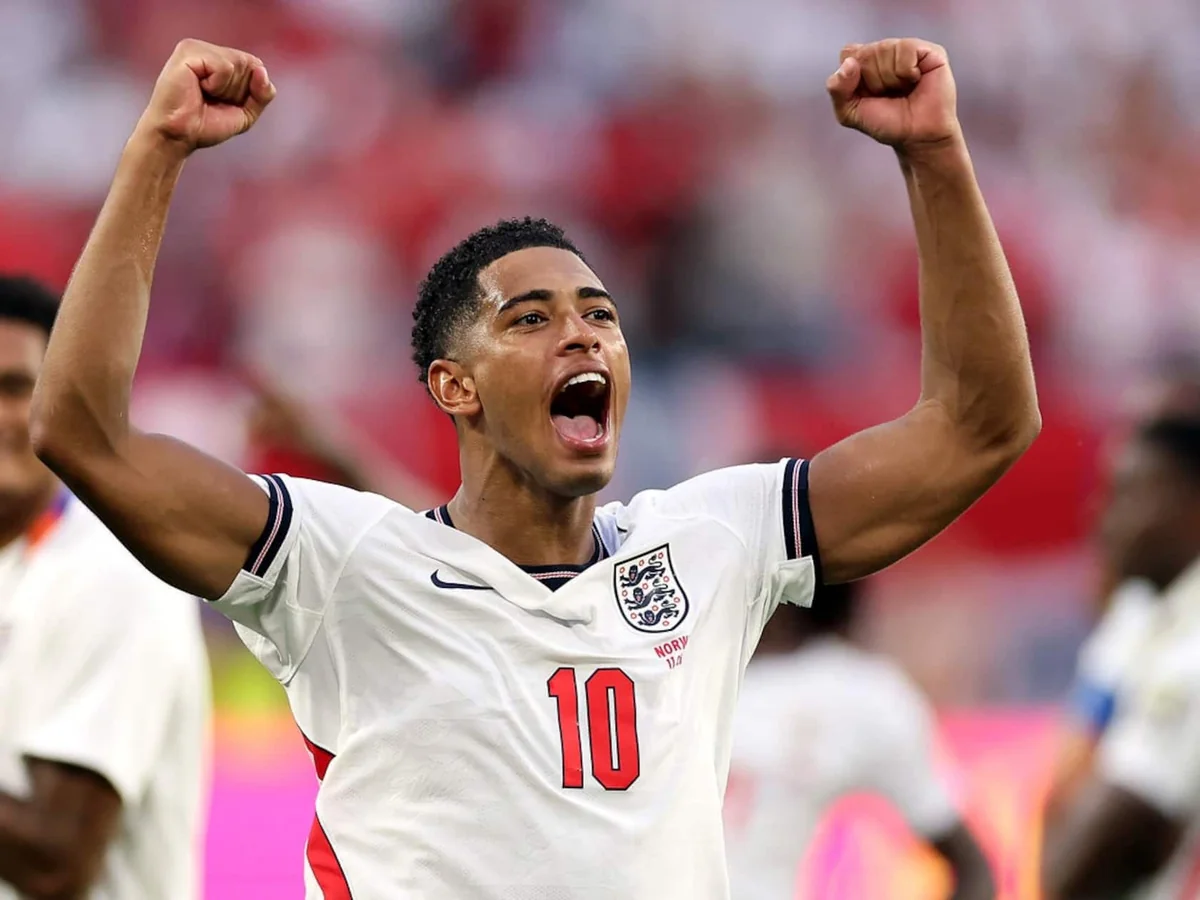
Three weeks ago, Jude Bellingham wasn’t even a lock to start for England at the World Cup. His own manager, Thomas Tuchel, called the decision between Bellingham and Morgan Rogers a 50-50 call, like it was a coin flip in the tunnel. Now? Bellingham station on the Thameslink line has a new sign out front that reads “Jude Bellingham.” West Midlands Railway is letting anyone named Jude ride for free. And “Hey Jude” has joined “Three Lions” and “Wonderwall” on the official England victory playlist. Only one player gets his own song.
This tournament was supposed to be Harry Kane’s coronation, and maybe it still is. Kane’s sitting on 72 goals for the season, a number only Lionel Messi has topped. If England wins the final on Sunday, Kane might end the year holding a golden orb in Paris. But the story that keeps writing itself is Bellingham’s story. It was his goal that broke Croatia open. His goal that cracked Panama. His rapid double that briefly shut down the Azteca, which is harder than it sounds. And in the quarterfinal against Norway, his first goal was a moment of elite technique buried in a mess of bad play. His second was pure instinct, and it gave England a win they probably didn’t deserve.
What makes this arc wild is that Tuchel spent 18 months treating Bellingham like a problem to solve rather than a weapon to deploy. After shoulder surgery last September, Bellingham missed qualifiers. England played its best game under Tuchel without him, a 5-0 win in Serbia where Rogers looked great. So Tuchel left Bellingham out of the next camp, even after he was healthy. There was the infamous comment about Bellingham’s “repulsive” on-field behavior, which Tuchel later blamed on his mom and a language slip. He apologized. But the message was clear: Tuchel built a brotherhood without Bellingham, and he wasn’t sure the Real Madrid star could fit in.
Even making the World Cup squad didn’t guarantee Bellingham would start against Croatia. When Tuchel was asked why he picked Bellingham over Rogers, he said “it was really close.” Was it Bellingham’s big-game appetite, that knack for scoring when it matters? Tuchel said no. Just a 50-50 call. You don’t hear managers describe a 103 million dollar midfielder that way.
But over the last few weeks, Bellingham has shown why he’s not just another piece of England’s puzzle. He’s the piece, the one everything else clicks around. There are the goals and assists, obviously. But there’s also the way he bends games to his will. The way his presence in the tunnel makes opponents shrink a little. The way he stands 6-foot-something with those square shoulders and cheekbones, which is maybe not relevant to sports journalism but also, come on. The Norwegian defense went weak in the knees, and suddenly England was up 1-0 in a quarterfinal.
Then there are the tackles. Three in the second half against Croatia alone. Not dainty toe-pokes but full slides that take the man with the ball. The kind that gets the whole stadium humming “Juuuuuude” in that low octave. The kind that gets his teammates facing forward and changes the direction of the game.
FIFA’s stats tell the rest. Bellingham leads the tournament in sprints with 328, or 55 per game. That’s one sprint every 110 seconds across six games, including one played near the altitude of Mount Olympus and another in heat that would make Amazon tribesmen complain. He also leads in a category FIFA calls “offers to receive in between,” which is a fancy way of saying he stands in the most dangerous part of the field, where defenders are everywhere, and demands the ball anyway.
The comparisons to Steven Gerrard are fair. Gerrard could play anywhere. But Gerrard never played this well for England during a World Cup. Neither did Lampard or Rooney or Beckham or Owen. Bellingham’s individual run might be the best by an England player since 1966, surpassing Gascoigne at Italia ’90 and Lineker at Mexico ’86.
He still has that edge. He yells at referees and barks at teammates who don’t read his mind. His mom spent days before the Norway game reminding him not to get a yellow card and risk suspension. He took shots at Tuchel in post-match interviews, using his leverage to get things off his chest. But that edge has been weaponized into performances full of commitment and energy that set England’s tone. Tuchel might even take some credit for that, if he’s honest.
After the Norway game, thousands of England fans belted out “Hey Jude” while Bellingham stood alone on the grass, soaked in sweat, letting the noise wash over him. For the first time at this World Cup, he looked like he didn’t know what to do with himself.
Leave a Comment