
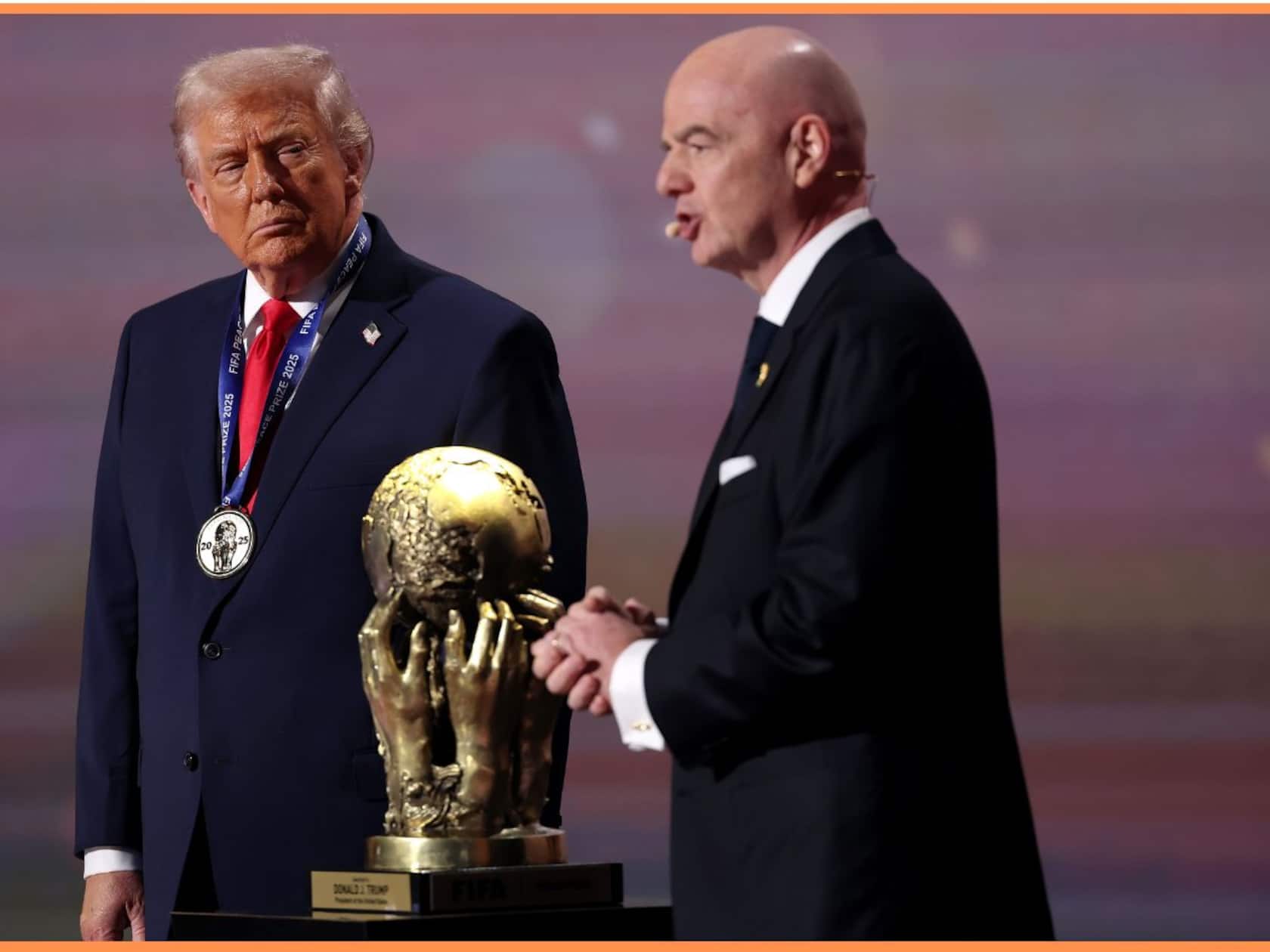
The World Cup final is supposed to be about the players. The captains lift the trophy. The confetti falls. The images get burned into history. But if reports out of the United States are accurate, the 2026 final could include a presence that has nothing to do with the game — and FIFA is ready to let it happen.
According to Talksport, the Trump administration has expressed interest in the U.S. President being part of the trophy presentation after the final match. And despite FIFA’s own protocols stating that only the winning team should participate in the initial trophy lift, the organization will not block Trump if he wants to hand the Jules Rimet Trophy to the winning captain and stay for the celebration.
This is not hypothetical. Trump has already done something similar. At last summer’s Club World Cup, he handed the trophy to Chelsea captain Reece James and then stood with the Blues’ players as they celebrated. Photos from that moment show a visibly confused Cole Palmer looking on as the President lingered in the middle of the team huddle. The scene drew widespread mockery online, but it also established a precedent: Trump sees himself as part of these moments, and event organizers have let him.
FIFA’s Mixed Messaging on U.S. Policies
The trophy ceremony news arrives against a backdrop of increasing tension over U.S. immigration policies during the tournament. FIFA President Gianni Infantino has publicly defended America’s right to refuse entry to thousands of fans, members of the Iranian team staff, and a Somali referee named Omar Artan. That defense came despite Infantino’s earlier guarantees of freedom of movement for tournament participants. The contradiction has not gone unnoticed.
Critics argue that allowing Trump to stage-manage a trophy lift undermines the tournament’s stated values. Supporters counter that the host nation’s leader participating in the ceremony is a tradition at many international events. But 2022 showed just how quickly a trophy handover can become political. When the Emir of Qatar draped a traditional bisht over Lionel Messi before he lifted the World Cup, the image sparked immediate debate about cultural imposition. That moment was captured in photos that will forever associate Messi’s crowning achievement with Qatari symbolism.
What It Means for the Final
If Trump inserts himself into the 2026 ceremony, the optics will be different — but no less loaded. His presence would reframe the moment around a political figure rather than the athletes who earned it. The team has not confirmed any final plans, and the White House has not commented on the reports. But if the past is any guide, the trophy lift could become another flashpoint in a tournament already defined by off-field drama.
FIFA, for its part, appears unwilling to intervene. The organization’s silence on the matter speaks volumes. Whether that is deference to the host nation or simply a calculation that the backlash will be short-lived remains unclear. What is clear is that the 2026 World Cup is shaping up to be remembered for more than just the football.
Leave a Comment