
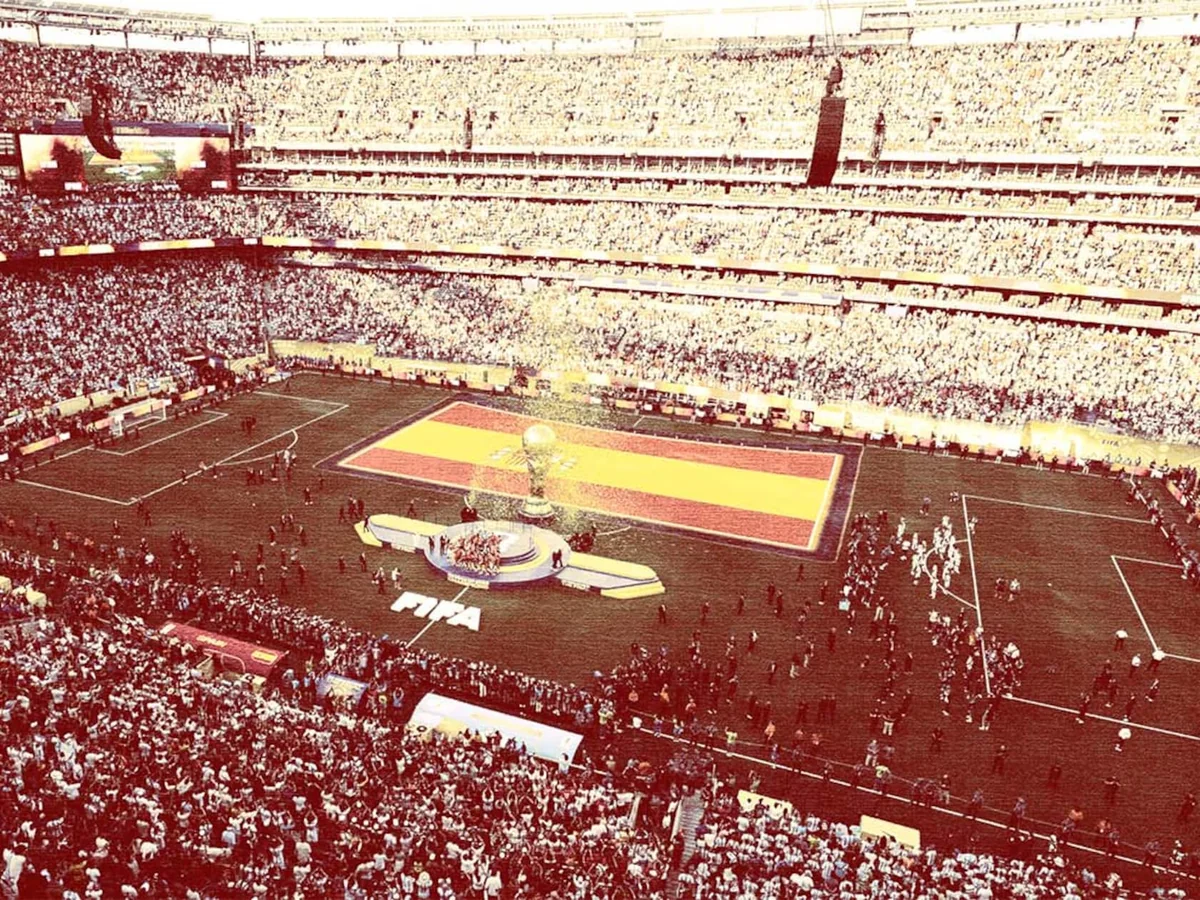
The 2026 World Cup is over, and Spain is your champion. But honestly, what do we actually remember about it?
Luis de la Fuente’s team beat Argentina in the final. The score was 1-0 after extra time. Ferran Torres scored in the 106th minute. But calling it a one-sided final undersells how dominant Spain actually was. They outshot Argentina 20-3, held nearly 70% possession, and basically controlled every single second of the game. Yet the match still dragged into extra time. That says something about Argentina’s stubbornness, sure, but it also says something about Spain itself.
This Spanish team was weird to watch. Beautiful, yes. Technically perfect, absolutely. But also cold. Clinical to the point of feeling mechanical. Every pass looked rehearsed. Every movement seemed pre-programmed. There wasn’t much grit or chaos or raw emotion. They dismantled France in the semifinals the same way. Same formula. No deviation. It worked. But it didn’t feel like the kind of World Cup champion you fall in love with.
And maybe that’s fitting for a tournament that was less about the football and more about everything else.
The numbers were insane
FIFA made an absolute fortune. According to multiple reports, the organization pulled in around $15 billion in total revenue. The final alone was the most bet-on soccer match in history. Ticket prices were dynamic, meaning they shifted based on demand, and fans actually paid them. Attendance hit 6.81 million across the three host countries, shattering the 3.59 million record set back in 1994. Stadiums operated at 99.7% capacity. That’s basically full.
Spain will take home $50 million in prize money. The U.S. earned about $15 million for reaching the Round of 16. The 48 participating nations split $691 million total. FIFA’s coffers are stuffed. The question nobody can really answer yet is how much of that money trickles back into the actual sport.
The hydration breaks were ads, let’s call it what it was
FIFA tried to pitch mandatory hydration breaks as a player safety measure. Fine. But they ran like three-minute TV timeouts, complete with sponsor graphics and commercial breaks. During U.S. matches especially, fans in the stadium booed when promising attacks got stopped dead for a scheduled ad slot. FIFA has admitted the policy was unpopular and says it’ll review it. But media partners reportedly generated more than $1 billion in ad revenue during the tournament. So you tell me whether those breaks are really going away.
They tried to make the final feel like a Super Bowl
The halftime show was new for a World Cup final. Traditionalists hated it. But FIFA under Gianni Infantino has been clear about where it’s headed. Celebrity cutaways, influencer cameos, paid appearances from people like IShowSpeed and Tom Cruise and Jason Sudeikis in Ted Lasso gear. It’s all part of the same push. The cringe factor was high at times. But the strategy is working financially. Whether it’s good for football depends entirely on who you ask.
What happens in 2030 is complicated
The 2030 World Cup is the 100th anniversary of the tournament. It’ll be co-hosted by Spain, Portugal, and Morocco, with Argentina, Uruguay, and Paraguay each staging one commemorative opening match. Six host nations. Automatic qualification for all six. And FIFA is reportedly pushing to expand the field from 48 to 64 teams. That would make qualifying for most confederations almost meaningless. It would also generate more revenue, which seems to be the priority.
The power struggle between FIFA and UEFA is getting uglier too. Both organizations know how much money is sitting on the table. They just disagree on how to grab it. UEFA president Aleksander Čeferin could eventually emerge as a challenger to Infantino. But right now, Infantino faces no serious threat.
The U.S. soccer question hasn’t been answered
The World Cup proved Americans will show up for the sport when it’s the biggest event in town. But converting that into year-round engagement is still the problem. MLS has never had a better opportunity to grow its audience, but the league’s TV numbers are still modest. Liga MX remains the most-watched domestic league in the country. Soccer in the U.S. occupies roughly the same TV niche as the NHL. Respectable. Not dominant. And until broadcasters treat the sport as more than a quadrennial event, it’ll keep fading between tournaments.
Hollywood loves sequels and reboots because they’re safe. Sports media does the same thing. Soccer needs someone to treat it like a long-term bet, not a summer fling. The next four years will tell whether anyone is willing to do that.
Leave a Comment