
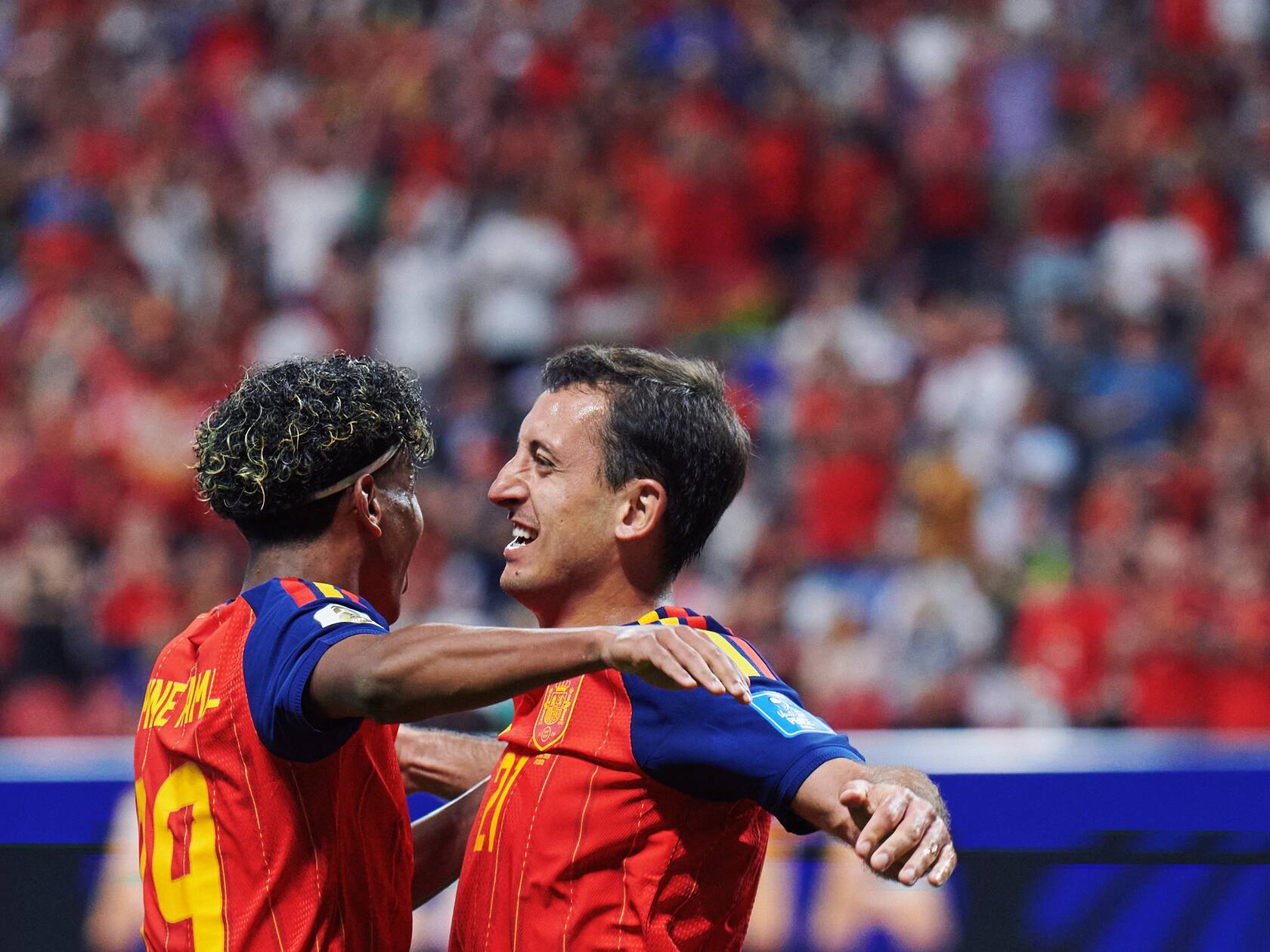
Chattanooga, Tennessee doesn’t feel like a place where world champions go to prove themselves. But there Spain was on Sunday night, four days removed from a result that had the Spanish press reaching for the panic button and a German tabloid calling them an embarrassment. The response was emphatic. A 4-0 demolition of Saudi Arabia that wasn’t just about goals. It was about intent. About frustration. About a team that had been questioned for the first time in a long time and did not enjoy the feeling.
Lamine Yamal looked like a kid who had been told he couldn’t do something. He tore apart the Saudi left side like it was a training drill. Mikel Oyarzabal turned half-chances into goals. The whole operation was fast, precise, and just a little bit angry. By the time the first hydration break rolled around, the game was already over as a contest. The thirst Spain had for a reaction was quenched well before halftime.
For context: Spain opened this World Cup with a baffling draw against Cabo Verde. Not a loss. A draw. But in the world of a national team that has won a European Championship and a Nations League in the last three years, a draw against a smaller footballing nation feels like a crisis. Especially when Cabo Verde managed it by committing exactly one foul. One. They disrupted Spain’s rhythm without breaking a sweat, and the Spanish crowd in Atlanta was confused more than anything.
The headlines back home were predictable. “Upset” from Diario AS. “Red Alert” from Sport. Mundo Deportivo went with the slightly wounded “What a Comedown.” Marca, ever dramatic, called it a “Historic Disappointment.” And then there was BILD in Germany, who really didn’t hold back: “A Group of Islands Embarrass Spain.” The Spanish public, remarkably, didn’t lose their minds. The general reaction was more of a shrug. A collective “that was bad, but we’ll be fine.” Former Spain manager Jose Antonio Camacho said on Cadena SER that a wake-up call is actually a good thing. And he was probably right.
Luis de la Fuente, the manager, tweaked things. He moved Pedri back into a deeper midfield role. He started Yamal. He made sure the tempo was higher, something both he and his players had pointed to as the issue against Cabo Verde. The result against Saudi Arabia was so one-sided that it almost felt like an overcorrection. But that was the point.
“It’s normal that they were upset or furious,” de la Fuente said after the match. “Nobody likes having their professionalism, ability, or work questioned. But this reaction is logical. It’s no different from things we’ve done in the past.”
Yamal was more pointed before the game even started. “You want to jump to conclusions. Now Spain is terrible. But those who know, know that’s not the case,” he said from Spain’s base camp in Chattanooga. The siege mentality was in full effect. Alex Baena, who started on the left, was more measured afterward. “We’re calm, even with all the noise from outside.”
This is a Spain team that has gone 33 games without a defeat. They are one of the favorites to win the World Cup. But the siege mentality thing doesn’t quite fit. It feels a little manufactured. Spain are not the scrappy underdogs they were in 2008 anymore. They are the team everyone is trying to beat. But de la Fuente seems to be leaning into this idea that his squad needs something to push against. A dragon to slay. Before Euro 2024, nobody gave the 63-year-old rookie manager much of a chance. Lamine Yamal was a teenager who some thought was being fast-tracked. Adrien Rabiot tried to challenge him before the semifinal that year. It didn’t work. Yamal hit a goal that felt like it came from another planet. Then Alvaro Morata, who had been questioned everywhere he went, lifted the trophy.
“No one is immune to criticism,” de la Fuente said later. “Their pride was stung. They can do even better. But those comments motivate them.”
Michael Jordan used to find something to take personally in every situation. De la Fuente, ever the optimist, is hoping his team has found that same source of fuel. The contrast is interesting. This Spain team is built on fluidity and technical brilliance, not the old “La Furia Roja” aggression. But if they keep playing like they did on Sunday night, the siege might just make them stronger.
Leave a Comment