Hours before kickoff of the World Cup final, the Council of Europe sent a blistering open letter to FIFA that didn’t bother with diplomatic niceties. Alain Berset, the organization’s head, laid into the tournament’s integrity in plain language. “The next crisis has already begun. It has two names: money and power,” he wrote.
The timing wasn’t subtle. The letter landed as Spain and Argentina prepared to face off in East Rutherford, New Jersey, with the trophy on the line. But Berset wasn’t focused on the game itself. He was looking at what happened before it.
Balogun suspension reversal draws fire
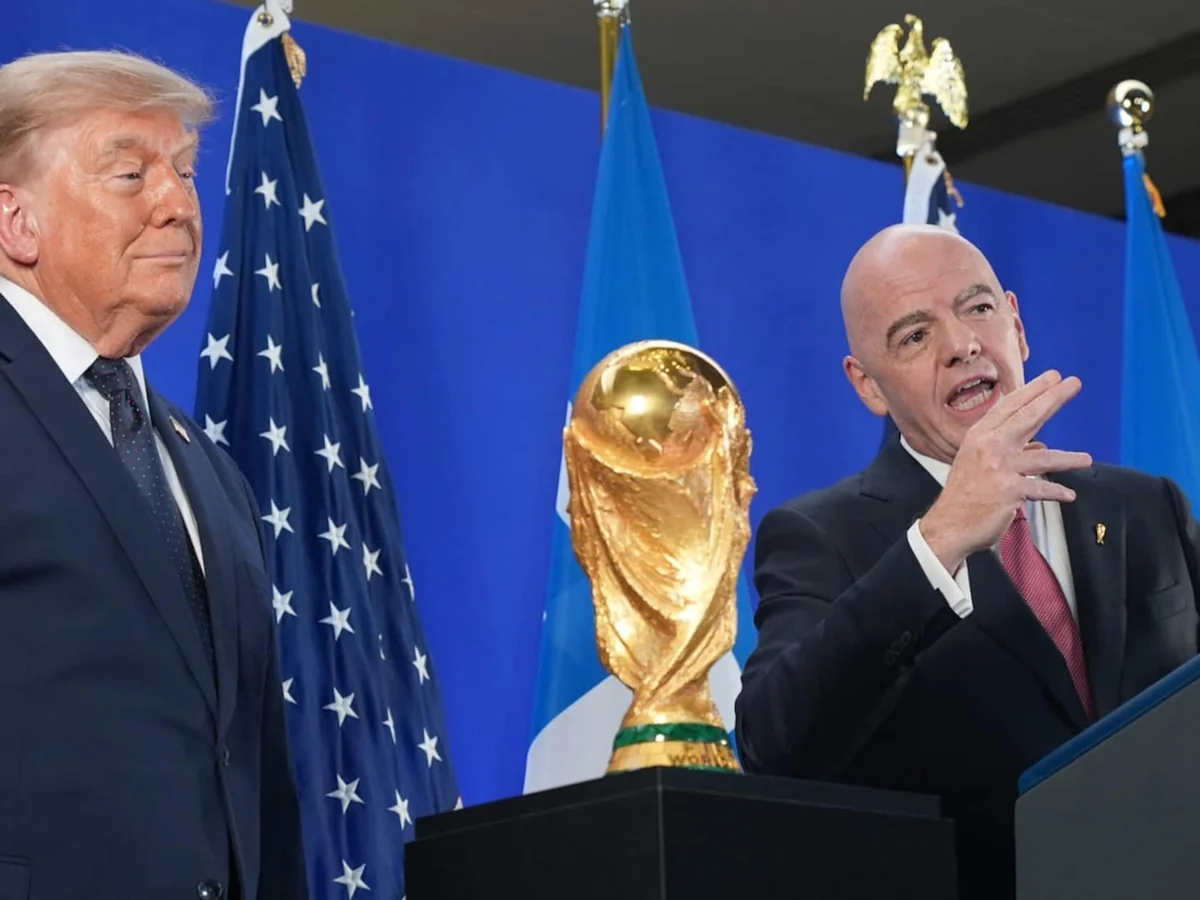
The biggest lightning rod? FIFA’s decision to suspend a ban against U.S. forward Folarin Balogun mid-tournament, a move that let him play against Belgium in the quarterfinals. Belgium won that game 4-1. The suspension came after President Donald Trump personally called the FIFA president, a detail Berset did not let slide.
“When the rules bend under pressure, every result is open to doubt,” Berset wrote. “Political influence has also moved onto the field. The sanction suspended mid-tournament came after a head of state called the president of FIFA.”
UEFA, European soccer’s governing body, also hammered the ruling, calling it a step over “a red line” in the sport’s rule of law. FIFA still hasn’t published its reasoning.
Betting deal raises red flags
Then there’s the money. FIFA signed a $150 million sponsorship with ADI Predictstreet, a prediction market company that barely existed when the ink dried — it was formed just one week before the deal closed in April. The organization also has other gambling-related commercial agreements tied to this World Cup.
Berset called out prediction betting specifically, arguing it rewards insider trading because people can wager on “moments a single player can produce without changing the score.” His conclusion was blunt: “It is an open door to fraud. And this World Cup has opened the door wider.”
This isn’t just some random complaint. The Council of Europe wrote the European Convention on Human Rights. It has a formal working agreement with FIFA dating back to 2018, signed by Gianni Infantino himself, who back then talked about shared values like transparency and integrity. But the relationship clearly isn’t warm right now.
More than one problem
Berset’s letter also pointed to referee authority getting questioned openly, racist abuse of players (some of it from elected officials), and a massive surge in micro-betting on “every pass, every card, every corner” during the first 48-team, 104-game World Cup. That’s a lot of action, and a lot of potential for things to go sideways.
Looking ahead, the 2030 men’s World Cup will be mostly in Spain and Portugal with Morocco co-hosting. Three matches will be played in Argentina, Paraguay, and Uruguay to mark 100 years since the first tournament. That’s three more host countries with three more sets of politics and pressure points. Berset seems to be warning that none of this is getting simpler.
Leave a Comment