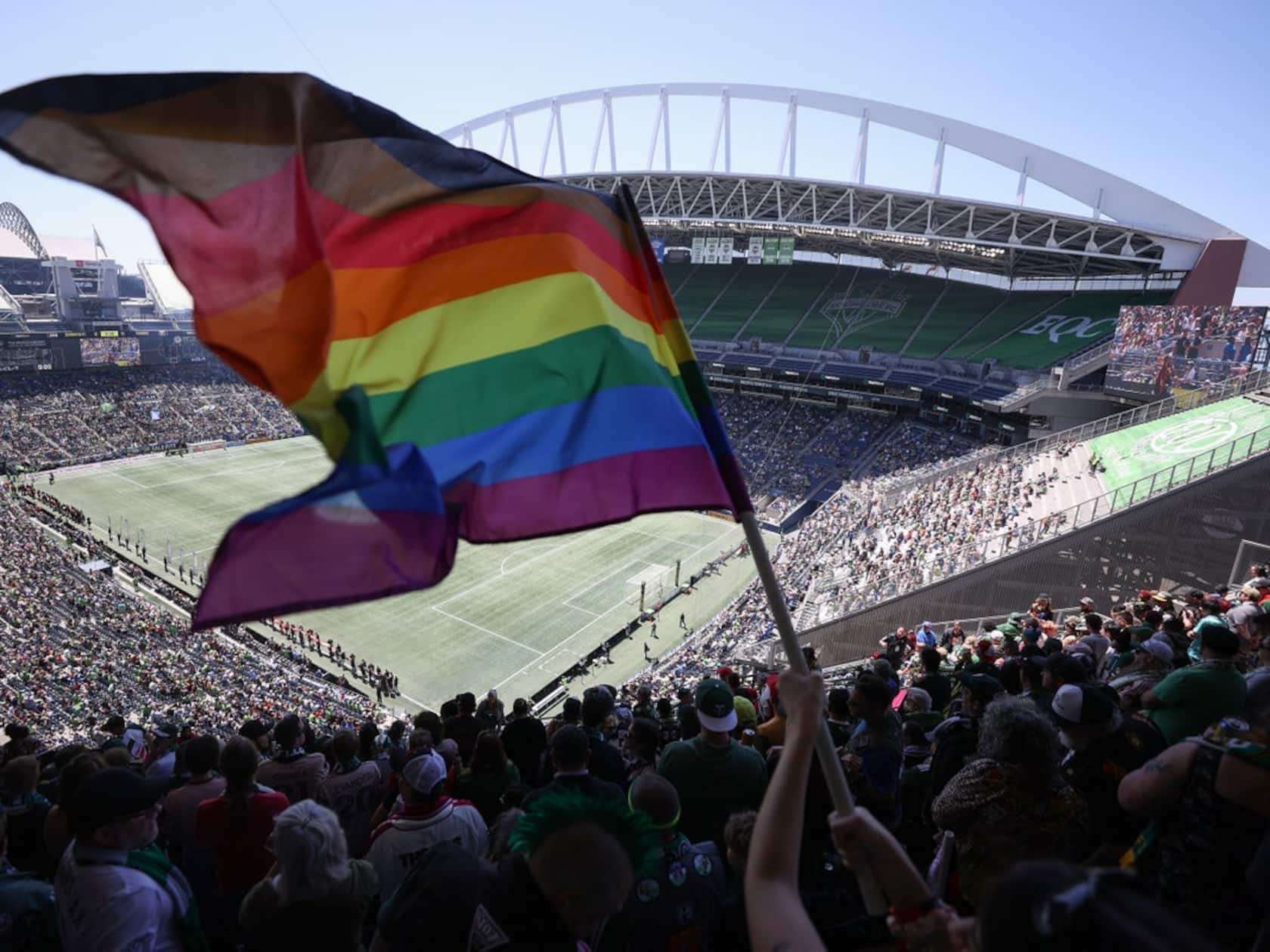
When the 2026 World Cup schedule dropped two years ago, Seattle looked like the perfect place for a Pride celebration. The city’s annual Pride weekend overlaps with the anniversary of the Stonewall riots, and Lumen Field was set to host the final group-stage match on that same Friday. It felt almost scripted.
Then the draw happened. Iran and Egypt landed in that exact Seattle matchup. And suddenly what was supposed to be a party became a political firestorm.
Jen Barnes runs Rough & Tumble, a sports bar built around inclusivity and gender equity in fandom. She also co-chairs Seattle’s World Cup Pride+ Match Committee. She told The Independent that the moment is bigger than the backlash.
“Soccer is the world’s game for a reason,” Barnes said. “When I think about what it will look like to fans watching from afar and fans who are here experiencing it, I do feel like we are celebrating Pride for the world on that day.”
Two countries, two sets of laws
Iran criminalizes homosexuality under Sharia law. Penalties range from flogging to execution. Egypt doesn’t explicitly outlaw being gay, but uses vague morality laws to persecute queer people, who can face up to seven years in prison.
Both federations objected to the rainbow-themed match. Iran called it an “irrational move that supports a certain group.” Egypt said it “categorically rejects any activities promoting LGBTQ during the match” and cited cultural and religious sensitivities.
They appealed to FIFA. President Gianni Infantino distanced the organization from any formal Pride designation. “There will be no ‘Pride Match’ at the World Cup,” he said in January. “There will be a FIFA World Cup match in Seattle and, on the same day, events organized by external organizations will be taking place in the city.”
The irony is hard to miss. At the 2022 World Cup in Qatar, FIFA threatened yellow cards to any captain wearing the rainbow “OneLove” armband. The German team covered their mouths in protest. Now FIFA is trying to pretend the Pride events don’t exist.
But those events are happening anyway. Seattle’s police department is bracing for a massive operation — drones, Coast Guard patrols along the waterfront, extra security — especially given the Iranian regime protests that have punctuated Iran’s earlier matches in Los Angeles, where fans booed the national anthem.
A simple switch that never happened
Vancouver hosts the other Group G match that same night: Belgium vs. New Zealand, two countries with progressive LGBTQ+ laws. Swapping the venues would have defused the tension entirely. It would have also removed one of the visa hurdles Iran has faced getting into the United States. But common sense didn’t win. The schedule stayed put.
“I think it’s expected given their rules,” Barnes said of the objections from Iran and Egypt. “I’m not sure if disappointed is the right word. Despite Iran and Egypt’s policies, queer people exist everywhere and that’s really the most important part.”
FIFA confirmed Friday that rainbow flags will be allowed inside Lumen Field under the stadium code of conduct, which permits “general statements of human rights, including rainbow flags and other flags representing sexual orientation and gender identity.”
More than a game
Outside the stadium, the city has organized the “Unity Loop,” a route directing visitors to LGBTQ+-owned businesses. Watch parties will pop up across Seattle, including at Barnes’s bar. Rainbow merchandise and social media campaigns are in full swing.
Seattle Mayor Katie Wilson said law enforcement is “expecting and prepared for protest activity.” State Senator Jamie Pedersen, one of several openly gay members of the Washington legislature, said the local dynamics make this different from what would happen in Cairo or Tehran. “If you tried to import a pride celebration into Egypt or Iran, obviously that could be a disaster,” he said. “But in a community like Seattle that prides itself on welcoming people from all over, I just can’t imagine that it’s going to be a significant problem.”
Barnes sees this as a potential legacy moment. She hopes the Pride Match concept carries forward to the 2030 World Cup in Spain, Portugal, and Morocco. “There are queer human beings everywhere on this planet,” she said. “There’s no reason not to be inclusive of a huge portion of our fan base and our athletes themselves.”
Leave a Comment