
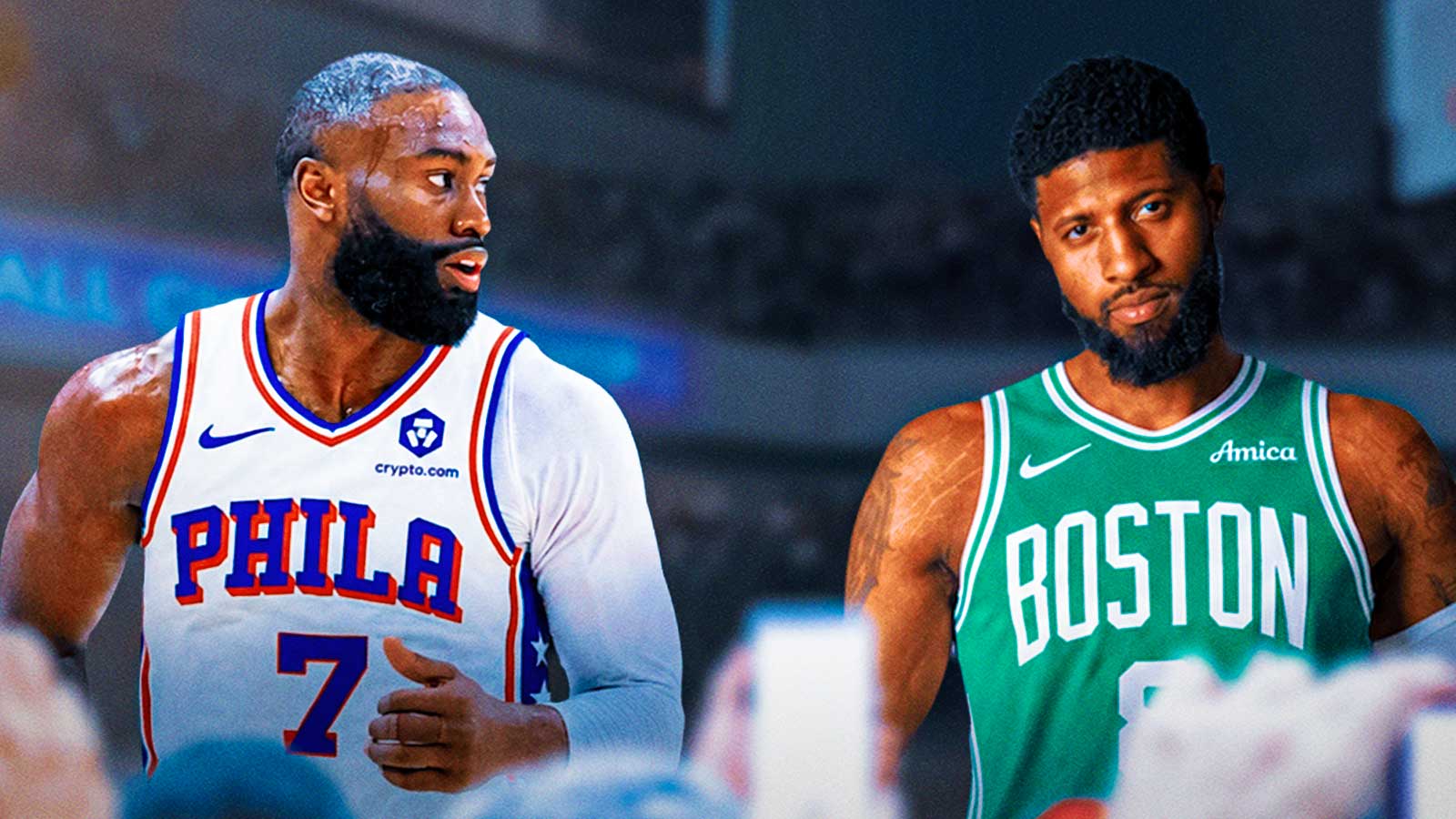
Brad Stevens didn’t sugarcoat it. The Celtics president of basketball operations stood at a podium last week and said what plenty of fans already believed: trading Jaylen Brown, a Finals MVP who helped bring Boston its 18th banner, might not work out. He even called it a hard call and refused to guarantee it’d be the right one.
But he also made a case for why the front office pulled the trigger anyway — and it came down to one word he kept circling back to: optionality.
Boston sent Brown to the Philadelphia 76ers in exchange for Paul George, two first-round picks and two second-round picks. This came after the Celtics made a run at Giannis Antetokounmpo and missed. Stevens said that failure didn’t force their hand on the Brown deal, but it did confirm what the front office already suspected about the roster’s ceiling.
Brown and Jayson Tatum combined for roughly 70 percent of Boston’s salary cap. They also soaked up most of the offensive possessions. Under the NBA’s new collective bargaining agreement, that two-star model gets punished with second apron restrictions. The Celtics saw the 2024 championship roster as proof of concept: when Brown and Tatum took up a smaller share of the payroll, the team could surround them with veteran role players like Jrue Holiday and Kristaps Porzingis. After that title, Boston lost several key contributors trying to stay under the second apron.
Stevens made clear Tatum didn’t push for the trade
He has a hard-and-fast rule, he said, that he doesn’t ask players about other players. So no, Tatum didn’t Green-light the decision. Stevens also pushed back on the idea that analytics drove the move. Advanced numbers only represented a small piece of the evaluation, according to him.
The Paul George part is what’s drawing the most skepticism. George turns 37 this spring. His contract has been widely panned as an albatross because of his age and injury history. But Stevens pointed out that George’s deal runs one year shorter than Brown’s, which opens up cap space sooner. And Boston didn’t just get George — it got a 2028 first, a 2031 first, two seconds, and a chance to rebalance the roster around Tatum without the salary cap eating everything alive.
Stevens acknowledged that fans would rather hear about stars than picks. “I keep going back to myself as a kid,” he said. “I don’t want to hear about picks and optionality.” But he argued the Celtics viewed this as a package deal — George plus the picks plus the long-term flexibility — and that outweighed keeping Brown alone.
New majority owner Bill Chisholm backed the move in his first public comments since taking over. He said ownership didn’t pressure Stevens to trade Brown, and described his role as trusting the basketball staff’s recommendation even when it wasn’t popular. “The mandate is to win,” Chisholm said. “This was Brad and his team.”
Stevens said George visited Boston over the weekend and expressed excitement about joining the organization. The Celtics don’t plan any other major offseason moves after finalizing agreements with Mitchell Robinson and Mike Conley.
When asked the obvious question — did this trade actually make Boston better this season? — Stevens didn’t try to sell anyone. “We’ll find out,” he said. “What we ultimately decided could be right or wrong. It’s obviously unpopular, and most people think it will be wrong.”
Leave a Comment