
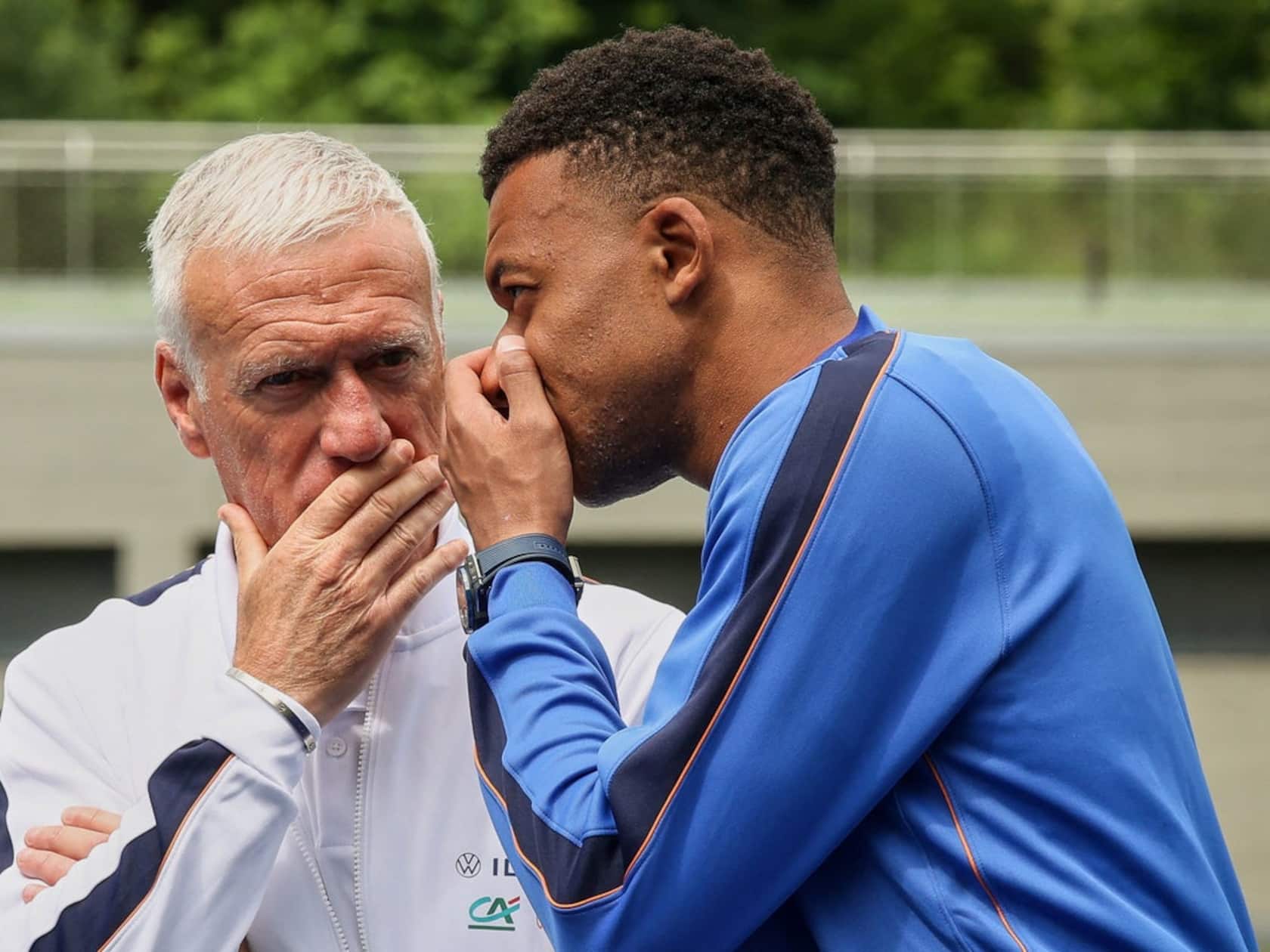
Didier Deschamps has been France’s manager so long that the last time he wasn’t, Tottenham was hiring Andre Villas-Boas. Sir Alex Ferguson was still at Manchester United. Jose Mourinho was in his first stint at Real Madrid. Fourteen years later, as the 2026 World Cup kicks off inside MetLife Stadium, the 57-year-old is finally walking away.
Win the whole thing in New Jersey on July 19, and he’ll have done something no manager has ever accomplished: reach three straight World Cup finals. He already won one (2018) and lost another on penalties (2022). The only other coach to make back-to-back finals was Franz Beckenbauer—who also won the trophy as a player and manager, just like Deschamps.
But here’s the thing about Deschamps: he’s never gotten the love his resume deserves. Critics point to the embarrassment of talent at his disposal—Kylian Mbappe, Antoine Griezmann, Ousmane Dembele, Michael Olise. They point to his pragmatic, sometimes joyless style. Euro 2024 was a case in point: France reached the semifinals without scoring a single goal from open play. Two own goals, a penalty and a shootout got them there. That’s it.
Yet there’s another way to look at it. Before Deschamps took over in 2012, France’s 2010 World Cup was a disaster—player mutinies, one goal scored, first-round exit. Under Deschamps, Les Bleus have exited six tournaments exactly three times: 1-0 to eventual winners Germany (2014), 1-0 to Portugal in extra time in the Euro 2016 final, and on penalties in Euro 2020 and the 2022 final. They’ve never been blown out. They’ve rarely been outcoached.
What Deschamps does well is solve puzzles. In 2018, he started Olivier Giroud despite the striker registering zero shots on target in the entire tournament. Why? Because Giroud’s physicality and selflessness created space for Mbappe and Griezmann. In 2022, with Paul Pogba and N’Golo Kante unavailable, he dropped Griezmann into a deeper midfield role and trusted Adrien Rabiot—who had refused to be on the standby list four years earlier—to anchor the middle. It worked.
This time, the puzzle is harder. Mbappe is the captain now, the reigning Ballon d’Or winner in the room. But France’s group is tough: Norway and Senegal, then a potential round-of-16 date with Germany. Finish second and it could be Brazil. A semifinal with Spain looms—a rematch of the Euro 2024 semifinal Spain won 2-1.
Deschamps leaves after this tournament no matter what. His 188-game tenure is among the longest in modern international football, trailing only Joachim Low’s 15-year, 198-match run with Germany. Low stayed too long, critics say. If France stumbles here, the same will be said of Deschamps—especially with Zinedine Zidane, his former teammate and a three-time Champions League winner, waiting in the wings.
But here’s what the numbers say: under Deschamps, France have been the most consistent team in world football. They’ve reached two of the last three World Cup finals. They’ve never exited a major tournament to a team that didn’t either win the whole thing or take them to penalties. And they’ve done it without a signature brand of football—no “Deschampsball” to put on a T-shirt—just ruthless, unglamorous winning.
There’s something poetic about it ending in New York. The same stadium where it starts for France could be where Deschamps walks off for good. If he lifts that trophy one more time, the argument that he’s the greatest World Cup manager of all time won’t be a debate anymore. It’ll be a fact.
Leave a Comment