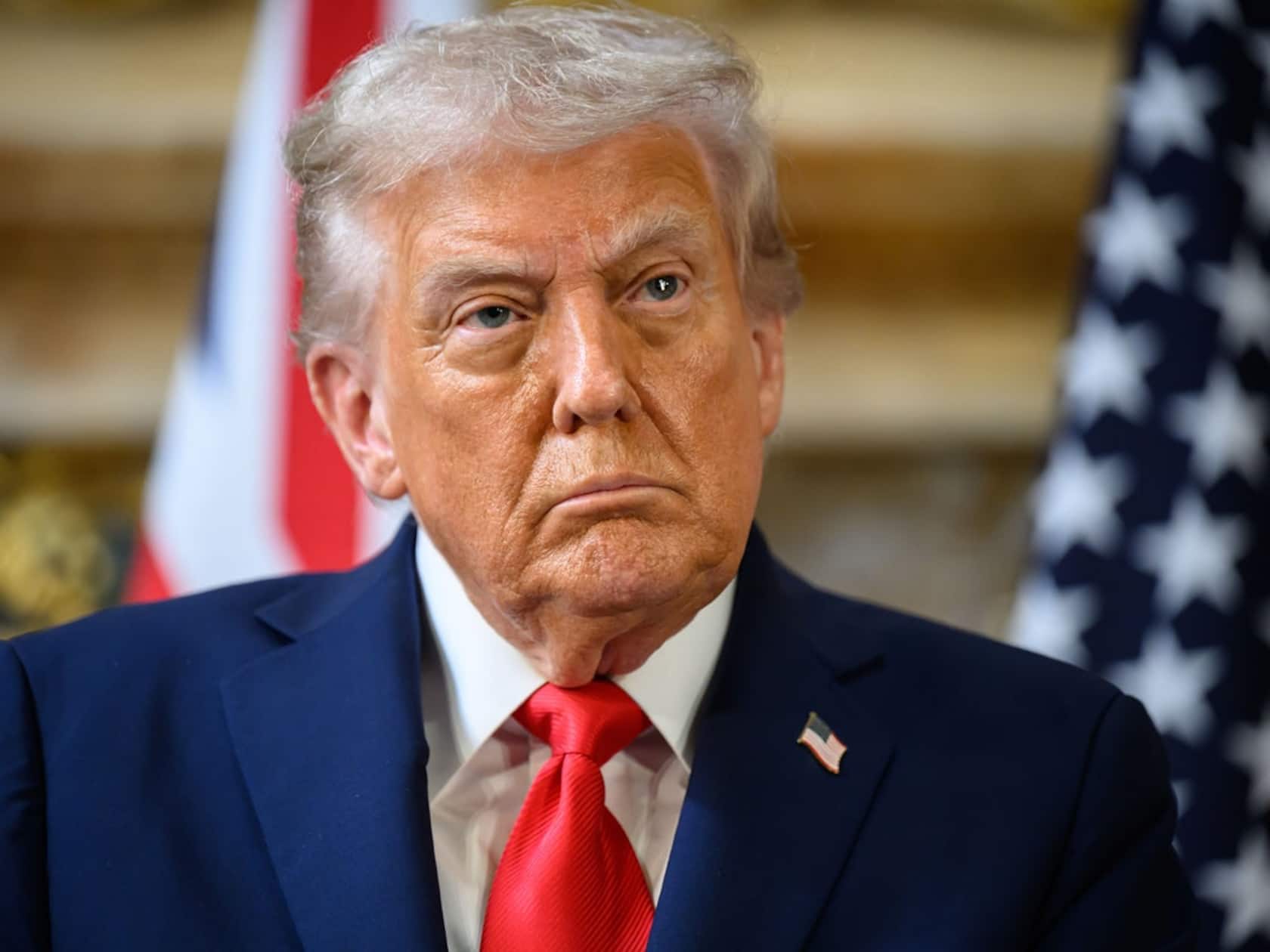
Donald Trump got booed at the NBA Finals in his hometown this week. Then he decided to skip the U.S. men’s national team’s World Cup opener in Los Angeles. The White House cited a “tight schedule” — but anyone who has watched Trump at sporting events over the past decade knows that alibi doesn’t hold up.
Trump has shown up at the Super Bowl, UFC fights, the Ryder Cup, and the men’s U.S. Open final. He attended the FIFA Club World Cup final. He basked in the adoration of golf fans who cheered him like a folk hero. But when it came to the biggest sports stage the United States has ever hosted — the first World Cup match on American soil since 1994 — the president decided to stay home.
Instead, Secretary of State Marco Rubio will lead the official delegation from Washington. The decision raises an obvious question: Is Trump afraid of the reception he’d get at SoFi Stadium?
California is deep-blue territory. The towering screens hanging over the field would have broadcast his face to a crowd that includes tens of thousands of international fans — many from countries whose citizens have been affected by his second-term immigration policies. According to reports, Trump was loudly booed at Madison Square Garden earlier this week. The noise in Los Angeles could have been worse.
It’s not just about optics. Host-nation leaders almost always attend their country’s first match of the tournament. Sheikh Tamim was there for Qatar in 2022. Vladimir Putin appeared for Russia in 2018. The tradition is as consistent as an opening ceremony handshake. Trump’s absence breaks that pattern — and it comes at a time when his administration has actively alienated two co-hosts, Canada and Mexico, both of whom are in the middle of escalating trade disputes and diplomatic friction with the U.S.
Beyond the foreign-policy headaches, there’s a simpler explanation: ego. Trump craves adulation. He builds his public appearances around crowds that will cheer him. At UFC Freedom — a fight night being held at the White House this Saturday to celebrate his 80th birthday and the nation’s 250th anniversary — the audience will be hand-picked. No boos. No chants. No risk.
The World Cup is supposed to be a celebration. FIFA president Gianni Infantino has repeated the phrase “football unites the world” so often it’s become a punchline. But in 2026, that message feels hollow. The U.S. is embroiled in multiple conflicts abroad. The administration’s border policies have turned away players and officials — including Africa’s referee of the year, a Somali official whose exclusion raised eyebrows inside soccer circles. Meanwhile, Canada denied entry to Ghana’s Thomas Partey, who faces an alleged rape charge.
Polls show Trump’s approval rating near historic lows. Hosting the World Cup was supposed to be a moment of soft-power triumph. Instead, the man at the center of it all is choosing to stay away from his own party.
Leave a Comment