
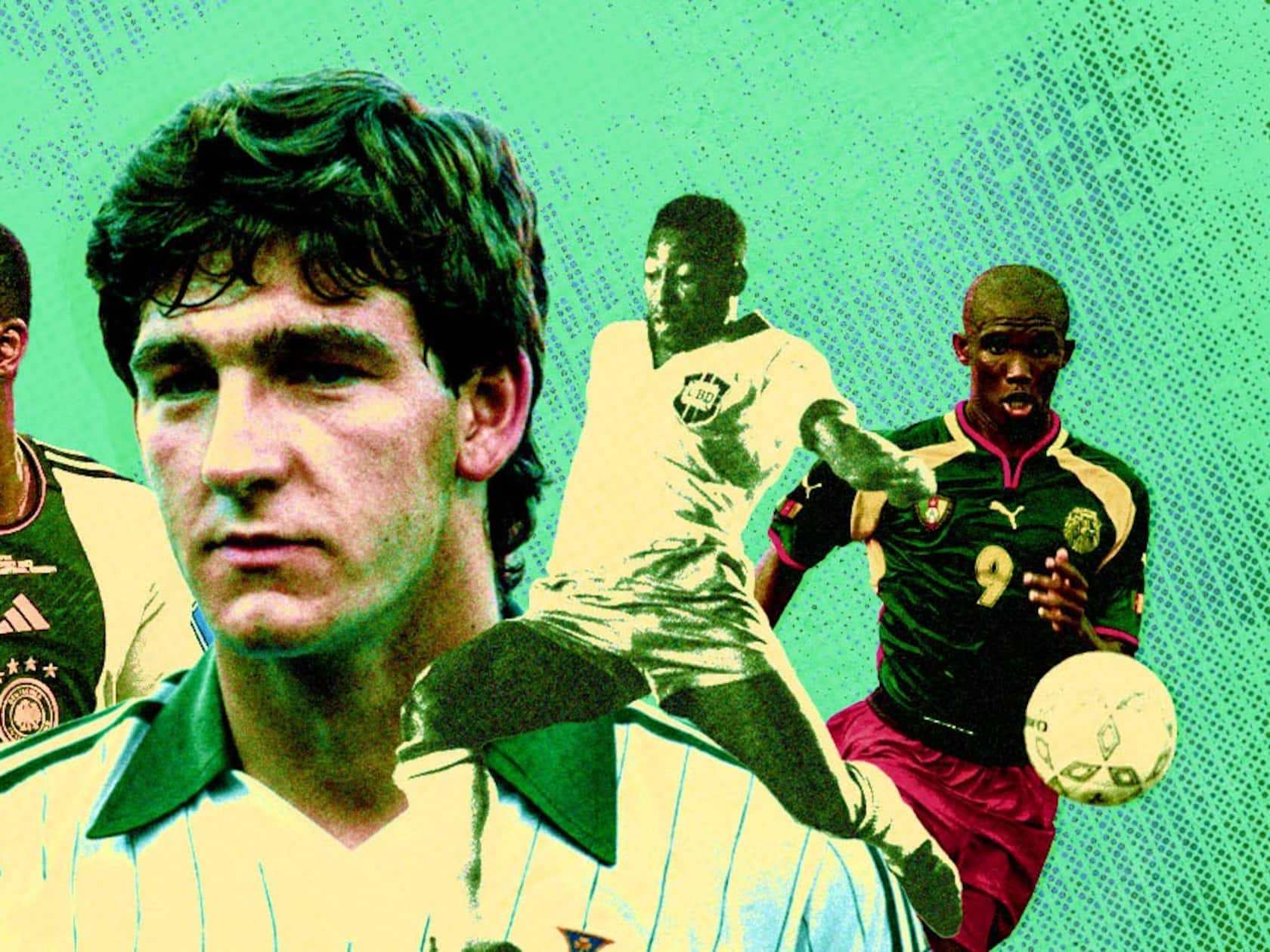
When Norman Whiteside stepped onto the pitch for Northern Ireland in the 1982 World Cup, nobody could have predicted the emotional rollercoaster that was about to unfold. The teenager, who had been scouted by the same man who discovered George Best, was about to etch his name into soccer history—but the cost would be devastating.
Whiteside’s debut against Yugoslavia wasn’t just historic; it was a cautionary tale. He became the youngest player ever to appear in a World Cup match, but instead of celebrating a goal, he picked up a yellow card. Sources close to the situation claim the pressure on the 17-year-old was immense. “He was just a kid,” a former teammate reportedly said. “But the expectations were absurd.”
Incredibly, Whiteside’s Northern Ireland squad pulled off one of the biggest upsets in World Cup history, defeating Spain 1-0 to advance out of the group stage. They eventually fell to Michel Platini’s France in the quarterfinals, but Whiteside’s performances were enough to convince Manchester United manager Ron Atkinson to start him regularly. The teenager went on to become the youngest goalscorer in both the League Cup and FA Cup finals. But insiders say the joy was short-lived.
The Tragic Fall of a Child Star
Whiteside’s body began to betray him. By age 26, knee injuries had forced him into early retirement. “He was done before he could even hit his prime,” a source close to the player alleged. “The sport chewed him up and spat him out.” Whiteside finished his international career with 39 caps and nine goals for Northern Ireland—a fraction of what many believed he could have achieved.
On the same day Whiteside made his debut, 16 years later in 1998, a 16-year-old Samuel Eto’o stepped onto the World Cup stage for Cameroon. The future Barcelona star, who would go on to become Cameroon’s all-time leading scorer with 56 goals, managed only two goals across four World Cup appearances. Reports indicate Eto’o’s bittersweet legacy includes leading his team to a shock 1-0 win over Brazil in the 2003 Confederations Cup—a moment that seemed to promise greatness but never materialized on soccer’s biggest stage.
A Promising Career Cut Short by Glaucoma
Femi Opabunmi’s story is perhaps the most heartbreaking of all. The Nigerian winger made history as the third-youngest World Cup player in 2002, after a stunning performance at the U-17 World Cup where he scored a hat-trick against Australia. Scouts from Manchester United, Arsenal, and Lyon were reportedly circling. “The kid had everything,” a former Nigeria youth coach told us. “But then his vision started going.”
Within four years, Opabunmi was forced into retirement due to glaucoma, leaving him blind in one eye. “He never got the chance to show what he could really do,” a source close to the player claimed. “It’s a tragedy that nobody talks about.”
Salomon Olembé, who became Cameroon’s youngest-ever World Cup player in 1998, also struggled to sustain his early momentum. Despite winning back-to-back Africa Cup of Nations titles and a Ligue 1 championship with Nantes, his World Cup appearances were limited to just three games. “He had the talent to be a star,” a former teammate said. “But the stage was just too big, too fast.”
The King Who Still Reigns
And then there’s Pelé. The Brazilian legend burst onto the scene in 1958 at just 17 years and 249 days old, scoring a hat-trick in the semifinal against France and a brace in the final against Sweden. He remains the youngest player to both feature and score in a World Cup final—a record that sources say is “virtually untouchable” in the modern game.
Pelé’s legacy, however, is not without its whispers. Reports indicate that a lingering knee injury nearly kept him out of the 1958 tournament altogether. “He was limping through training,” a former Brazil team doctor was quoted as saying. “But he refused to sit out.” The gamble paid off, but insiders wonder how different his career might have been if he had pushed himself even harder.
As the 2026 World Cup approaches, these stories serve as a reminder that youth on the biggest stage comes with a price. Some, like Pelé, rise to immortality. Others, like Whiteside and Opabunmi, fall into obscurity—their potential forever locked in a moment of what could have been.
Leave a Comment