
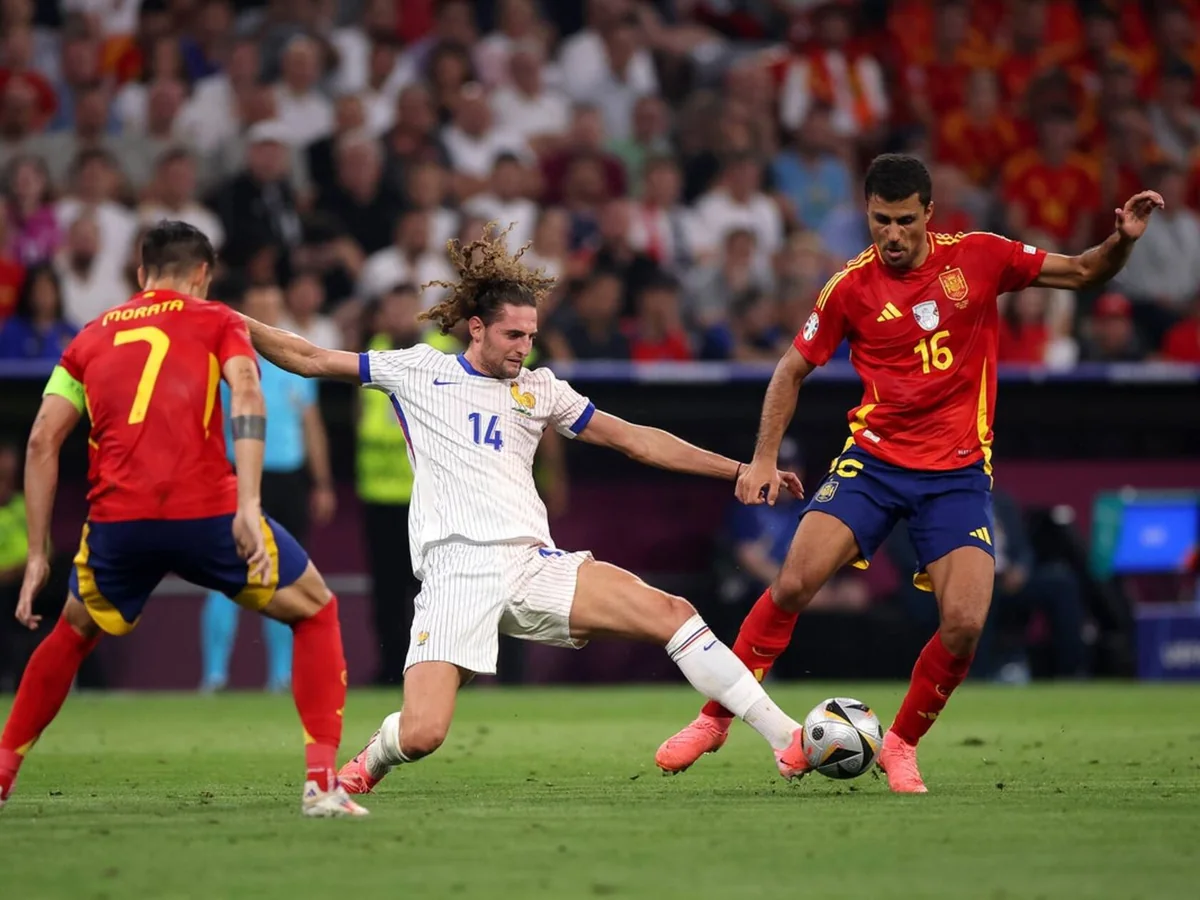
There’s a tactical puzzle sitting at the center of this World Cup semifinal, and it’s not about which team has the better attackers. France has scored 16 goals in six games. They have Kylian Mbappe looking liberated, Ousmane Dembele fresh off a Ballon d’Or, and Michael Olise playing like a top-five player in the world. But Didier Deschamps has a problem, and he’s been asking reporters to point out his team’s flaws all tournament. Now it’s unavoidable.
France plays with a two-man midfield. Spain plays with three. That numbers game in the middle of the pitch is where this thing gets complicated.
Spain hasn’t conceded more than one goal in the entire tournament. But that defensive record is misleading in a modern soccer sense. They don’t defend deep. They defend high, pressing constantly and winning the ball back in 11.57 seconds on average — the fastest of any quarterfinalist. The actual defending happens in forward areas. The space behind their backline is wide open, and Mbappe and Dembele have been staring at it all week.
Here’s the catch: Spain plays the positional game, the Pep Guardiola system that dominates club soccer. Everything is structured around where players are relative to the ball. France plays something closer to relationism — more freedom, more individual interpretation, more letting attackers figure it out on the fly. It’s an orchestra versus free jazz, basically.
Why Lamine Yamal hasn’t looked like a superstar
Yamal is the most talented teenager in the tournament, but he hasn’t popped the way other young stars have. That’s partly because Spain’s system is the most complete tactical idea at this World Cup by a long shot. They’re the one team that looks like an elite club side. Yamal has a defined role, and part of that role is exhausting the two defenders marking him until one of them has to come off. It’s not glamorous, but it works.
France’s approach is the opposite. Deschamps has built the most anti-Deschamps team of his career. He’s a pragmatist by nature, but the talent coming through — Bradley Barcola, Desire Doue, Olise — forced him to let the handbrake off. The result is a team that plays with attacking freedom rarely seen at this level.
The problem is that freedom comes with a cost. Rabiot and Tchouameni have to do everything in midfield because there’s no Rodrigo-type holding player. France doesn’t produce that archetype. Spain has two on the bench.
The actual vulnerability nobody is talking about
Spain’s backline hasn’t been properly tested yet. Belgium got at them in the quarterfinal. Charles De Ketelaere finally broke Unai Simon’s clean-sheet record, and for a moment you could see the doubt creep in. Spain didn’t buckle. They kept playing. But the question is whether they can sustain that control against a French team that can hurt you from anywhere.
Deschamps needs to figure out how to get his midfield to funnel play toward his attackers despite being outnumbered. That’s the whole game. If France can’t solve that numbers problem, Spain will just keep the ball and slowly move up the pitch. If they do solve it, we might be looking at the template for how to beat positional soccer at the highest level.
Either way, this game is bigger than just a semifinal. It’s a genuine philosophical duel between two ways of thinking about soccer. And the winner will probably set the tactical conversation for the next four years.
Leave a Comment