
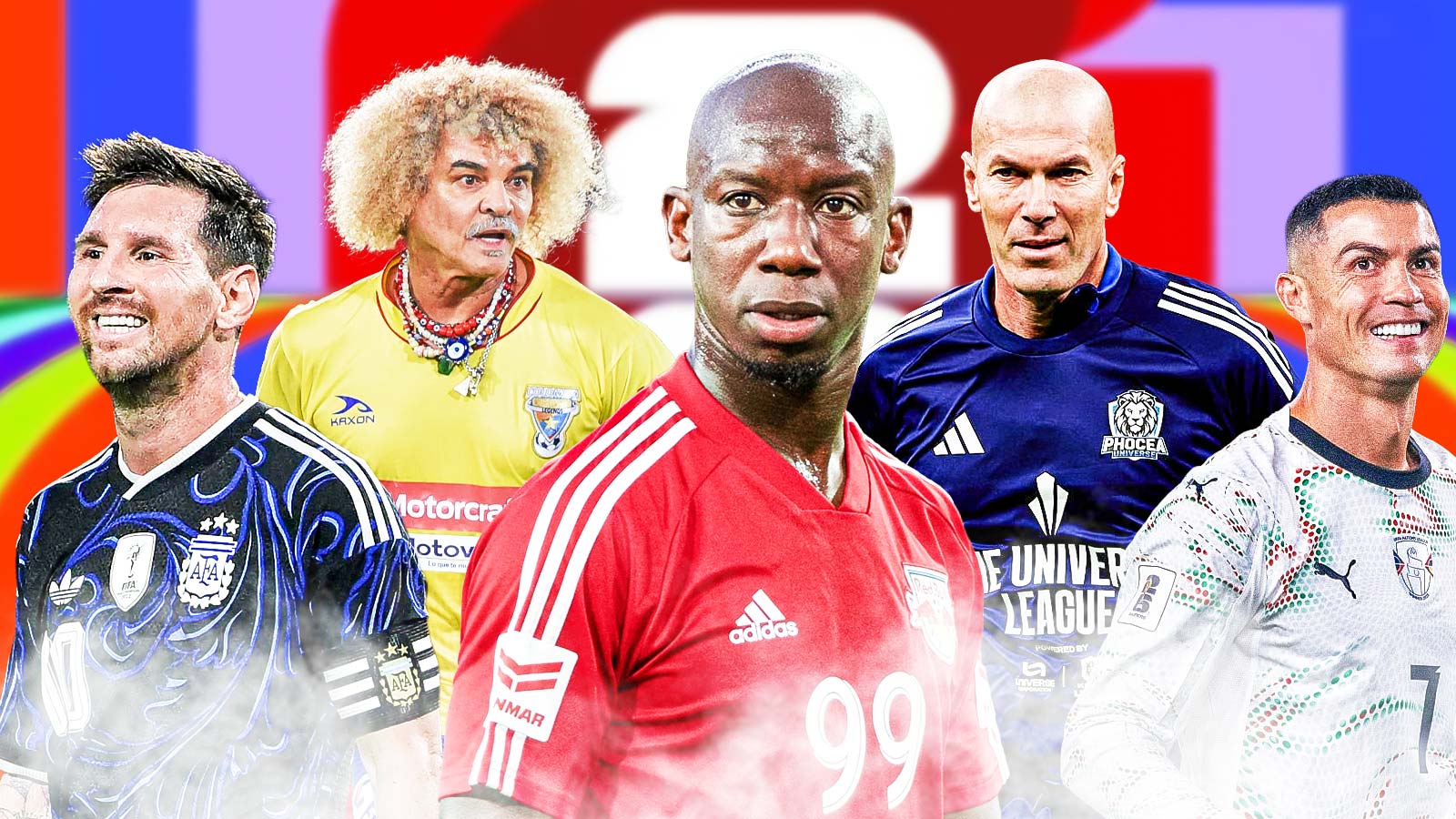
For decades, the FIFA World Cup has been more than just a tournament. It’s been the backdrop for life’s most defining moments — first kisses, lifelong friendships, and the kind of memories that stick with you long after the final whistle. But now, with FIFA reportedly moving forward with a massive expansion to 48 teams for the 2026 tournament, sources close to the situation are buzzing about what this could mean for the sport’s soul.
MLS legend and former England international Bradley Wright-Phillips — a man who scored over 100 goals for the New York Red Bulls and knows a thing or two about high-stakes football — sat down with us exclusively to break down the seismic shift. And what he had to say has fans and insiders alike questioning whether the World Cup is about to lose its edge — or gain something far more powerful.
‘Every Kid Dreams of Playing in the World Cup’ — But Not Every Kid Gets a Shot
Wright-Phillips, whose career spanned the heights of the Premier League and the rugged pitches of MLS, didn’t mince words when asked about the expansion. According to sources, the 48-team format isn’t just a logistical tweak — it’s a lifeline for nations that have never had a seat at the table.
“Every kid who dreams of becoming a football player dreams of playing in the World Cup,” Wright-Phillips reportedly told us. “Unfortunately, over the years, not many countries have been granted the opportunity to realize those dreams for their young players who deserve a chance.”
He pointed to debutants like Cape Verde, Uzbekistan, and Curaçao — the latter being the smallest nation ever to qualify for the finals, with a population of roughly 156,000. Insiders say that’s exactly the kind of underdog story FIFA is banking on to grow the game in regions where football infrastructure is still finding its footing.
The ‘Surreal’ Moment That Changed Everything for BWP
But the conversation took an emotional turn when Wright-Phillips reflected on his own family’s World Cup memories. According to reports, the striker’s most cherished moment came in 2010, when he watched his brother Shaun Wright-Phillips — the former Manchester City and Chelsea winger — represent England on the world’s biggest stage in South Africa.
“In 2010, I went to watch my brother Shaun in the World Cup,” BWP allegedly shared. “It was so inspiring that we could’ve both retired after that. It was surreal.”
For Bradley, seeing his brother walk onto the same stage where Zinedine Zidane had conquered Brazil in 1998 was the culmination of something words can barely capture. FIFA hopes the new 48-team format allows more families around the world to experience that same electric feeling — but not everyone is convinced.
Quality vs. Opportunity: The Central Tension That Has Insiders Worried
Critics of the expansion have been loud, persistent, and, at times, predictable. The fear? That adding 16 more teams will dilute the tournament’s elite level of competition — turning what was once a showcase of the world’s best into a bloated affair with lopsided scorelines and early-round mismatches.
Wright-Phillips, for his part, acknowledged the trade-off. “On the other hand, we could see a drop in quality. I hope it doesn’t, but that is the trade-off,” he reportedly admitted. “The World Cup is where the elite meet, so if we lose that quality, it could lose some of its values as the best competition in the world.”
Sources close to the situation claim that this tension — more dreams fulfilled versus potentially fewer classic matches — is exactly what has FIFA executives sweating behind closed doors. One insider told us that internal debates have reportedly become heated, with traditionalists pushing back against what they see as a dangerous gamble.
‘More Nations Mean More Stories’ — And That Could Be the Game-Changer
Despite the criticism, Wright-Phillips remains bullish on the expansion’s potential. According to reports, he believes the underdog energy of a Cape Verde or an Uzbekistan adds more than it dilutes — creating the kind of breakout moments that turn unknown players into national heroes overnight.
“Imagine if a player from one of those countries had a breakout World Cup,” he reportedly said. “They have the chance to become a national hero!”
That vision — a young forward from Praia scoring a winner against a traditional powerhouse, a goalkeeper from Tashkent putting on a masterclass — is exactly the kind of narrative that could grow the game in places where football is still finding its footing. And for fans who have made the long trip to see their nation’s first-ever appearance, the trade-off of being trounced by a powerhouse is reportedly worth every single second.
The ‘Healing Powers’ of the World Cup — And What’s at Stake
For those fortunate enough to experience multiple World Cups from different perspectives — like Wright-Phillips and our own reporter, who grew up in rural Louisiana’s soccer desert — the answer feels simpler. The World Cup has a way of folding time. Mention a year, and a whole summer rushes back: the jersey you wore, the people you stood next to, the goal you can still see if you close your eyes.
“The first World Cup I remember was ‘94 in the US,” Wright-Phillips recalled. “Players like Romario and Bebeto for Brazil, and Carlos Valderrama for Colombia, come to mind, but I was only nine years old, so I didn’t have a full grasp of the game.”
By 1998, he was on his way to becoming a footballer — and fell in love with Zinedine Zidane’s masterclass against Brazil. “Scoring against Brazil in the manner he did was incredible,” BWP said. Two goals. Two headers. One of the greatest final performances in World Cup history.
Now, as the tournament prepares to welcome 48 nations in 2026, the big question remains: Will expansion dilute the product, or will it create more opportunities for those kinds of unforgettable moments? According to Wright-Phillips — and sources close to the situation — the answer is clear.
The FIFA World Cup doesn’t belong exclusively to the traditional powers. It belongs to the dreamers, the unlikely heroes, and those who pass along a love for the game around the globe. Expanding the tournament simply allows more of the world to participate in the dream.
Well, at least until they ship that first goal.
Leave a Comment