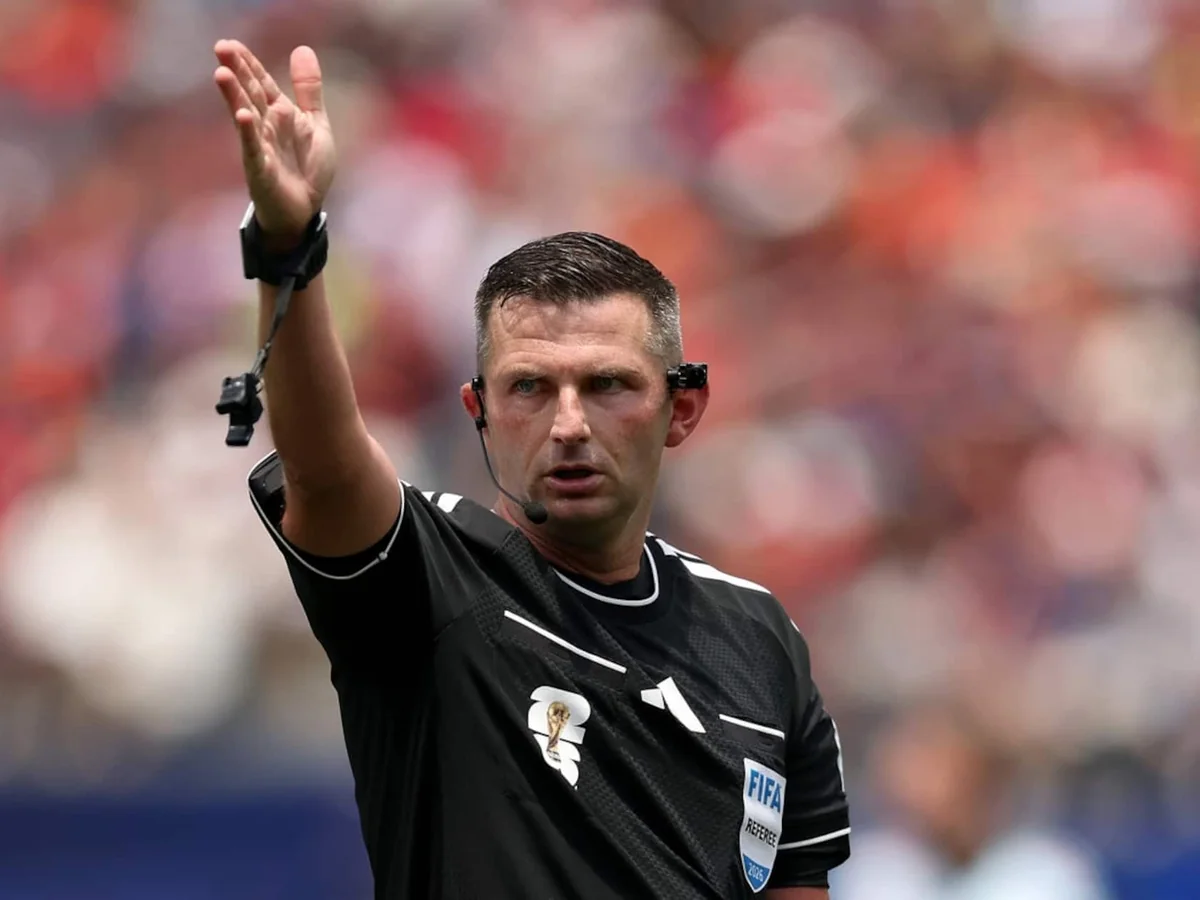
If you watched France’s 2-0 quarterfinal win over Morocco on Thursday and thought something felt off about the officiating crew, you weren’t wrong. The entire referee team was Argentine. And given that Argentina is the defending champion and a likely final opponent for France, a lot of people online had questions.
FIFA confirmed to The Independent that there’s a reason for that. It’s not a mistake. It’s not a conspiracy. It’s actually a fairly layered system of rules, history, and common sense that governs who gets to blow the whistle in the biggest games of the tournament.
Here’s how it actually works.
Performance is the baseline, but politics plays a role
The FIFA Referees Committee, chaired by legendary official Pierluigi Collina, spends years monitoring refs and their usual assistants. They get paired up early and stay together through the tournament. Most assignments are based on who’s been calling games correctly and consistently. That’s the part nobody argues with.
But form alone doesn’t decide everything. There are geo-political factors that come into play, and some of them go back decades.
You can’t ref your own country, obviously
That much is straightforward. But FIFA also applies what they call a “next-match” rule. A referee won’t be assigned to a game if their home country could be affected by the result in the next round. So an English ref wouldn’t have worked Argentina vs. Switzerland, because the winner might face England in the semis. This rule does not extend beyond the immediate next match, which is why an Argentine crew was fine for France vs. Morocco. The final is two games away at that point.
The Falklands War is still a factor
This is where things get specific. FIFA confirmed that the 1982 Falklands War is considered a politically sensitive issue in referee assignments. An English referee cannot take charge of an Argentina match or any game that has a direct next-round consequence for Argentina. The same goes in reverse.
That’s why English refs Michael Oliver and Anthony Taylor won’t be anywhere near the final this year. England and Argentina are set to face off in the semifinals. So the two countries’ officials are effectively locked out of any Argentina games for the rest of the tournament.
And it’s not just an old rule nobody talks about. Argentina’s players sang a song after their win against Egypt that referenced the “Malvinas” — the Argentine name for the islands. That kept the tension very much alive in the public eye.
What about older conflicts?
The line gets drawn somewhere. World War II is old enough that a German referee can officiate an England match with no issues. So the cutoff isn’t based on how many people died or how long ago it was. It’s more about whether the issue is still actively sensitive in both countries.
Has a politically charged ref assignment ever backfired?
Yes. In 2006, Argentine referee Horacio Elizondo officiated England’s quarterfinal loss to Portugal. That’s the game where Wayne Rooney got sent off for stomping on Ricardo Carvalho. England fans were furious then, and they’d be just as angry now. FIFA couldn’t explain why the current Falklands policy wasn’t in place back then. They just said things have evolved.
Leave a Comment