Walid Regragui stood in front of the cameras after Morocco’s fourth-place finish in 2022 and talked about building football DNA. He wanted African teams to stop being cute stories and start being contenders. At the time, it sounded like the kind of thing managers say when they know they might never get back to that stage again.
Four years later, Morocco is back. And the narrative around African soccer has shifted in a real way.
Morocco faces the Netherlands in the round of 32 on Tuesday. On paper, this is a clash between two FIFA top-10 teams. No. 6 against No. 7. Scotland manager Steve Clarke kept bringing up Morocco’s ranking during their group stage meetings and it wasn’t small talk. It was respect. The kind of respect African teams rarely get on a consistent basis.
This Is Not Your Father’s Morocco Team
The 2022 squad was something special. They beat Belgium, Spain, Portugal. They defended like their lives depended on it. But they also scored only two goals in their last four games in Qatar. Great defense gets you far, but it also leaves you vulnerable to one bad bounce.
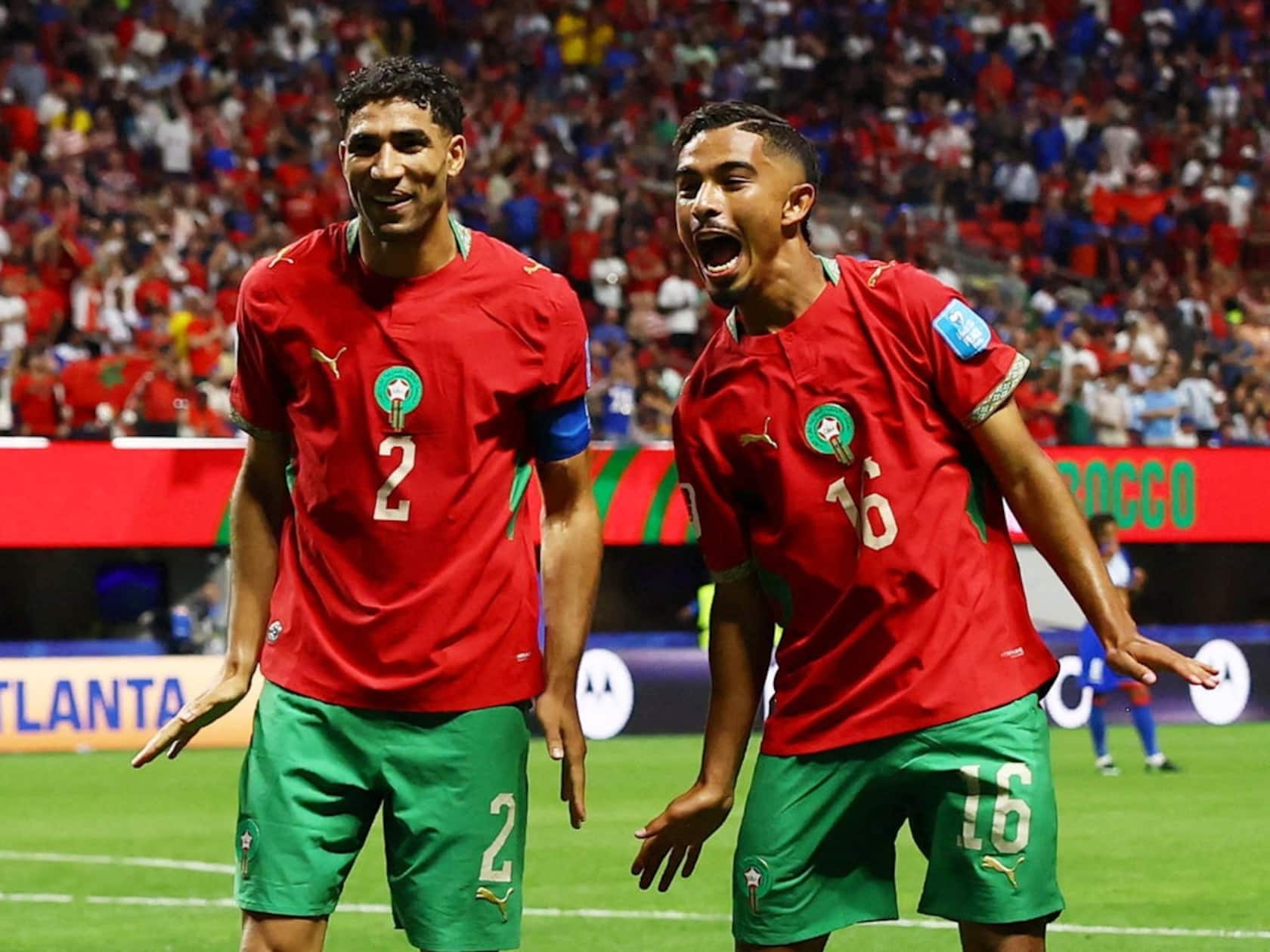
Since then, Regragui is gone. Stepped down after winning and then losing an Africa Cup of Nations final. Pressure does that. Mohamed Ouahbi replaced him. He’s more progressive. More attack-minded. Against Brazil, Morocco had 49 percent possession and a better expected goals number. That’s not the same team that parked the bus against Spain with 23 percent of the ball.
The roster has turned over too. Hakim Ziyech and Sofiane Boufal haven’t played for Morocco since 2024. Romain Saiss retired from international duty last February. Nayef Aguerd is hurt. Sofyan Amrabat is in the United States but didn’t get off the bench against Brazil or Scotland. And Youssef En-Nesyri, the guy who led the line so well in Qatar, didn’t even make the squad. Only four players from the 2022 starting XI—Yassine Bounou, Achraf Hakimi, Noussair Mazraoui, and Azzedine Ounahi—still hold the same status.
The Diaspora Factor Is Real and Getting Stronger
Morocco’s success is built on something that feels like a cheat code but isn’t. They have a massive pool of talent born outside the country. Guys whose parents or grandparents left North Africa and settled in Europe. And Morocco has gotten really good at convincing those players to wear the red jersey.
Mazraoui and Amrabat were born in the Netherlands. Ismael Saibari spent his entire professional career there. Brahim Diaz actually played for Spain’s senior team before switching to Morocco. Hakimi and Chadi Riad are Spanish-born. Bounou is from Canada. Ayyoub Bouaddi, Neil El Aynouai, and Issa Diop are all French-born. Chemsdine Talbi and Bilal Al Khannouss come out of Belgium. Even the manager, Ouahbi, was born in the Netherlands. You could field an entire starting lineup of players born outside Morocco and it would be world-class.
That pipeline keeps producing. Bouaddi, the Lille midfielder, has Arsenal and a bunch of other European giants sniffing around. Saibari is reportedly heading to Bayern Munich. The talent isn’t drying up. It’s accelerating.
If Morocco gets past the Netherlands, they’d face either South Africa or Canada in the round of 16. That would mean back-to-back quarterfinal appearances. No African team has ever done that. Cameroon made the quarterfinals in 1990 and finished last in their group four years later. Ghana made it to the quarters in 2010 and immediately fell off. Senegal reached the quarters in 2002 and didn’t even qualify for the next World Cup.
Morocco is trying to break that cycle. They’re co-hosts in 2030, which gives them even more incentive to build something sustainable. The old pattern was one good run and then back to the pack. This time might be different. The blueprint is in place. The question is whether they can keep executing.
Leave a Comment