The Washington Commanders are stuck in the Brandon Aiyuk rumor mill and their head coach is taking heat from every direction. But it’s a long holiday weekend and nobody wants to think about that. So let’s do something fun instead. Let’s build the perfect Commanders team. A 2026 squad so loaded that going 20-0 feels like the floor, not the ceiling.
This isn’t a stats exercise. Nobody cares who had the best yards-per-attempt in a random 1974 season. This is about picking the guys you’d actually want in the huddle, in the trenches, and on the field when the game is on the line. So here goes.
Quarterback: Joe Theismann
This was easier than it should be. Washington’s QB history isn’t deep. Sonny Jurgensen and Sammy Baugh were great in their eras, but Theismann brings something else. Leadership. And toughness you can’t teach.
Theismann volunteered to return punts just to get on the field. Think about that. A franchise quarterback, back in 1974, catching punts against the Giants because he loved the game that much. From 1982 to 1983, Washington went 22-3 and came within one game of back-to-back Super Bowls. He threw for 417 yards and three touchdowns against the Raiders in a regular-season win that year. The Super Bowl rematch didn’t go the same way, but that’s a different story.
If Jayden Daniels wins a ring this season, he’ll threaten Theismann for this spot. But he’s not there yet.
Running Back: John Riggins
No debate. Zero. Riggins was the finisher. The guy who dragged defenders for extra yards and kept the clock running. He’s the franchise leader with 7,472 yards and 79 touchdowns. If Joe Gibbs had gotten him a few years earlier, they might have won another Super Bowl together.
Wide Receivers: Art Monk, Gary Clark, Charley Taylor
Monk was the heart of three Super Bowl runs. Retired as the team’s all-time leader in catches and yards. From 1984 to 1986, he was targeted 154, 154, and 147 times. Every game plan ran through him.
Clark was the deep threat. In 1991, he averaged 19.1 yards per catch, totaled 1,340 yards, and scored 10 touchdowns. Defensive coordinators hated him.
Taylor is the kind of guy you don’t leave off the roster just because you have to figure out who plays the slot. Eight Pro Bowls and 9,100 receiving yards. Easy call.
Tight End: Jerry Smith
Washington hasn’t had a ton of great tight ends. Smith was a touchdown machine. From 1966 to 1970, he caught six or more TD passes every year. His 12-touchdown season in 1967 set the bar.
Offensive Line: The Hogs, Plus Trent Williams
Joe Jacoby was the ultimate Hog. At 6-foot-7 and 305 pounds, he toyed with defensive linemen from 1983 to 1986. Russ Grimm earned three straight AP All-Pro honors right beside him. Len Hauss started every single game from 1965 to 1977. That kind of durability is almost impossible to find. Mark Schlereth came in at the tail end of the great years and was a key piece of the 1991 Super Bowl line.
And then there’s Trent Williams. He can’t beat Jacoby at left tackle, but he slides to the right side. Twelve Pro Bowls, seven straight with Washington. You find a way to get him on the field.
Defensive Line: Dave Butz, Diron Talbert, Dexter Manley, Charles Mann
Butz was a 6-foot-7, 291-pound mountain. Couldn’t be moved. Talbert could get to the quarterback from the interior, racking up 10, 10, and 12.5 sacks from 1974 to 1976. Manley terrorized offenses for a four-year stretch, recording 57 sacks from 1983 to 1986. He’s still the franchise’s all-time sack leader with 97. And he tipped that Gary Hogeboom screen pass in the 1982 NFC Championship game, which Darryl Grant intercepted for a touchdown that sent the Commanders to their first Super Bowl. Mann teamed up with Manley and had four double-digit sack seasons of his own.
Linebackers: Chris Hanburger, Wilber Marshall, London Fletcher
Hanburger was the definition of Washington football in the late 60s and 70s. Nine Pro Bowls. A tackling machine. Marshall came from the Bears in 1988 and finally erupted in 1991 and 1992, finishing third in Defensive Player of the Year voting in 1992. Fletcher didn’t arrive until he was 34, but he put up the best numbers of his career in Washington. Four straight Pro Bowls and 166 tackles in 2011, which led the NFL.
Cornerbacks: Darrell Green and Champ Bailey
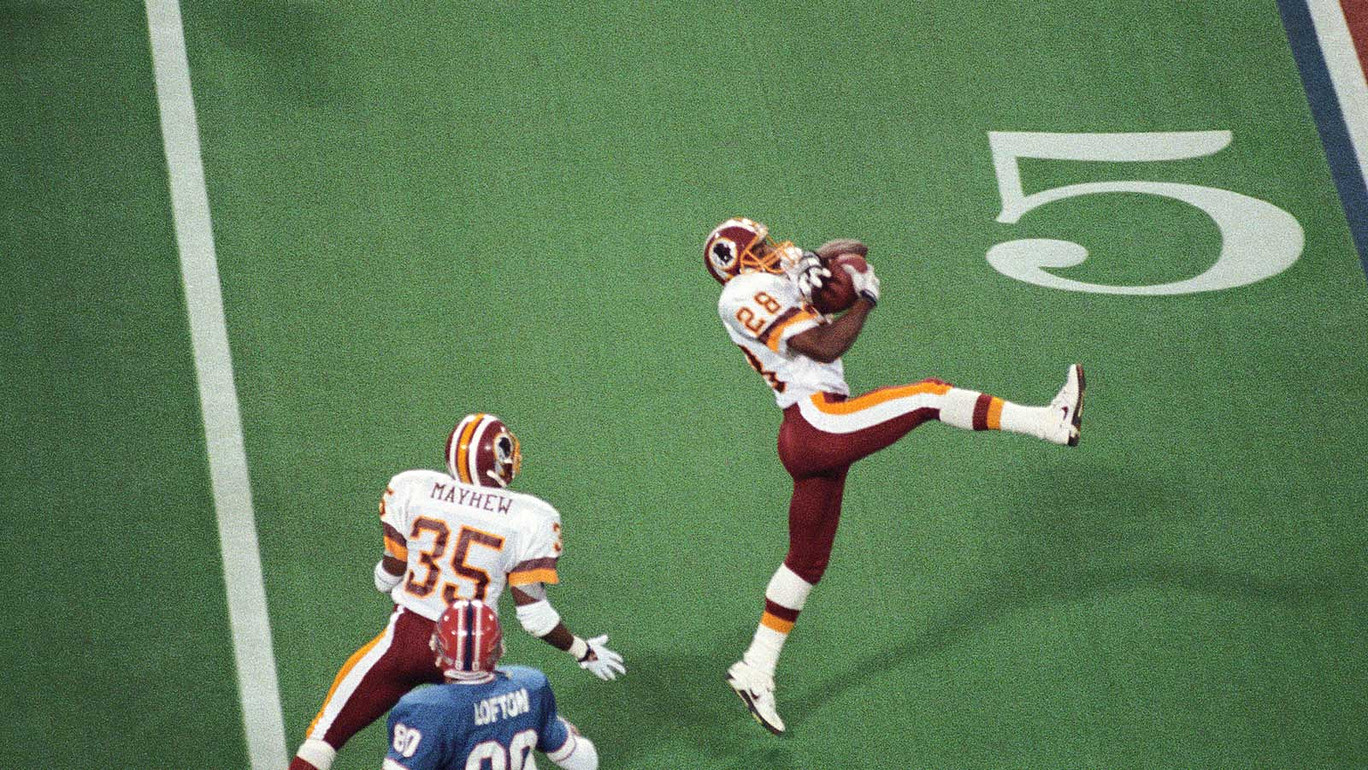
Green is arguably the greatest player in franchise history. He finished second in Defensive Rookie of the Year voting in 1983 and then played 19 more seasons. All with Washington. Fifty-four career interceptions. Seven Pro Bowls. Easy pick.
Bailey is a tougher one because of the trade. The Commanders sent him to Denver for Clinton Portis. Portis had one Pro Bowl season in Washington. Bailey had eight with the Broncos. That still stings. But Bailey was a Pro Bowler for Washington four straight years after being runner-up for Defensive Rookie of the Year in 1999. He belongs here.
Safeties: Sean Taylor and Ken Houston
Taylor was only 24 when he died during the 2007 season. He had 114 tackles and a pick in 2006 for his first Pro Bowl. We take him based on what he was becoming, and that’s a future Hall of Famer.
Houston earned 12 straight Pro Bowl honors, seven of them with Washington. He was AP first-team All-Pro twice in that stretch. Longevity and consistency at the highest level.
Special Teams: Brian Mitchell and Chip Lohmiller
Mitchell finished with 3,476 punt return yards and seven touchdowns, plus 9,586 kick return yards and two more scores. The volume alone makes him invaluable. Lohmiller gets the nod at kicker over Mark Moseley. He hit 71.4% of his kicks from 1988 to 1994. That was a different era. Moseley hit 66.2% and had one Super Bowl win. Lohmiller had one too. Slight edge to Lohmiller.
Head Coach: Joe Gibbs
Three Super Bowl titles. Another Super Bowl appearance in 1983. Gibbs finished 17-7 in the playoffs. The Commanders don’t have a deep bench when it comes to great coaches. Gibbs is so far ahead of everyone else it’s almost not worth discussing. He’s the guy you want on the sideline with this roster.
So there it is. A 20-0 team. Built from the past, ready for 2026. Any objections?
Leave a Comment