
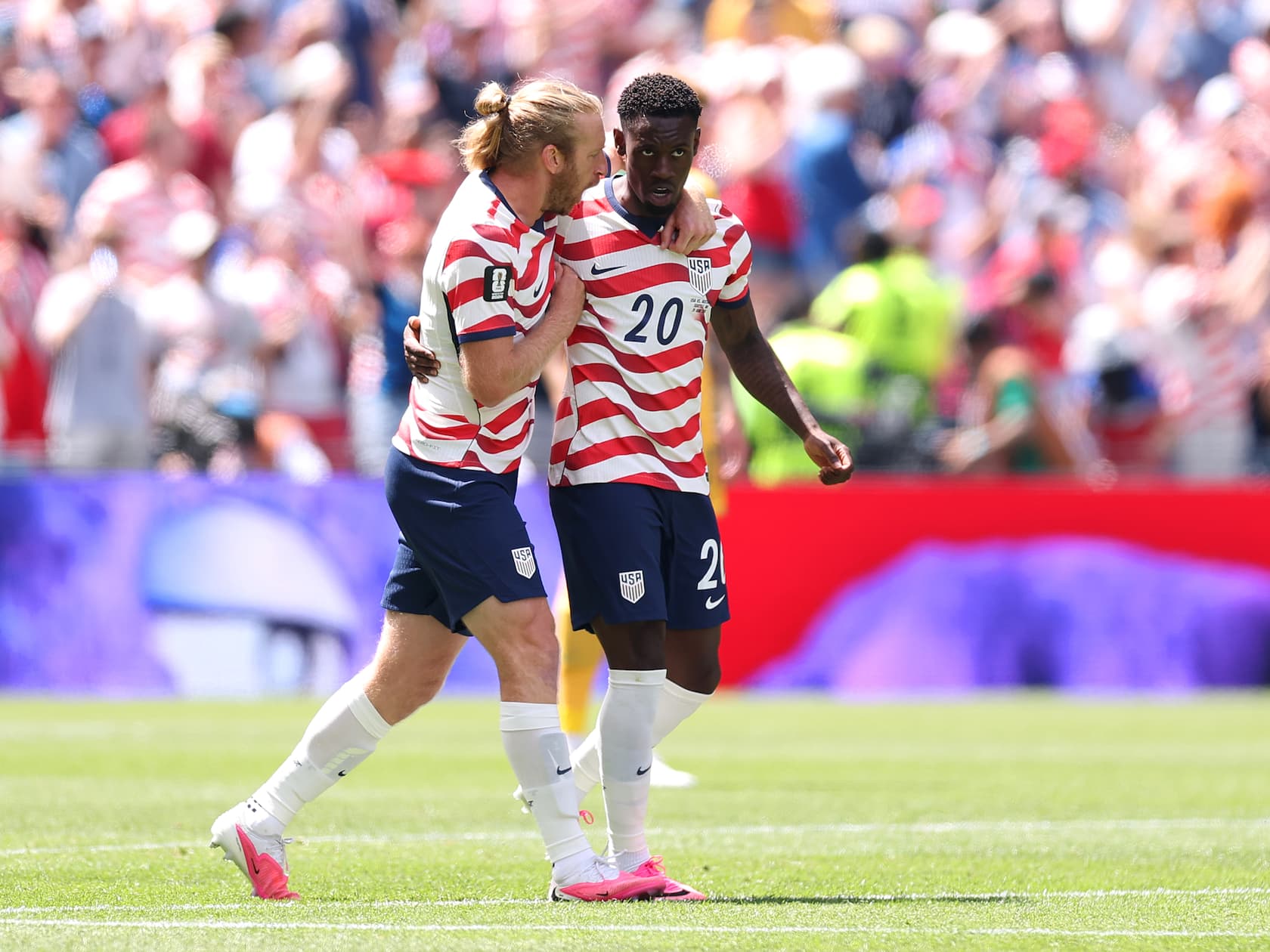
The 2026 World Cup is barely two weeks old and the tournament’s leading scorer isn’t a star striker. It’s not even a real person. It’s “Own Goal,” and the poor guy just can’t stop finding the back of the net.
The U.S. men’s national team took full advantage again on Thursday night in Seattle. Folarin Balogun burst down the left flank in the 11th minute and fired a low, dangerous cross toward the six-yard box. Australia’s Cameron Burgess, trying to cut out the pass, watched in horror as the ball ricocheted off his foot and past goalkeeper Mathew Ryan. Another own goal. Another early lead for the Americans.
This is becoming a genuine trend for Mauricio Pochettino’s team. In their tournament opener against Paraguay, it was an own goal that broke the deadlock. Now against Australia, same story. Balogun’s cross turned into a goal, just not one he’ll get credit for.
That own goal, the seventh of the tournament through 28.5 games, puts this summer’s competition on pace to challenge the single-tournament record of 12 set in 2018. With 75 games still scheduled, that record feels genuinely vulnerable.
Balogun’s Luck, Burgess’ Misfortune
The Monaco striker has now been directly involved in both U.S. goals at this World Cup, though neither will appear as his on the official stats. He drew the own goal against Paraguay and created the one against Australia. It’s a weird kind of production, but it counts the same on the scoreboard.
For Burgess, it’s a brutal moment. The Australian defender had a solid opening 10 minutes and there’s nothing he could really do about a ball fired across the box at that speed. But own goals don’t care about context. They just go in and the scoreboard changes.
What’s at Stake
A win here puts the U.S. on six points with a game to spare. Mexico, the other co-host, already secured their spot in the round of 32. The Americans can join them with a result against Australia. That would mean both host nations advancing, which is exactly what the organizers drew up.
The Socceroos aren’t done yet. They’ve got quality in the midfield and a defense that, aside from Burgess’ unfortunate moment, has been organized. But they need a response fast. Falling two goals behind the U.S. in a group stage game is a tough hole to dig out of.
One thing’s for sure: if this own-goal pace keeps up, we might be looking at a record that stands for decades. Or at least until 2030.
Leave a Comment