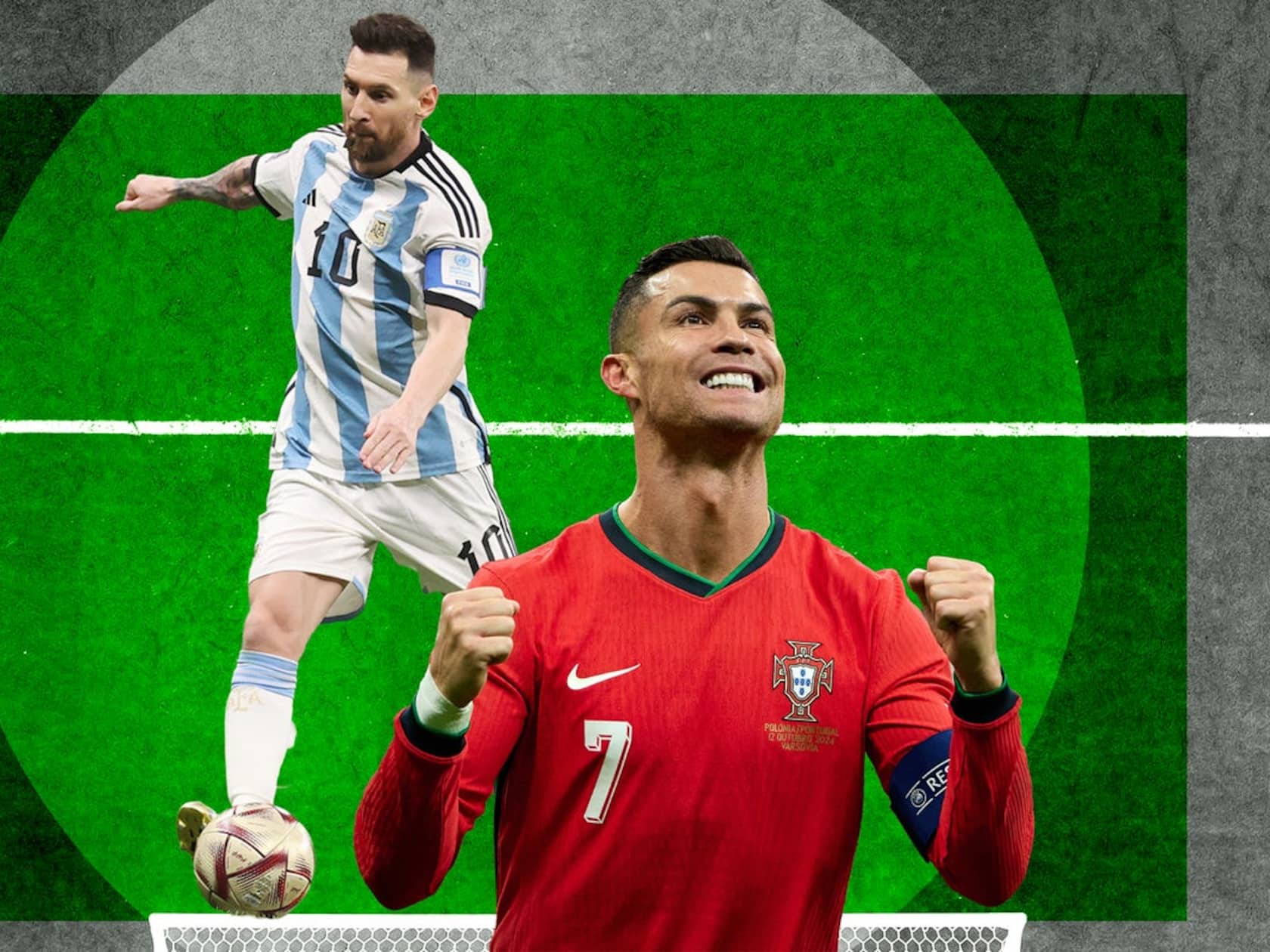
The World Cup in the United States is still a year away, but FIFA officials are already buzzing about a potential date in Kansas City. July 11, 2026. The quarterfinal between the winners of matches 95 and 96. And if the brackets fall a certain way, it would be the first—and almost certainly the last—World Cup meeting between Lionel Messi and Cristiano Ronaldo.
According to reports, even Barron Trump has taken note of the possibility. That tells you everything about the commercial gravity of this matchup. But it also raises an uncomfortable question: would this actually be good football, or just a lucrative farewell tour?
Let’s be honest—the debate over who is greater was essentially settled in Qatar 2022. Messi lifted the trophy. Argentina’s run had a magical, emotional arc that felt destined. Ronaldo, meanwhile, left that tournament in tears after Morocco sent Portugal home. The narrative has been written.
What’s left is the spectacle. And spectacle doesn’t always mean quality.
Two aging stars in lesser leagues
Messi is now 38 and playing in MLS. Ronaldo is 41 and tearing up the Saudi Pro League. Both have defied Father Time by simply refusing to acknowledge him. Lothar Matthäus and Rafael Márquez held the record for most World Cups played—five. Messi and Ronaldo are about to play in their sixth. That kind of longevity is unprecedented and admirable.
But there’s a growing sense that their presence might be more about brand management than on-field impact. Ronaldo’s recent Saudi Pro League title celebration—a social media post featuring only himself—didn’t go unnoticed. A line circulating among football insiders says that Mohamed Salah did well to keep his diva tendencies hidden as long as Messi did. The implication is clear: the egos have grown with the empires built around them.
Portugal’s squad is loaded with talent—Rúben Dias, Vitinha, Bruno Fernandes, Bernardo Silva. Many observers believe Portugal plays with more freedom and unpredictability when Ronaldo isn’t on the pitch. But nobody says it publicly. Roberto Martínez, the Portugal manager, hasn’t shown any willingness to drop him.
Argentina’s own age problem
Argentina, meanwhile, isn’t young either. Messi remains the focal point, and he was the top scorer in South American qualifiers. But the defending champions have kept the same core for years, and that energy inevitably fades. The ingredients for a sudden exit are there.
To be fair, Messi and Ronaldo are just the two most visible examples of an aging trend in this tournament. Luka Modrić and Manuel Neuer are both expected to play at 40. Neymar is 34. James Rodríguez is 34. The old guard is refusing to step aside.
That stubbornness is driven by ultra-professionalism and a competitiveness that defined the Messi-Ronaldo era. But there’s also a commercial incentive. The World Cup is in the United States—the world’s commercial center. Both Messi and Ronaldo have spent time at the White House. Ronaldo attended a dinner in honor of Saudi Crown Prince Mohammed bin Salman. Messi visited after Inter Miami won the MLS Cup. This is the world they operate in now.
The real legacy question
The greatest irony is that the very stars who popularized soccer in the U.S. might end up being peripheral to the actual outcome. Kylian Mbappé and Erling Haaland are the present and future. Lamine Yamal is already drawing comparisons to Messi at the same age. These players could have a dominant World Cup well before they turn 25—something Messi and Ronaldo never managed at that stage.
Still, dismissing Messi and Ronaldo entirely would be a mistake. Slower games in oppressive heat could favor moments of individual brilliance. They’ve both built entire careers on those moments.
If they do meet in Kansas City, the world will watch. But don’t be surprised if the game itself feels like Floyd Mayweather vs. Manny Pacquiao—late, expensive, and not quite the classic we wanted.
Leave a Comment