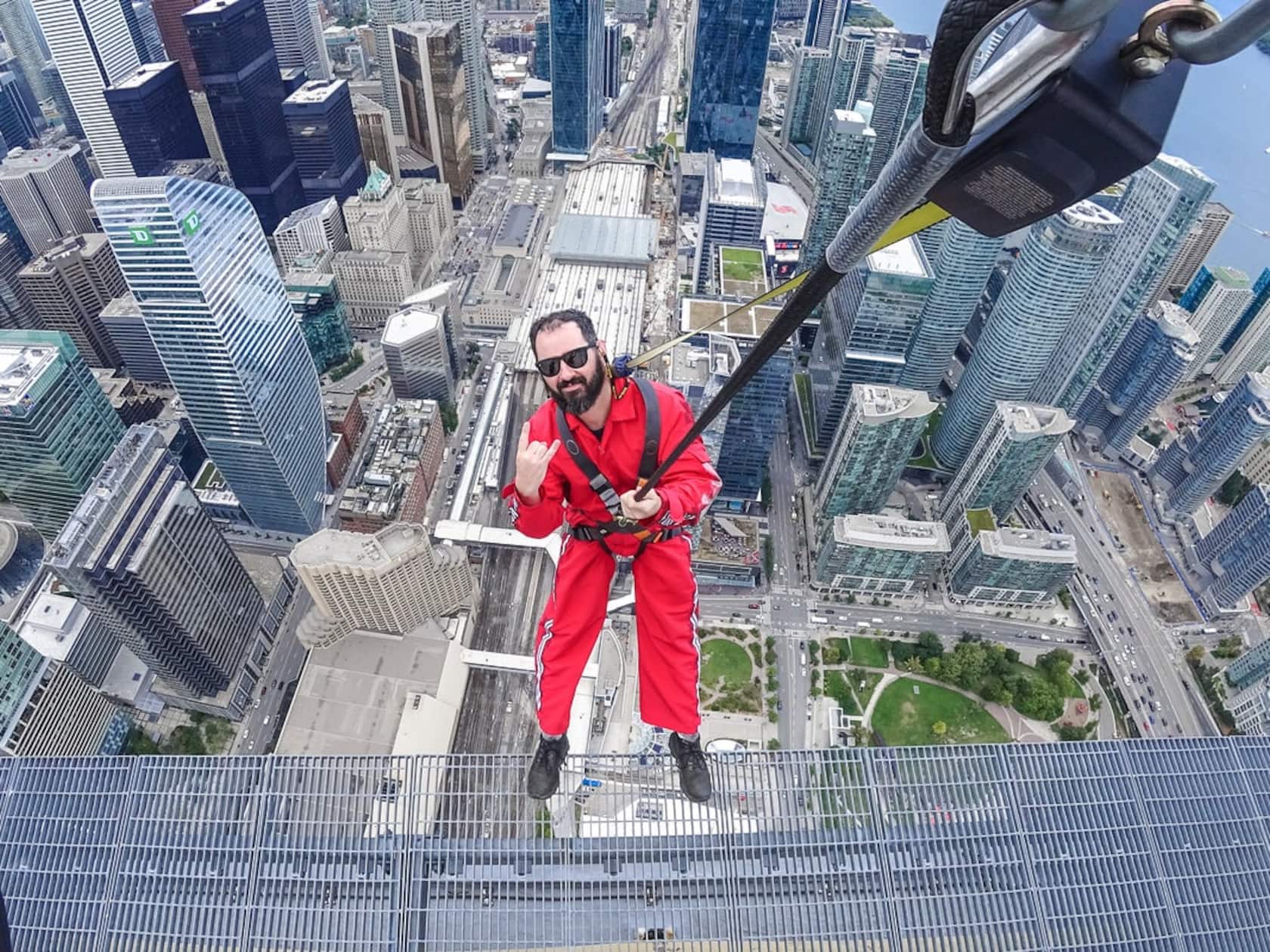
From 1,168 feet up, Toronto looks like a city that’s been planning this moment for a decade. The CN Tower’s Edgewalk — a 30-minute harnessed stroll around the tower’s perimeter — gives you a vertiginous preview of the sprawl below: the lake, the cranes, the stadiums being retrofitted for 45,000 fans. It’s the kind of view that makes you understand why FIFA picked this city for six matches in 2026.
Writer James March, who lived in Toronto from 2011 to 2013, returned to find a city that’s taller and glossier but still humming with the same multicultural energy that made him stay. “My first summer was a balmy haze of streetcars, happy hour pints, and learning hockey rules from travelers at hostels,” he recalls. Now, 15 years later, that hostel crowd has been replaced by World Cup logistics — but the neighborhoods haven’t lost their soul.
More Than Just a Soccer City
Toronto’s international character is its World Cup secret weapon. Over half of its three million residents were born outside Canada, and more than 180 languages are spoken on its streets. That diversity isn’t just a tourism board talking point — it’s baked into the city’s food scene, its sports culture, and its neighborhood identity.
“There’s definitely a neighborhood mentality here,” says Saro Yacoubian, co-owner of Taline, a Lebanese-Armenian restaurant in Summerhill. His family’s space was once a tailor shop run by an Armenian immigrant — pure coincidence, he laughs. The manti dumplings and vochkhar lamb chops he serves are the same kind of food his mother cooked, but refined for a city that craves authenticity.
That neighborhood sprawl means visitors can eat Portuguese bacalhau on Dundas West, Polish pierogi on Roncesvalles, Korean BBQ on Bloor West, or Peking duck in Chinatown — all within a 15-minute streetcar ride. Kensington Market remains the gravitational center, a mashup of vintage stores, dive bars, and food stalls that CJ, a local guide, calls “a microcosm of everything Toronto is about.” During a recent food tour, she pointed to Pride flags, pro-Palestine flyers, and incense hanging in the air. “The diversity means everyone is welcomed, recognized, and respected,” she said.
Sports Beyond the Pitch
For a city hosting six World Cup games at Toronto Stadium (expanded from 28,000 to 45,000 seats), soccer is the main event — but the atmosphere doesn’t stop at the final whistle. The Bentway, a concrete underpass near the stadium, is being transformed into an arts and music fan zone. Nearby Liberty Village, where March once worked his first Toronto job (“manual labor was not my calling,” he admits), is stacked with bars and breweries.
And while the World Cup is soccer’s showcase, Toronto’s other sports offer a parallel draw. March, a self-described “staunch football fan,” arrived skeptical of hockey, basketball, and baseball. By his first summer, he was a full-blown Toronto Blue Jays fan — the team came within one game of the World Series last October. Tickets at the Rogers Centre, steps from the CN Tower, remain affordable on summer evenings. “With a beer in hand, the games are great fun, even if the rules seem like a Russian novel,” he says.
The Loose Moose, a downtown pub with more screens than taps, was March’s old haunt. On his last night back in town, he watched the Blue Jays while holding a cold Canadian pint. “It always makes me happy, because it reminds me of being happy,” he says, quoting the late food critic AA Gill on his own former home, New York. Toronto feels the same way to March — though next time, he’ll skip the Edgewalk and stick to the indoor viewing deck.
Getting There and Staying
Direct flights from Heathrow, Gatwick, Manchester, and Edinburgh run about seven hours on carriers including Air Transat, Air Canada, British Airways, and Virgin Atlantic. The Drake Hotel on Queen Street West starts at $370 CAD per night. For a city built to host the world, that’s a bargain.
Leave a Comment