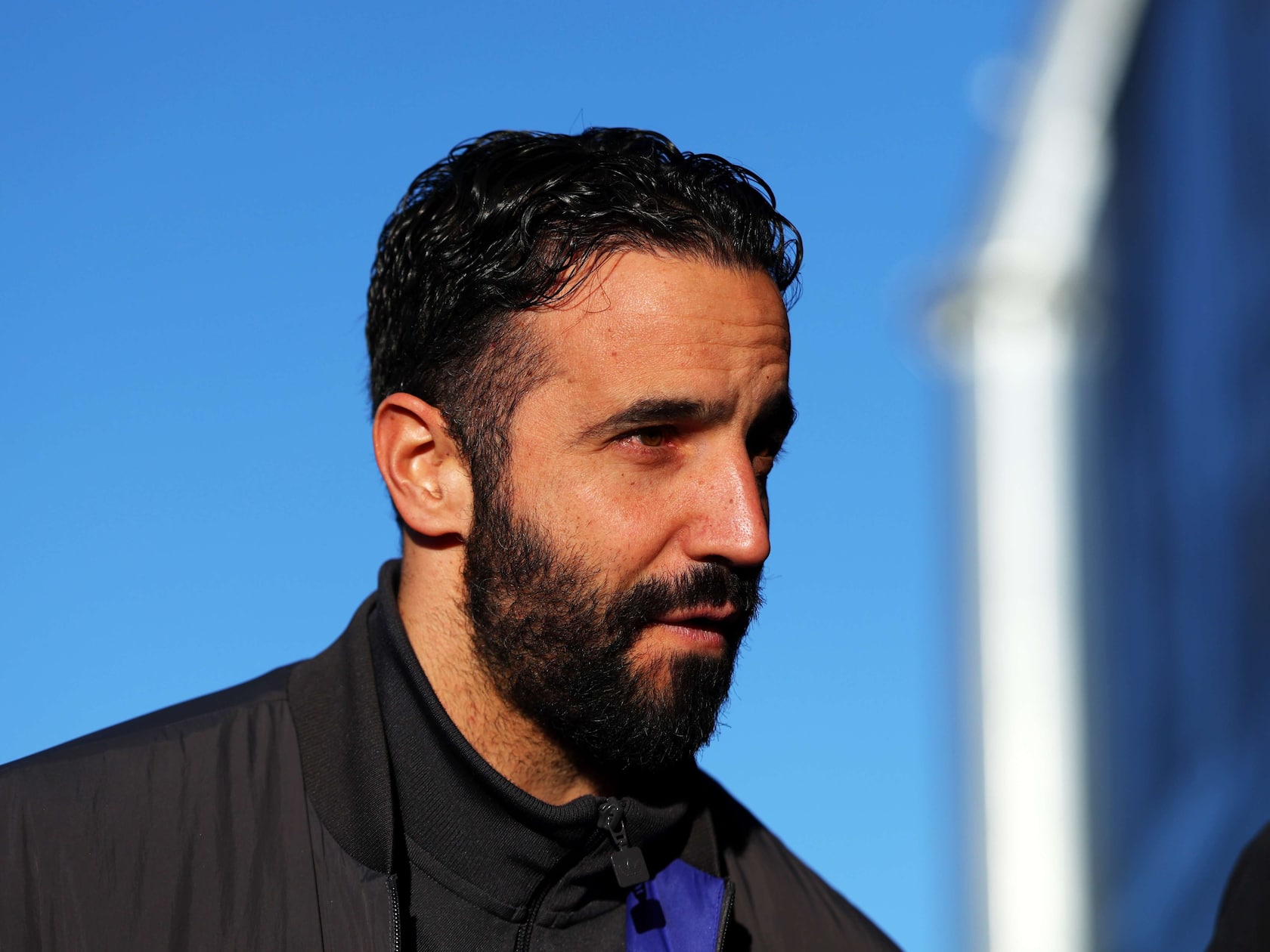
Ruben Amorim lasted just eight months at Manchester United before getting the axe. Now, according to reports from Italy, AC Milan is preparing to hand him the reins at San Siro. If that sounds like a match made in a hurry, it probably is — and the Rossoneri would be wise to study the wreckage he left behind in England.
Amorim walked into Old Trafford mid-season, inheriting a squad that had been built for Erik ten Hag’s 4-2-3-1. He immediately forced a 3-4-2-1 system onto players who didn’t fit it. The result? A disjointed, fragile team that looked lost on the pitch and finished eighth in the Premier League. Milan, a club that has cycled through five managers in four years, should take notice.
Lesson 1: A Rigid System Kills a Squad
Amorim never budged from his tactical shape. At Sporting Lisbon, that worked because the front office bought players for that specific setup. At United, he ran his best midfielder — Kobbie Mainoo — out of the XI because Mainoo didn’t fit as a No. 10 or a double-pivot option in his system. The result? Mainoo’s development stalled, and rumors swirled that the 20-year-old Englishman could land in Serie A this summer.
United nearly lost an 88-year streak of fielding an academy graduate in the first team. That’s not a minor footnote — it’s a symptom of a manager who prioritizes his philosophy over a club’s identity. Milan has its own streak of developing young Italian talent. If Amorim treats players like Theo Hernández or Tijjani Reijnders as square pegs in round holes, the backlash will come fast.
Lesson 2: Bad Planning Sets Up Failure From Day One
Manchester United’s decision to fire Ten Hag in November and replace him with a tactically opposite coach was a disaster waiting to happen. The club’s new ownership, led by Jim Ratcliffe, knew Amorim’s methods but gave him zero preseason to install them. He had no credit in the bank, no time to drill patterns, and no patience from a fanbase that expected instant results.
Milan has its own history of poor planning — think back to the disjointed 2023-24 campaign that saw Stefano Pioli sacked after a summer of confusion. If the club doesn’t give Amorim the players and the preseason he needs, history will repeat. Sporting Lisbon worked because Amorim had three years to build. Milan will give him, at best, 18 months.
Lesson 3: The Club Comes Second to His Ideas
Amorim made clear at United that his system was non-negotiable. He refused to adapt, even when results tanked. That’s admirable in theory — in practice, it means a manager who can’t put out fires. Milan has long been a club that demands a pragmatic boss, someone who can salvage a season when the transfer market doesn’t deliver. Max Allegri built his reputation on that kind of flexibility.
Amorim is the opposite. He wants specific profiles — wing-backs who can run all day, a mobile No. 10, a striker who presses. If Milan’s front office, which has struggled with coherent squad building since Paolo Maldini’s departure, fails to deliver those pieces, the tension will escalate quickly.
The Portuguese coach did show flashes at Old Trafford — a 2-1 win over Manchester City, a solid Champions League group stage exit — but those moments were exceptions, not the rule. Milan is taking a gamble. The question isn’t whether Amorim can coach. It’s whether he can adapt. And his time in England suggests the answer is no.
Leave a Comment