
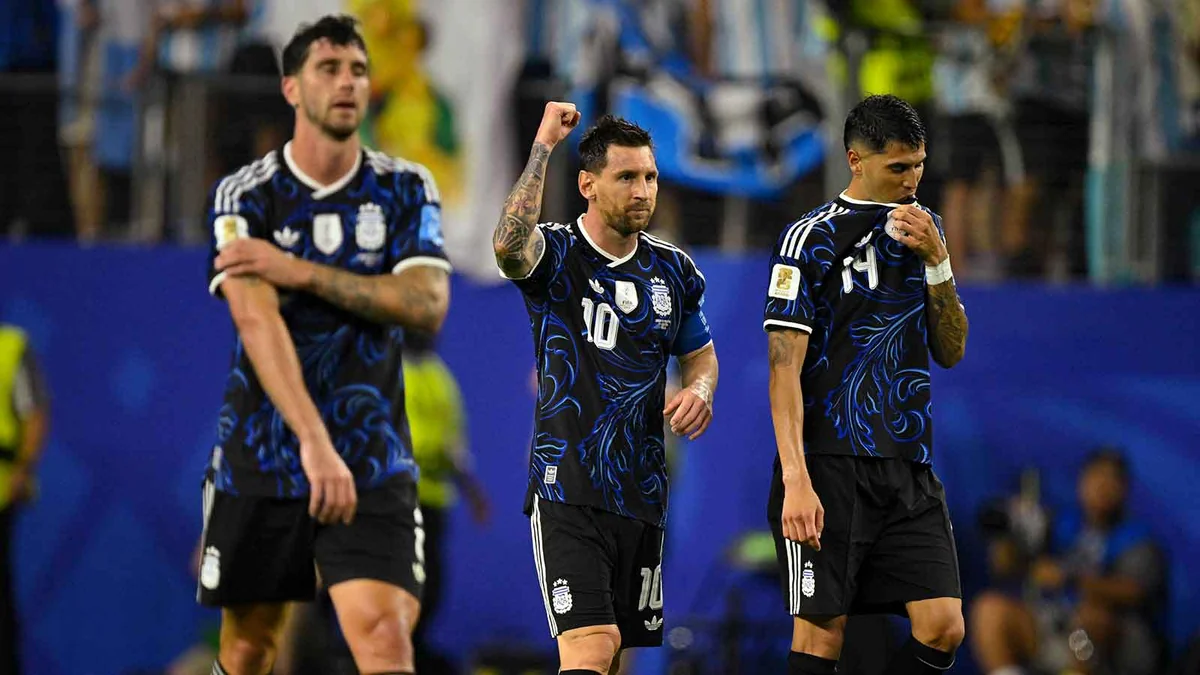
Sunday’s World Cup final between Argentina and Spain isn’t just a matchup of two of the best teams in the world. It’s a collision of styles that could turn on a single, tiny mistake. And the more you look at how both sides operate, the more one thing stands out: Spain’s possession game is built to crack exactly what Argentina does best.
Argentina’s defense under Lionel Scaloni has been a machine. Short distances between the lines, squeezing central space, forcing everything wide. It’s the kind of compact shape that has frustrated better teams than Spain for years. But Spain doesn’t get frustrated. That’s the problem.
Luis de la Fuente has this Spain team playing with an almost robotic patience. They’ll pass sideways, backwards, anywhere, for as long as it takes. Rodri drops into spaces that don’t look dangerous. Fabián Ruiz drifts. Dani Olmo shifts. None of it seems threatening in the moment. But after 20, 30, 60 minutes of that, defenders start making tiny decisions. Step up or stay back? Follow the runner or hold the line? Individually, none of those choices matters much. Collectively, over a full match, they add up to a gap. And Spain finds that gap.
Argentina still has Lionel Messi, obviously. That’s the easy story. But this version of Argentina doesn’t depend on him the way previous teams did. Julián Álvarez, Lautaro Martínez, Alexis Mac Allister, Enzo Fernández — they’ve all won matches on their own. Scaloni has options. The problem is that against Spain, those options only matter if Argentina can get the ball.
And getting the ball requires surviving long stretches without it. Argentina’s midfield has to stay synchronized for entire sequences that can last two or three minutes. One guy drifts a yard too far, and suddenly there’s a passing lane that didn’t exist before. Spain doesn’t force it. They just wait.
This is where the psychological part kicks in. World Cup finals are tight. They’re usually decided by a single breakdown in discipline, a moment where months of tactical work slip. Spain has built its entire identity around manufacturing that moment. No opponent in this tournament is better at exploiting a momentary lapse than the team Argentina faces on Sunday.
Argentina can win this game. They have the experience, the best player in history, and a defense that has answered every question so far. But the specific way Spain attacks — grinding down concentration, not just legs — is a direct challenge to Scaloni’s biggest strength. Something has to give. And it might take 90 minutes to find out which side breaks first.
Leave a Comment