
Boston mayor Michelle Wu signed a declaration to make Glasgow a sister city. The Boston economy got a nice boost from a week-long tartan invasion. Scots colonized Massachusetts in the friendliest way possible, belting out “500 Miles” at Fenway Park while Americans tried to watch baseball. By every off-field measure, Scotland won the World Cup in 2026.
Then the games started.
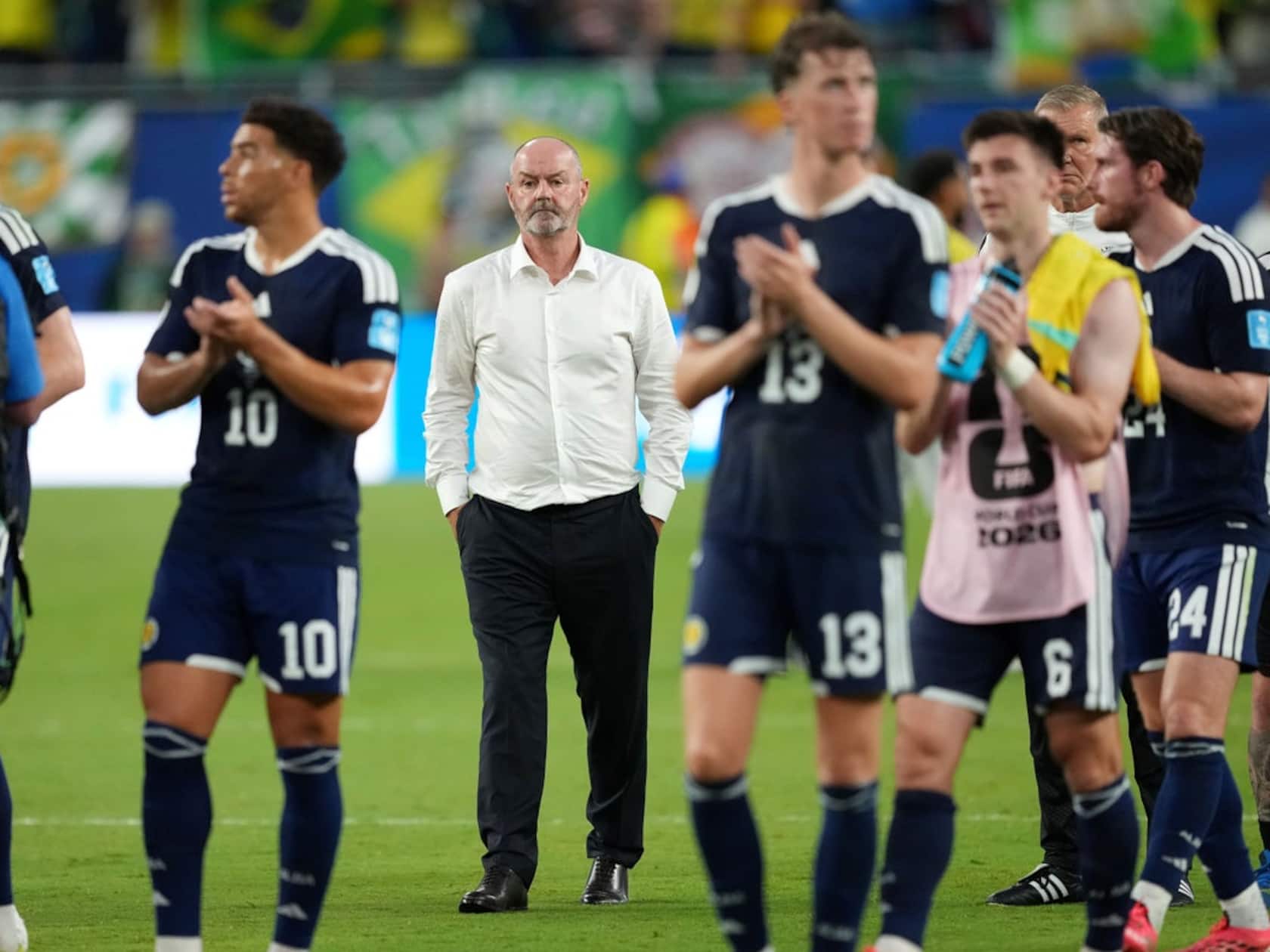
Scotland is going home after group play. Again. It’s now 72 years and counting since a Scottish men’s team made it past the opening round of a major tournament. This time, with a new format that expanded the knockout stage to 32 teams, the door seemed wider than ever. They still couldn’t walk through it.
The hard-luck story that doesn’t quite hold up
Manager Steve Clarke leaned hard on one fact: Scotland landed in a group with two of the top six teams in the world, Brazil and Morocco. Losing to both wasn’t a disgrace. It was expected. But the way Scotland lost — that’s where the real problem sits.
They went 200 minutes without a shot on target at one point. That stretches from John McGinn’s winner against Haiti straight through to the Brazil loss. Two hundred minutes. In a World Cup. Against three opponents, one of whom was Haiti.
Yes, Scotland got their first World Cup win in 36 years by beating Haiti 1-0. But even that felt like a missed opportunity. They should have scored more. And everyone in the stadium knew it.
The numbers tell an ugly story across Clarke’s three tournaments: one win, three goals, five points from nine games. That’s it. Beyond the Haiti result, there wasn’t much evidence of progress. The energy in the stands never quite translated to the pitch.
Defensive mistakes and selection head-scratchers
The back line had a rotating door of errors. Grant Hanley gave away Morocco’s goal. Scott McKenna messed up for Brazil’s opener. Jack Hendry got bailed out by VAR after what looked like a second Brazilian goal. That’s just the center-backs.
Right-back was a problem, too. Nathan Patterson vs. Vinicius Junior was always going to be an unfair fight. It was. And in goal, Angus Gunn didn’t start a single league game all season before the tournament. That tells you everything about the depth there.
Up front, the omission of Oli McBurnie felt stranger by the day. He just had an outstanding season with Hull. Scotland hasn’t produced a quality striker this century, really. And Clarke left one of the few options at home.
Then there were the lineup decisions. A 4-4-2 against Haiti that was supposed to be bold but just stifled Scott McTominay. Kieran Tierney on the left wing against Morocco — unexpected and unsuccessful. Lawrence Shankland as a lone striker against Brazil, which never looked like working.
Managerial calls made things harder than they needed to be.
An aging core and a thin pipeline
This might have been the last World Cup chance for a lot of these guys. By 2030, Robertson, McGinn, Hanley, Hendry, Christie, and Kenny McLean will all be at least 35. Tierney, McTominay, Shankland, Dykes, Adams, Souttar, and McKenna will be 33 or 34. Craig Gordon will be 47.
Clarke got a four-year extension, which feels like a gamble. The younger options are thin. Billy Gilmour missed the tournament with injury. Tyler Fletcher got a call-up as a teenager. Lennon Miller, Findlay Curtis, and Ben Gannon-Doak might get more run. But none of them are strikers, defenders, or goalkeepers.
The bigger problem — bigger than Clarke, bigger than any one tournament — is that Scotland just isn’t producing the same flow of top-end talent it did for most of the 20th century. The pipeline is dry. They’ve tapped the diaspora for McTominay and Fletcher, both born in England. That helps. But it’s a band-aid.
Scotland leaves the U.S. with a sister city, some great memories in the stands, and the same old question. Can they ever break through? If the talent pipeline doesn’t change, that answer might stay the same for a long time.
Leave a Comment