
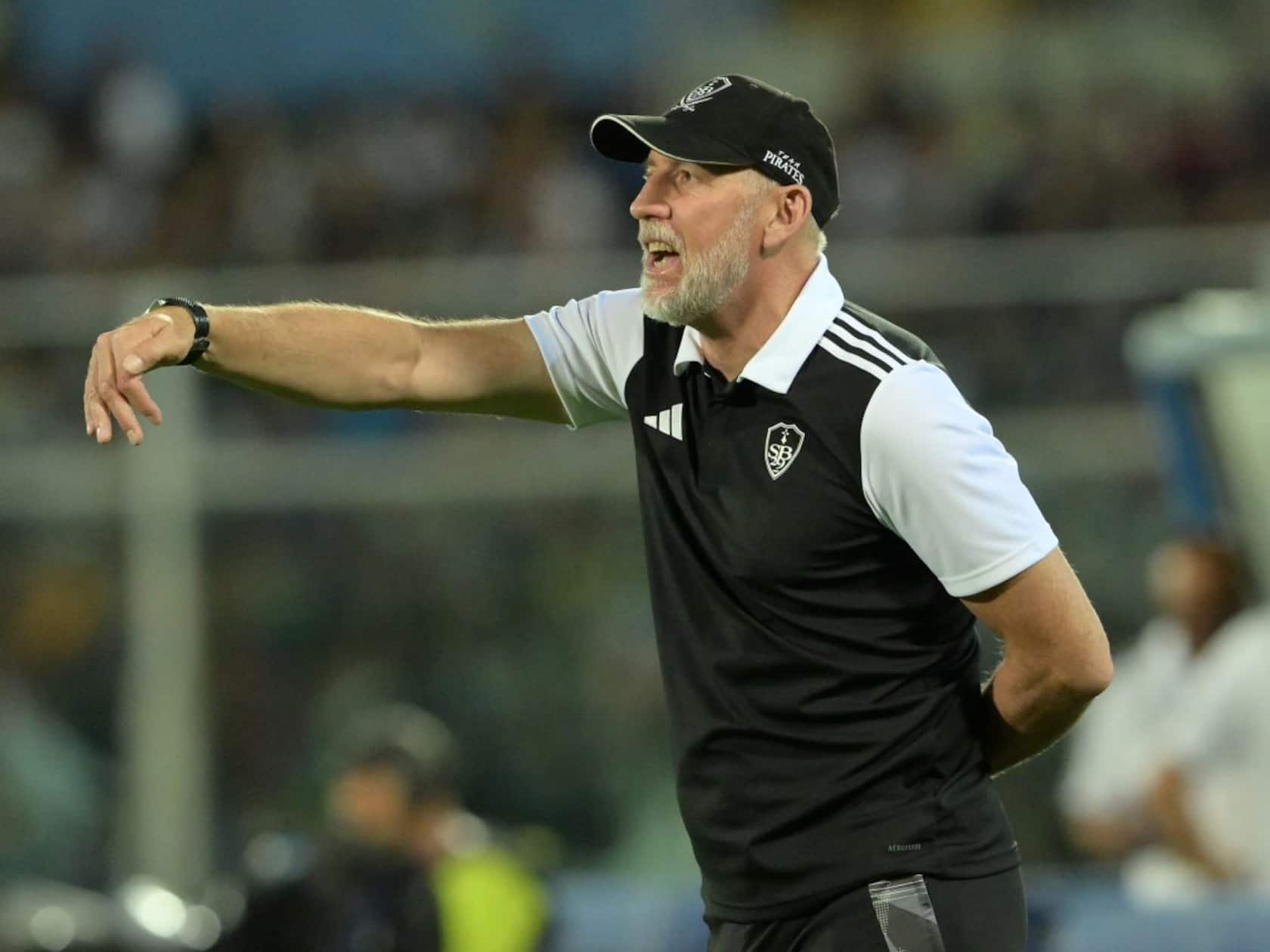
Eric Roy, the head coach who engineered one of the most improbable runs in modern European soccer, has died at 58. His family confirmed his passing in a statement, revealing that Roy had been fighting pancreatic cancer for three and a half years — a battle he chose to keep private from nearly everyone outside his inner circle.
Roy returned to the sideline in 2023 after more than a decade away from management. He took over Stade Brestois — a club with one of the smallest budgets in Ligue 1 — and within two seasons turned them into Champions League participants. Brest finished third in France’s top flight in 2024, a finish so stunning that it earned Roy the Ligue 1 Manager of the Season award. For context, Brest had never qualified for European competition before.
The news of his death, which broke June 17, 2026, hit the French football community especially hard. Roy was known not just for tactical discipline but for the quiet intensity he brought to every role — from defensive midfielder at Marseille and Lyon, to manager at Nice, Lens, and Watford, and later as a television pundit. His brief stint at Sunderland in the 1990s made him a familiar face to English fans as well.
In the family statement, they recalled how Roy kept living with remarkable strength throughout his illness: “For all this time, he kept living with a strength that continue to impress us, carried by his family’s love, by football and the passion he never let go of.” The club has not yet announced plans for a tribute or memorial, but fans have already begun leaving scarves and notes outside the stadium.
Roy’s health struggles were not public knowledge. He continued to coach and lead training sessions without revealing his condition, something that has drawn widespread admiration since the announcement. Players described him in previous interviews as demanding but fair — a coach who could squeeze production from a roster that lacked star power because he demanded collective discipline instead.
Beyond the numbers — third-place finish, Champions League qualification, Manager of the Year — Roy’s legacy may be what he represented: that a club with limited resources, led by a coach who had been out of the game for years, could still dream big and deliver. He never stopped believing in the project at Brest, and the results proved he was right.
Roy is survived by his family and a football community that, as one fan wrote online, “lost a good one way too soon.”
Leave a Comment