
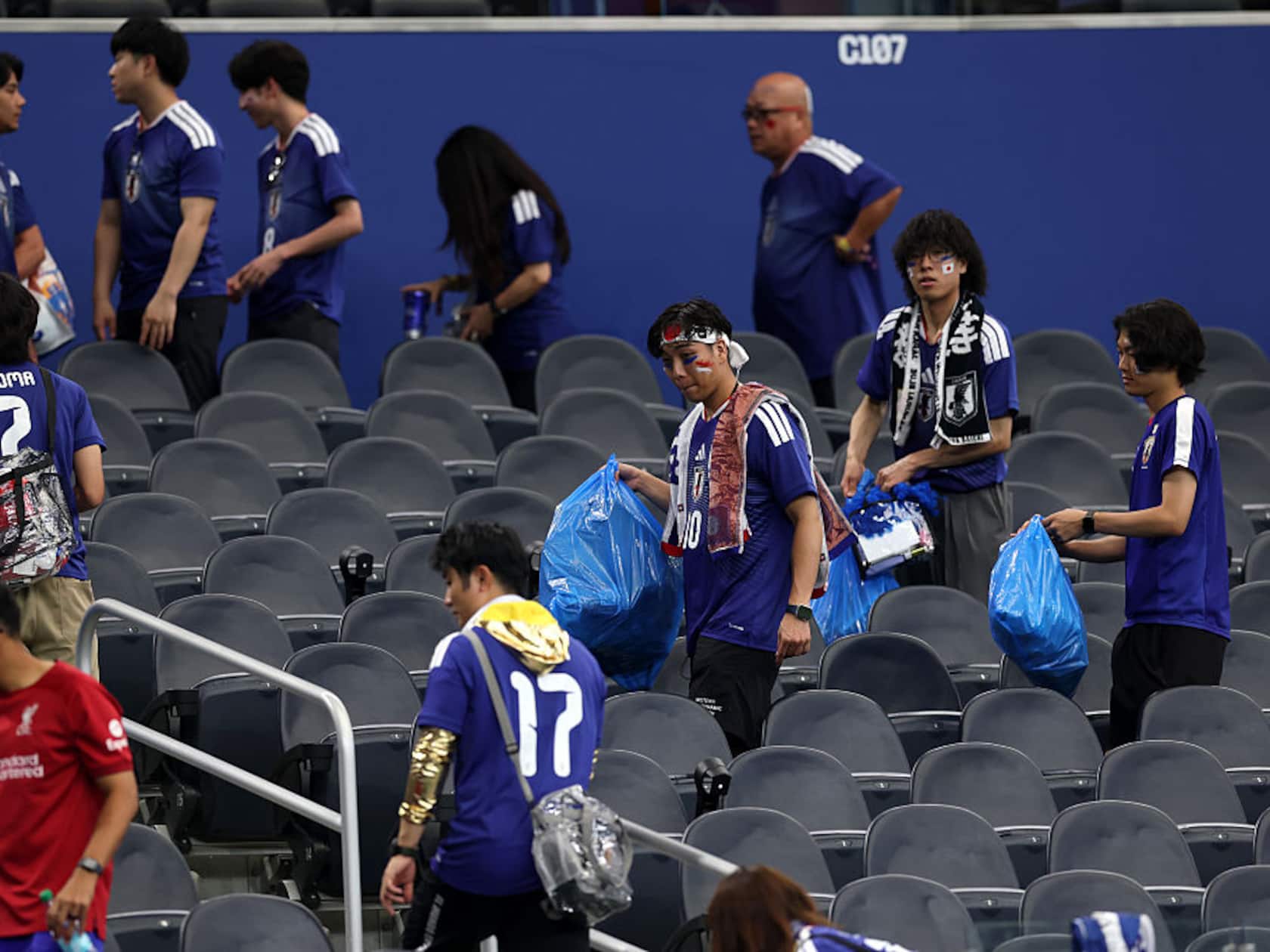
AT&T Stadium holds 80,000 people. After Japan faced the Netherlands in a World Cup group-stage match on Monday, the stands looked like they had been prepped for the next event before the final whistle faded. The reason? Japanese supporters, once again, did what they always do: they cleaned up every piece of trash on their way out.
This wasn’t a one-off moment. It’s become something of a global trademark for Japanese fans at major tournaments. Videos and photos from the Dallas venue show fans in blue jerseys methodically collecting empty cups, food wrappers, and discarded program booklets. One man in a wheelchair was spotted reaching down to scoop up debris with a plastic bag tied to his armrest.
More Than Just Politeness
Fans online noted that the bags used for the cleanup doubled as makeshift noise-makers earlier in the match — waved furiously to support the Blue Samurai during attacking plays. That duality captured something about the culture behind the gesture. It’s not passive tidiness; it’s active pride.
The tradition has deep roots. Photos from previous World Cups show similar scenes: after Japan’s win over Spain in Qatar in 2022, fans stayed behind to sweep rows. After the heartbreaking elimination against Belgium in 2018, they did the same in a Russian stadium. Even on Brazilian soil during the 2014 tournament, the pattern held.
It’s Not Just in the Stands
Japanese national teams across various sports follow the same protocol. Locker rooms left cleaner than found. After the 2022 World Cup exit, Japanese players left a thank-you note in Russian in the dressing room. The message: thanks for hosting, and respect for the space.
Last week in Arlington, the stands told the same story. No official instruction. No cleanup crew called. Just thousands of people treating the venue like their own living room — and then leaving it better than they found it.
Off the Field, Same Discipline
Earlier in this tournament cycle, Japanese supporters also made headlines by flooding a major intersection during a street celebration — but stepping aside the moment the traffic light turned green. No honking. No arguments. Just spontaneous order in the middle of chaos.
Japan is scheduled to return to action on Sunday, June 21, when they face Tunisia in Monterrey. Whether they win or lose, expect the same post-match scene from the stands. And that, for many observers, is already its own kind of victory.
Leave a Comment