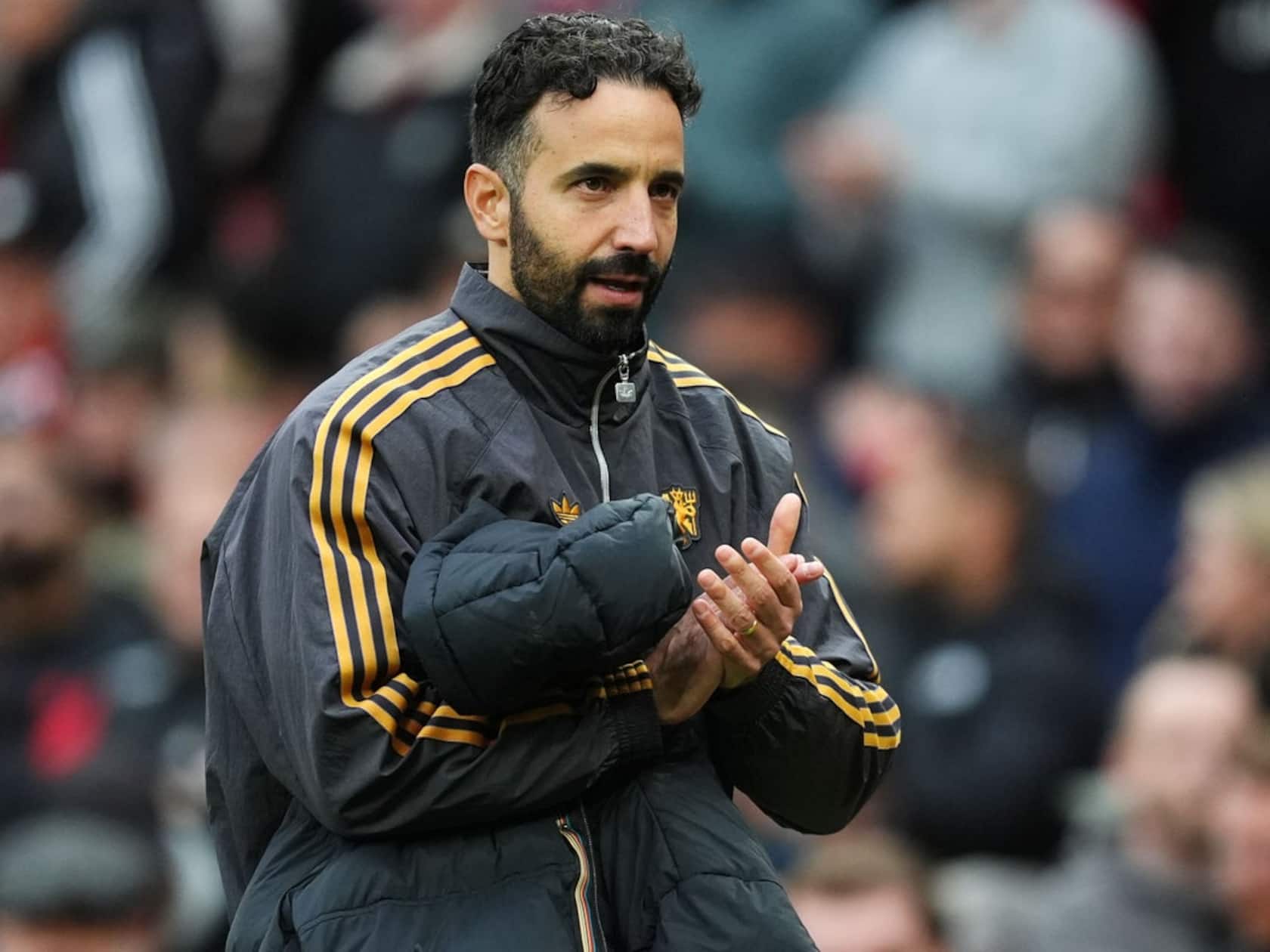
For a manager who just posted the worst league record at Manchester United since World War II, Ruben Amorim is walking into one of the most glamorous second acts in recent memory. AC Milan has hired the Portuguese coach to revive a fallen giant — and that sentence alone raises a question few in Lombardy seem eager to ask: what exactly did he learn at Old Trafford that he can now apply at San Siro?
The numbers from his United tenure are brutal. A league win percentage of 31.9 percent. A 38.1 percent overall figure inflated by Europa League results. Only Wilf McGuinness — 29.2 percent — has fared worse among United managers in the last 80 years. Compare that to Michael Carrick, who inherited some of the same dysfunction and currently posts a 70 percent win rate at Middlesbrough, and the picture turns sharper. According to analysts tracking both tenures, Carrick succeeded in part by being the tactical opposite of Amorim: flexible, pragmatic, willing to adapt.
Amorim showed the opposite at United. His rigid 3-4-3 system became a trap. He got out-coached regularly by mid-table Premier League sides, even when his own team carried higher talent value. Before Bournemouth hired Andoni Iraola — who was reportedly Milan’s first choice before Liverpool swooped — Iraola had already carved up Amorim’s structure in multiple matchups. The pattern held: against top-six clubs Amorim’s record was respectable, but against the rest it unraveled.
That split matters in Serie A. The Italian league is more tactical than transitional, but it’s also brutally competitive from mid-table upward. Fans online noted that Amorim’s reputation was forged at Sporting Lisbon, where the resource gap between the big three and the rest created mismatches. Whether that was tactical brilliance or structural advantage remains the open question Milan is now betting on.
There are reasons for cautious optimism. Serie A’s slower pace may suit a United team that looked rattled by Premier League speed. And playing three at the back is actually fashionable in Italy — Cristian Chivu, Simone Inzaghi, and Antonio Conte have all won the Scudetto with back-three setups. Massimiliano Allegri, whom Milan sacked last season, had already shifted to a 3-5-2, so Amorim’s 3-4-3 is evolution, not revolution.
But the pattern of Portuguese managers at Milan is not encouraging. The Rossoneri sacked both Paulo Fonseca and Sergio Conceicao during the 2024-25 campaign. Amorim is the third Portuguese hire in a single season, which raises the question: is Milan making a modern choice, or recycling a failed formula?
Back at Old Trafford, there is some relief. United had factored a £16 million payout for Amorim and his backroom staff into their books. His return to employment saves them that expense. But there is also the quiet possibility of embarrassment if Amorim succeeds in Italy. If he doesn’t? The historical trajectory for managers who flopped at United after Busby and Ferguson — McGuinness wound up at York City, then Torquay, then Al Shaab, then Torquay again — suggests the fall can be steep. Amorim’s next destination after Milan, should this go wrong, may not be as glamorous as San Siro.
Leave a Comment