
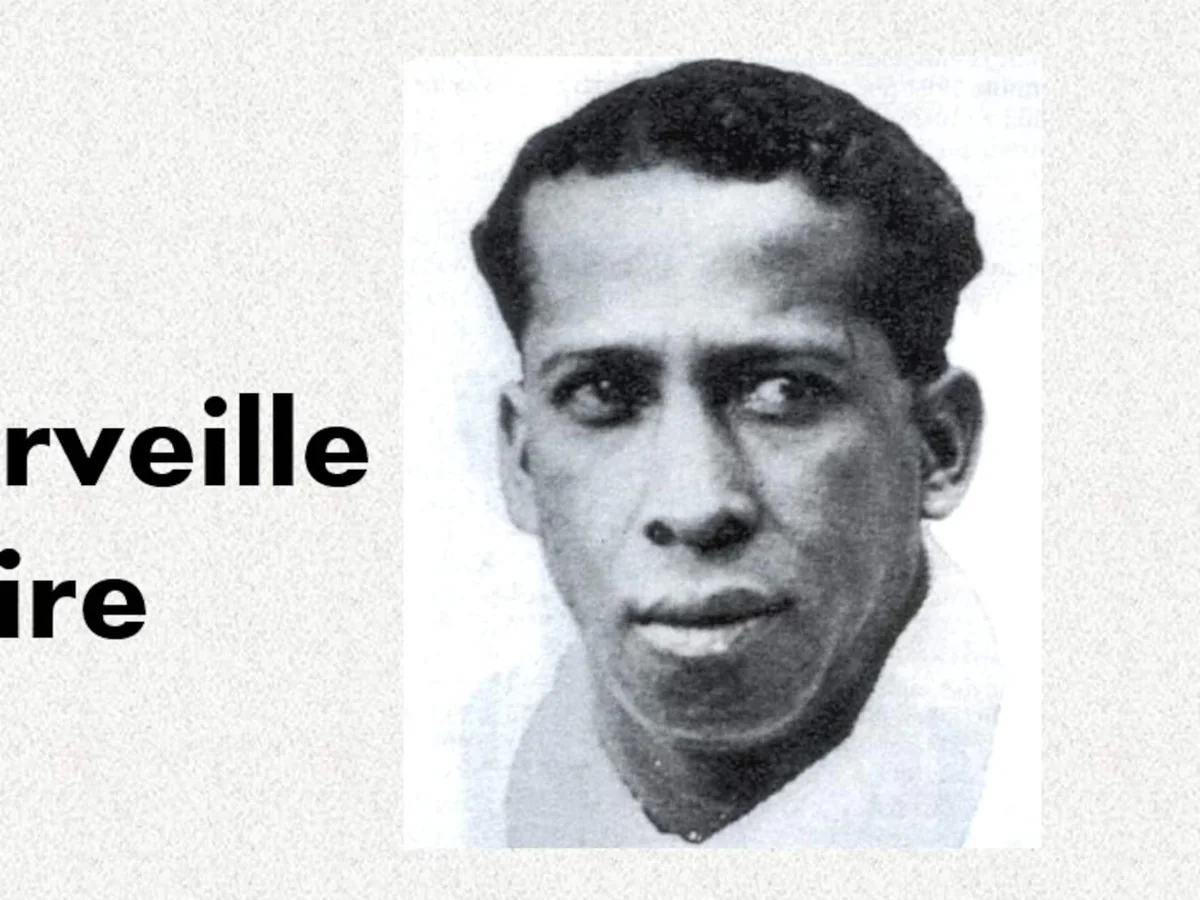
Before Pelé, before Maradona, before Messi, there was a kid from a border town in Uruguay who lit a match and held it up for the whole world to see. His name was José Leandro Andrade, and if you haven’t heard his story, you’re missing one of the wildest origin stories in sports.
Andrade was born in 1901 in Salto, Uruguay, to an Argentine mother and a father who was reportedly a West African slave who escaped Brazil using what some people at the time described as magic and voodoo. His father’s birth certificate lists him as 98 years old when Andrade was born, which was basically double the average life expectancy in Uruguay back then. Whether you believe the supernatural stuff or not, it tells you something about the man Andrade came from. Mystery and resilience were in his blood.
He grew up poor. Dropped out of school early even though he was one of the best students. But he kept playing football with his brothers on dirt pitches, and that was enough to keep him going. By his early teens, he had left Salto for Montevideo, looking for something bigger. He ended up playing for a local club called Bella Vista, but football in South America was still amateur back then. So Andrade worked as a shoe shiner and a carnival musician, playing drums and dancing tango to make ends meet. He was a showman before he ever stepped onto a professional pitch.
In 1924, Uruguay qualified for the Olympic Games in Paris. This was before the World Cup existed, so the Olympics were the biggest stage in football. But Uruguay almost didn’t make it. The country’s two football federations couldn’t agree on player selection, and the Olympic committee actually decided not to send a team. It took a guy named Francesco Ghigliani, Uruguay’s rep to the IOC, dissolving the local committee and registering the team himself to get them on the boat. Players had to chip in their own money for the trip. Atilio Narancio, the FA president, remortgaged his house to pay for their food and hotel in Paris.
On the voyage across the Atlantic, the goalkeeper Andrés Mazali ran training drills on the deck of the steamship. When they landed in Spain, they played nine friendlies against local clubs and won all of them, scoring 25 goals and conceding just eight. Spanish newspapers called them favorites for the Olympics before they’d even reached Paris.
Their first match in the tournament was against Yugoslavia. The Yugoslavs sent spies to watch Uruguay train. Captain José Nazassi told the team to fake clumsiness, kicking the ball in weird directions and falling over theatrically at every tackle. The spies reported back that Uruguay was nothing special. Then Uruguay beat Yugoslavia 7–0. Andrade didn’t score, but he set up four goals. The French press started calling him La Merveille Noire — The Black Marvel. He was the first black footballer to play in the Olympics, and he was impossible to miss.
Uruguay rolled through the tournament. They beat the United States 3–0. They beat host nation France 5–1 in front of a stunned crowd of 30,000. In the semifinal, they went down 1–0 to the Netherlands, the first time they had trailed all tournament. A halftime speech from Casto Laguarda, the official who had helped get them to Paris, reminded them of the people back home in Montevideo. They came back to win 2–1. In the final, they beat Switzerland 3–0 with Andrade assisting the opening goal. Uruguay had won Olympic gold.
Back home, the government declared a national holiday and issued commemorative stamps. Andrade was the star of the tournament, even though he hadn’t scored a single goal. He was a midfielder who controlled everything, a guy with rubber-band flexibility and a dancer’s grace. His teammate Héctor Scarone swore he heard Andrade click his tongue or snap his fingers on the ball, like he was dancing to music nobody else could hear.
After the Olympics, Andrade joined Nacional and won the Uruguayan league in his first season. In 1925, the team went on a nine-country tour of Europe. More than 800,000 people showed up to see him play. But during that tour, a Belgian doctor diagnosed him with syphilis, likely from his partying lifestyle. The disease took a toll. He started drinking more. His teammates said he came back to Montevideo changed, arrogant, unapproachable. He had left a humble man and returned wearing a top hat, leather boots, and a silk cravat, riding the wave of fame hard.
Argentina, jealous of Uruguay’s success, challenged them to a two-leg series to determine the real world champions. The second leg in Buenos Aires turned into a riot. Fans hurled stones at Andrade. He and his teammates threw them back. Police had to intervene. Héctor Scarone kicked a police officer and got arrested. Uruguay walked off the field with five minutes left. Argentina won the forfeit and claimed the unofficial world title. Months later, at the South American Championship in Montevideo, a Uruguayan fan was shot dead after a fight with Argentina supporters.
Andrade’s life after football was not a happy one. The syphilis eventually took his eyesight. He died in poverty in 1957, almost forgotten. But for a few years in the 1920s, he was the most captivating athlete on the planet. A carnival musician who danced through defenses and changed the way the world saw football.
Leave a Comment