
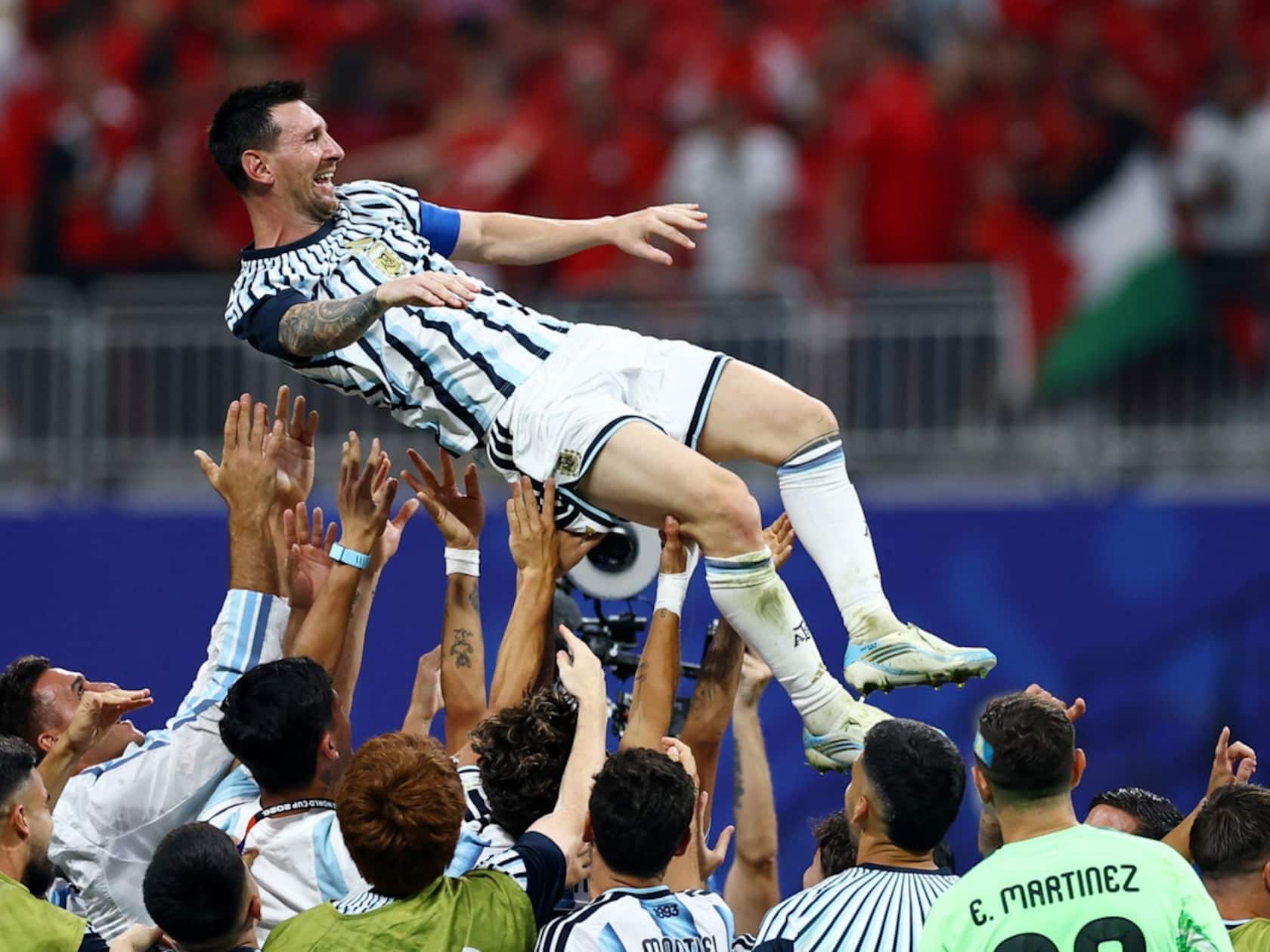
Lionel Messi was lifted into the air by his teammates, tears streaming down his face. On the other side of the field, Egypt’s players collapsed to the ground, beaten and furious. It was the kind of scene that makes for great television. The kind of drama any director would love.
But here’s the problem for FIFA. Some people are starting to wonder if that drama is a little too perfect.
Argentina’s comeback win over Egypt in the Round of 16 was supposed to be a moment of pure sporting glory. Messi, maybe playing his last World Cup game, dragging his team back from the brink. His manager Lionel Scaloni couldn’t even finish sentences. “I can’t look at you,” Scaloni said, sobbing. “I’m too emotional, what a group of players, my brother, that’s all… I can’t.”
It was beautiful. Until the conspiracy theories started.
Egypt feels robbed
Egypt coach Hossam Hassan didn’t hold back. After a game where his team had a goal disallowed on a borderline foul call, he let loose. “It’s all about money,” Hassan said. “They want Messi to stay in the tournament. In football, many things happen off the pitch because of interests. What happened was unfair. Egypt deserved to qualify.”
He wasn’t done. “We suffered an injustice,” he added. “I am not going to watch another match in this tournament.”
That kind of talk usually gets dismissed as sore-loser stuff. But here’s the thing. Sources at major European clubs told The Independent that similar thoughts are swirling around behind the scenes. The disallowed goal against Egypt was a light foul, far from the goal, and it went against the way the rest of the tournament has been refereed. The games have mostly been called with a light touch. Just not this one. Not when the biggest star in the sport was on the line.
The Trump problem
The bigger issue is the Donald Trump controversy that’s been hanging over this World Cup like a cloud. The exact details of the Trump situation are messy, but the perception is straightforward: if that kind of political interference can happen, what else is possible? What else might be getting nudged behind closed doors?
FIFA president Gianni Infantino should be worried. When you let one crisis of legitimacy slide, every borderline call starts getting viewed through the same lens. Social media is full of memes comparing the tournament to WrestleMania. People are joking that the script is obvious. It sounds absurd. It probably is absurd. But when a joke becomes a widespread belief, you have a problem that doesn’t just go away.
The irony of it all
Here’s what makes this frustrating. The actual football has been incredible. This World Cup has produced more goals, more last-minute drama, more genuine emotion than any tournament in recent memory. England’s wild win over Mexico. Colombia and Switzerland playing a staid 0-0 that felt like a relic from 2002. Argentina’s comeback. It’s been box office stuff.
But off the field, the picture is different. The quarterfinals feature six European teams from the wealthiest leagues. France, Spain, England, Switzerland, Belgium, Norway. The U.S. is out and facing tough questions about its pay-to-play youth system. Morocco is the only real outlier, and that’s because the Moroccan government treats soccer as a state mega-project.
FIFA does some genuinely good work redistributing wealth and investing in global development. Arsene Wenger is leading a campaign to raise standards everywhere. But that work is also a political tool, a way to secure votes. And when the politics gets too tangled with the sport, when people start believing the game is rigged, it poisons everything.
The World Cup is supposed to be authentic. Unscripted. That’s the whole point. But FIFA has a growing legitimacy crisis on its hands, and it’s not going to fix itself by hoping everyone stops asking questions.
Leave a Comment