
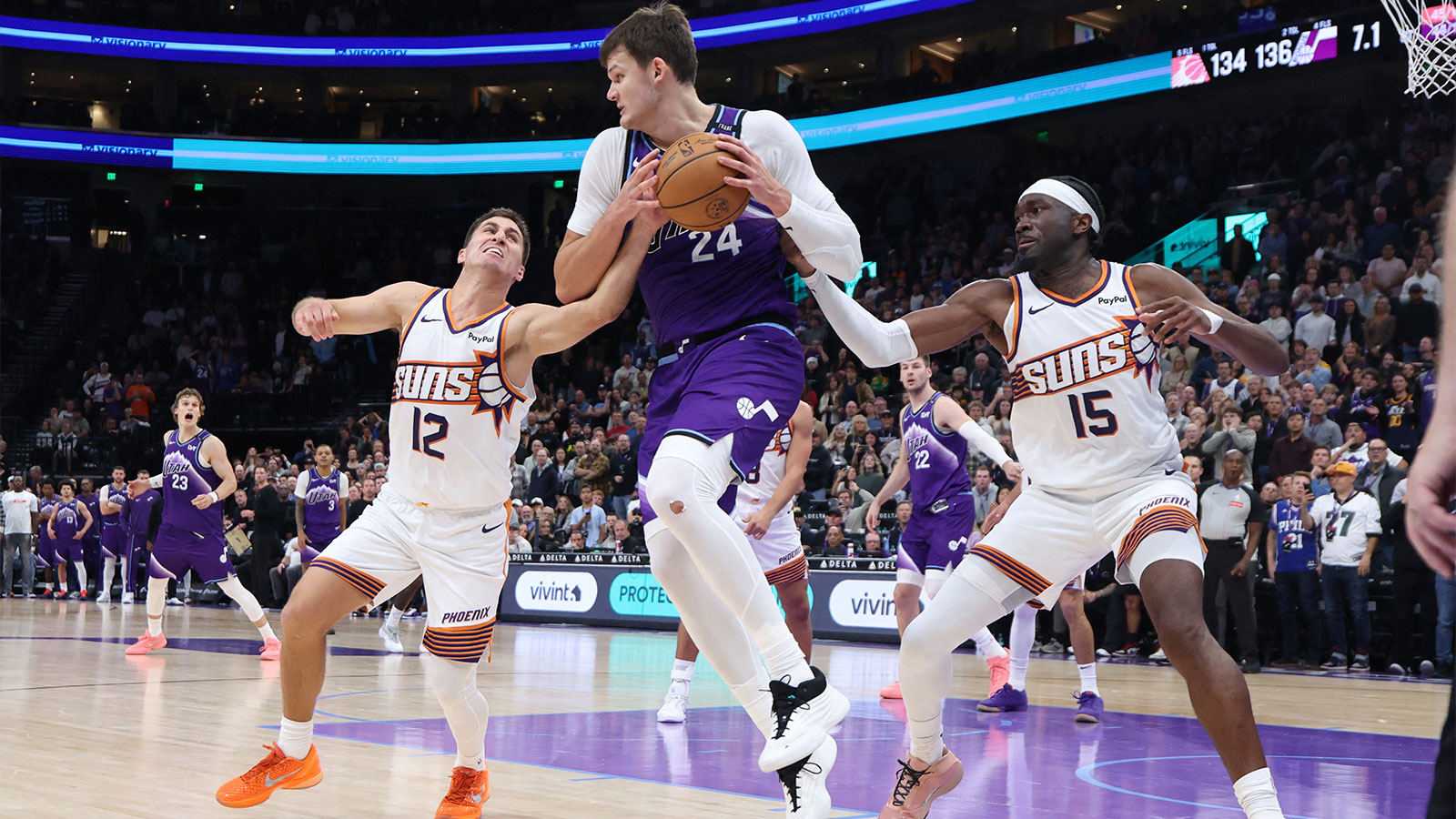
The Utah Jazz walked out of the 2026 draft with Darryn Peterson at number two overall. That choice always had some people scratching their heads, mostly because Cameron Boozer was still on the board and had just won National Player of the Year as a freshman. But then the Jazz traded Walker Kessler to the Lakers last week, and suddenly the Peterson pick looks less like a risk and more like the only move that made sense.
Kessler wanted a deal the Jazz weren’t going to sign off on. So they flipped him to Los Angeles for two first-round picks and two pick swaps. That’s a haul. But it also means Utah no longer has that traditional rim protector they had in Kessler. And if you’re the kind of fan who was already worried about frontcourt depth, losing Kessler might make you wonder if they should have grabbed Boozer instead.
The short answer is no. And here’s why.
Peterson solves a scoring problem the Jazz couldn’t ignore
Utah needed a shooting guard in the worst way. Lauri Markkanen can slide to the three but he’s seven feet tall and best as a stretch four. Jaren Jackson Jr. plays primarily at the four too, and Kyle Filipowski and Jusuf Nurkic are both bigs. The Jazz had a frontcourt logjam before they even thought about where to put Boozer, who thrives in the paint on offense and has only ever guard power forwards and centers on defense. Drafting Boozer would have meant either forcing a square peg into a round hole or giving up on someone else already on the roster.
Peterson, meanwhile, walks into the most obvious hole on the roster. The Kansas product is a three-level scorer with real defensive upside. The Jazz were the second-worst defensive team in the NBA last season. His point-of-attack defense combined with Jackson’s help-side rim protection is already a more workable foundation than trying to make Boozer work alongside a roster that has too many guys who want to play in the same spots.
Let’s be real about Boozer’s fit
There’s a reason Boozer fell to third despite the accolades. Scouts have quietly tagged him as a tweener for a while now. Not quite enough vertical pop to be a full-time center on defense. Not quick enough laterally to handle most fours. His offense is real, especially in the post, but the league has been moving away from that style for a decade. The Jazz would have had to build an entire scheme around covering for his defensive limitations.
Nurkic, by the way, looked better than expected after the Jazz acquired him last year. He was playing real minutes before a nose injury shut his season down. Filipowski has carved out a legit role as a floor-spacing big. Even without Kessler, the Jazz have bodies in the frontcourt. They don’t have a ready-made starting center, sure. But Jackson has always been best as a four, and the Jazz are still a couple of years from true contention anyway. That timeline aligns much better with Peterson’s development arc than with Boozer’s more polished but lower-ceiling game.
Utah picked up two extra first-round picks and two swaps in the Kessler deal. That’s assets to hunt for a center later, when the roster is actually ready to compete. In the meantime, they got the best prospect in the draft at their biggest position of need. Sometimes the right pick is the one that looks the most obvious in hindsight.
Leave a Comment