
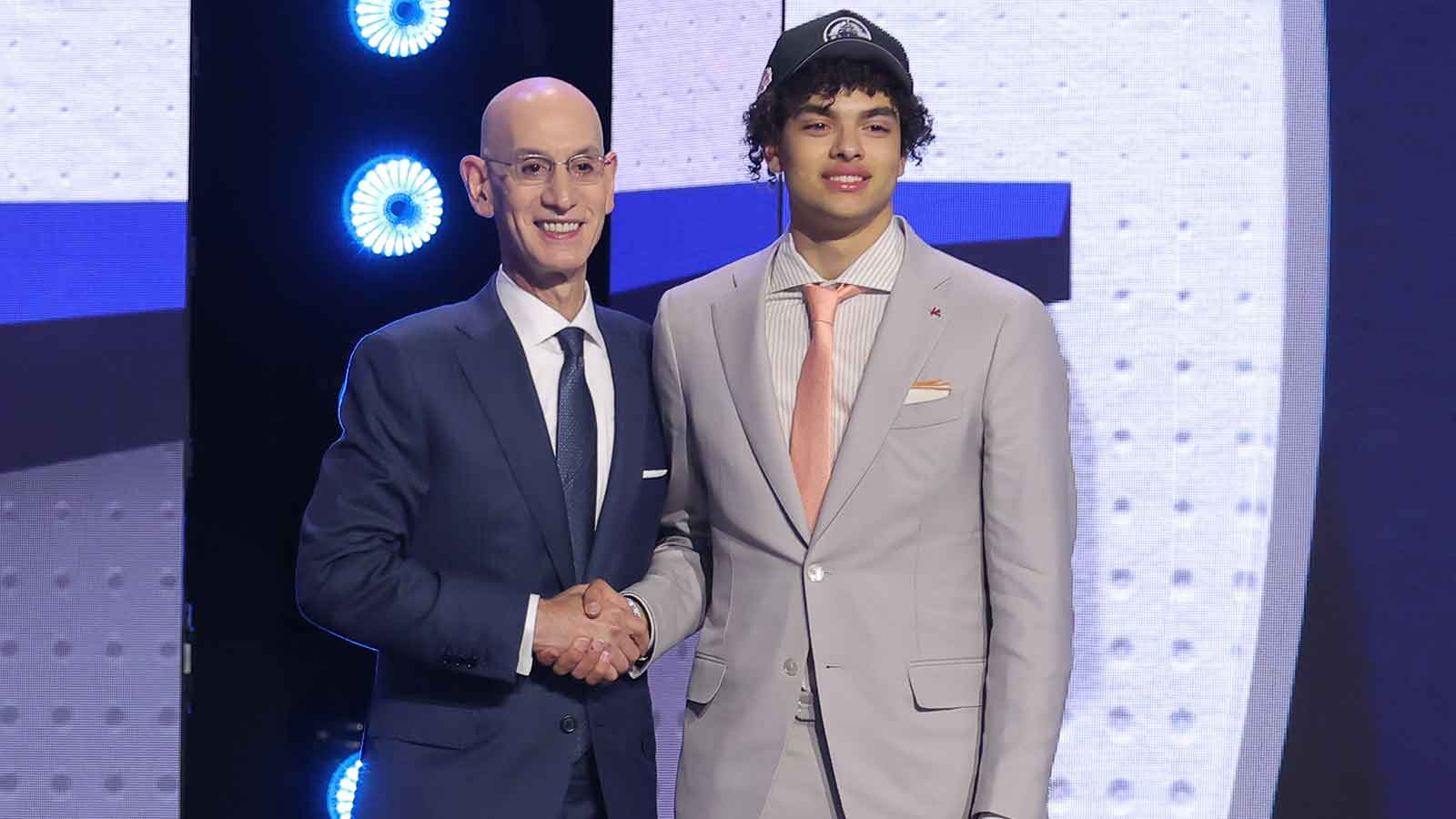
The Los Angeles Clippers went into draft night with a clear need in the backcourt. They left it with Keaton Wagler, the former Illinois guard taken fifth overall, and a pairing that might just work better than anyone expected.
Darius Garland was already on the roster, a 26-year-old point guard who can score, pass, and pick pockets on defense. But Garland is 6-foot-1. That matters in a league where perimeter size gets exploited in the playoffs. Wagler is 6-foot-5. That size difference alone shifts what the Clippers can do defensively, and it changes how they attack on offense.
The fit is the story, not just the draft slot
Wagler averaged 17.9 points, 5.1 rebounds, and 4.2 assists last season at Illinois. He got to the free-throw line 5.8 times a game. That’s nearly double what Garland averages over his career (3.1 attempts per game). Wagler isn’t a great free-throw shooter yet — 79.6 percent — but he draws contact in a way Garland doesn’t. That changes the geometry of the offense. Defenses have to account for a guard who hunts fouls instead of settling for jumpers.
Garland, for context, is a career 38.9 percent shooter from three and an 86.6 percent free-throw shooter. He’s efficient but doesn’t generate a ton of free throws. Pairing him with a bigger guard who lives at the line gives the Clippers two different kinds of pressure in the same backcourt.
Some noise came out of the draft about other guards still available — Mikel Brown Jr., Darius Acuff Jr., Kingston Flemings all went right after Wagler. But the Clippers targeted Wagler specifically. The front office saw something beyond the stats.
What Wagler does that Garland can’t
Wagler can play off the ball. That’s the key. Garland is at his best with the ball in his hands, running pick-and-roll, making reads. Wagler averaged 4.2 assists himself, so he can share playmaking duties, but his real value comes when he’s spotting up or cutting. He shot 37.1 percent from three at Illinois on decent volume. Defenses can’t sag off him, which opens space for Garland to operate.
Defensively, Wagler can guard up a position. That lets the Clippers hide Garland on the weaker opposing guard and let Wagler take the tougher assignment. With the way the Western Conference is loaded with big, athletic guards, that flexibility matters.
The Clippers backcourt last season lacked versatility. They had scorers, but they didn’t have a natural complement. Wagler is that complement. He’s not a star yet, but he doesn’t need to be. He just needs to do the things Garland doesn’t — rebound, draw fouls, defend bigger players — and let Garland do what he does best.
It’s early. Summer league hasn’t started. But the logic is clean here. The Clippers drafted for fit over flash, and that might be exactly what they needed.
Leave a Comment