
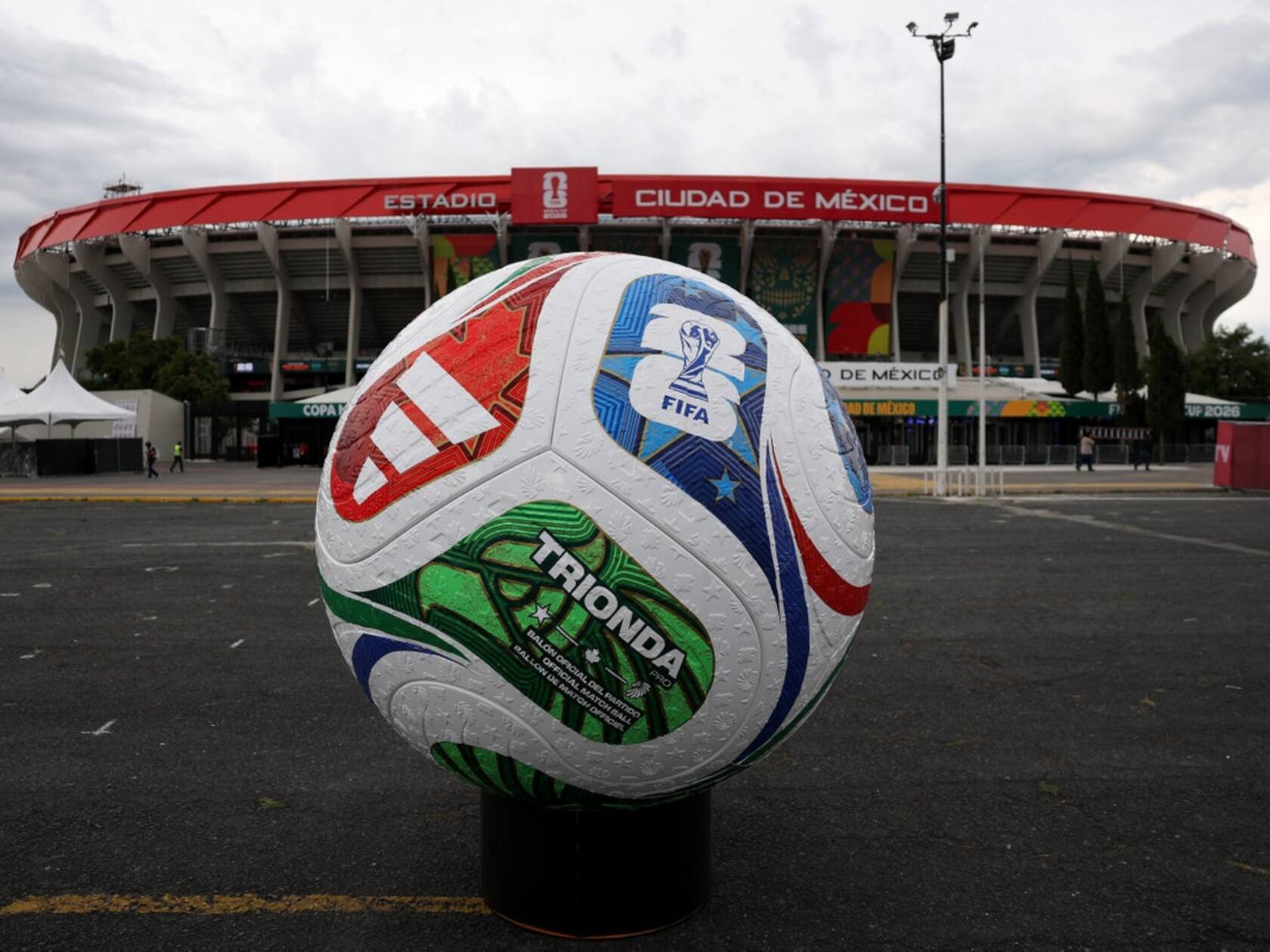
There’s a pattern forming at the 2026 World Cup and it’s making goalkeepers look bad. Or maybe the ball is just doing something weird again.
Jordan Pickford got a hand to it. Luca Zidane got a hand to it. Edouard Mendy got a hand to it. Ahmed Basil got a hand to it. In each case the ball still ended up in the back of the net. That’s the kind of thing that makes a goalie curse under his breath and makes everyone else start asking questions about the hardware.
The ball in question is called the Trionda. It’s Adidas’s four-panel design for this tournament and it’s the smoothest World Cup ball ever made. Fewer panels means less seam length. Less seam length means less drag and less predictable movement through the air. Adidas tried to compensate by deepening the seams and adding grooves and surface texturing. It might not be enough.
Joe Hart went on a rant during France’s win over Iraq and it’s worth paying attention to because Hart knows goalkeeping. He played at the highest level for a long time. “I’m seeing this goal way too many times for a World Cup for there not to be something up with that football,” he said during halftime. He pointed out that every instance involved a rising shot above shoulder height with minimal spin. The keepers got there but couldn’t push it wide. “They just cannot seem to get their timing of this World Cup football right,” Hart said. “Anything above shoulder height that’s not a curled effort.”
This is starting to feel like 2010 all over again. That year the Jabulani became infamous for its knuckleball effect. It had eight thermally bonded panels and an almost frictionless surface. Shots would wobble unpredictably and goalkeepers looked like they were swatting at butterflies. Diego Forlan figured it out by practicing with it for months before the tournament. He scored five goals and shared the Golden Boot. Most other players just complained.
The Trionda’s issue is different but related. Tests at the University of Tsukuba found that at higher speeds the ball loses range and drops sooner than previous World Cup balls. That might sound like a small thing but for a goalkeeper who has trained his entire career to read ball flight it’s enough to throw off the timing by a fraction of a second. That fraction is the difference between a save and a goal.
Hart talked about the “brain calculation of a goalkeeper” and how these guys are used to a certain feel. “In this tournament they’re getting set and they’re flying after it and it’s just not matching up with what they’re doing daily,” he said. That’s the kind of observation that makes you think this isn’t just a run of bad luck or shoddy technique.
What does this mean for the rest of the tournament? Probably more goals from range. The neutral fan will probably enjoy that. But the repetition of weird goalkeeping errors is already starting to wear thin. The Jabulani at least gave you those wild knuckleballs that were fun to watch even if they made goalies miserable. The Trionda just makes everyone look slightly confused.
Adidas has not commented on the criticism. The tournament continues. More keepers are going to get tested. Eventually someone might figure out how to handle it the way Forlan did. Or the ball might just keep winning.
Leave a Comment